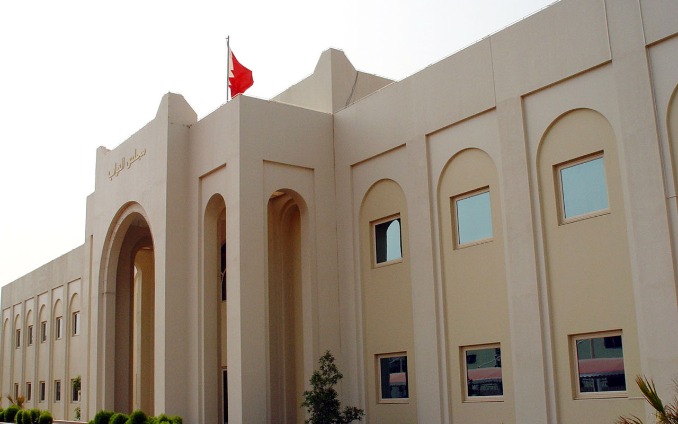
PARLIAMENT descended into chaos yesterday over controversial plans to give criminals a longer time to settle their fines, allowing them to pay by instalments over five years instead of two.
Debate to amend the 2002 Criminal Procedures Law in a bid to help lawbreakers repay the amounts gradually, so that the penalty doesn’t strain their finances or entice them to commit further crimes, reached a stalemate with an equal number of MPs for and against the proposal.
Speaker Fouzia Zainal had to withdraw the amendments for two weeks to allow the government enough time to present full statistics on the number of defaulters. The government had earlier asked MPs to rethink the suggested amendments.
“The fines are punishments and not the same as paying in instalments for an electronic device,” shouted MP Dr Hisham Al Asheeri.
“Former civil servants who stole thousands of dinars from public coffers will be happy as they will have a longer time to invest stolen money and repay it from the profits,” he added.
“The two-year period is long enough. It shouldn’t be that much in the first place, it should be shrunk to six months.
“We shouldn’t be encouraging criminals, we should be encouraging people to abide by the law.”
Parliament foreign affairs, defence and national security committee chairman Mohammed Al Sissi said that punishments remain the same, but an extended repayment period would help several businessmen and entrepreneurs who have been rotting in jail due to defaulting because of the impact of the pandemic on their businesses.
“Several people have been unable to repay due amounts for government services or bank loans during the pandemic and can’t afford to repay the amounts in two years,” he said.
“The punishment remains the same, but the timing is relaxed.”
Justice, Islamic Affairs and Endowments Ministry legal adviser Ismael Al Asfoor pointed out that MPs earlier wanted to reduce the wait for the issuance of ‘Good Conduct’ certificates from a year to a maximum of six months in a proposal submitted to the government. However, certificates would be delayed until any fine was paid in full and that would mean waiting five years if the amendments came into force.
It would do ‘more harm than good’ towards integrating criminals back into the community, he believes.
Meanwhile, MPs approved amendments to the 2013 Psychiatric (Mental) Health Law after two months of debate.
Under approved amendments, Electroconvulsive Therapy (ECT) will not be used on mental patients without their consent, or that of their relatives or guardians.
Such treatment will only be administered if it helps the patient recover quickly.
ECT is a treatment that involves sending an electric current through the brain, causing a brief surge of electrical activity, aimed at relieving the symptoms of some mental health problems.
Health Minister Faeqa Al Saleh said the law would be pushed urgently through the Shura Council prior to the end of the National Assembly’s four-year term in May.
Meanwhile, MPs unanimously approved three royal decrees issued by His Majesty King Hamad during the National Assembly recess last year.
They are:
* The new 2021 Civil and Commercial Verdict Execution Law, which would see payments, fines and compensations, carried out through a computerised system;
Justice, Islamic Affairs and Endowments Minister Shaikh Khalid bin Ali Al Khalifa said a new law to regulate payment for goods through instalments was in the pipeline.
He said 26 businesses selling through instalments have been banned from the practice, but stated that several continue under the table.
* Amendments to the 2009 Bahrain Chamber for Dispute Resolution (BCDR) Set-up Law that would see the body deal with cases that are above BD500,000.
* Amendments to the 2001 Companies Law that allow private registers to act on behalf of companies in English-language documents.
* Abrogating the National Oil and Gas Authority (Noga) with the Oil Ministry undertaking all functions.
All will be now reviewed by the Shura Council.
mohammed@gdn.com.bh