BAHRAIN will not allow its core human rights principles to be “abused or exploited” by individuals or groups with vested interests, stated a top official.
Interior Ministry’s Under-Secretary Shaikh Nasser bin Abdulrahman Al Khalifa said the kingdom will not tolerate organisations that continue to hurl a volley of allegations.
“We will not allow people to abuse and exploit human rights principles that pose a danger to Bahrain,” he said.
“All components of Bahrain know their rights and duties, and they don’t need false allegations from countries that like to harm Bahrain.”
Shaikh Nasser explained policing work continues to meet international standards, adding action is taken against violators.
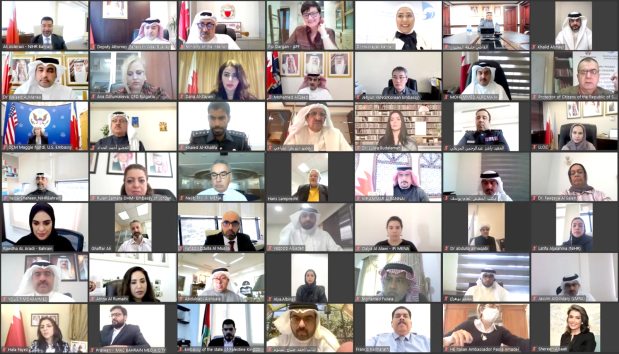
He was one of the speakers who took part in the virtual launch of the National Institution for Human Right’s (NIHR) Strategy and Action Plan (2022–2025) yesterday, that was attended by senior government officials, diplomats, MPs and rights groups abroad.
The new blueprint covers the impact of Covid-19 on the national economy and entrepreneurship, promote human rights culture, achieve equal treatment and gender equality and quality health care for all in Bahrain.
In his opening remarks, NIHR secretary-general Ali Al Derazi said they achieved 92 per cent of their objectives in their 2019-2021 strategy, despite the challenges posed by Covid-19.
“The NIHR in the past three years (2019, 2020 and 2021) was able to attract 8,200 individuals to take part in its activities to spread the culture of human rights.
“In addition, the institution dealt with 6,000 cases (during the same period) related to human rights complaints and legal assistance requests as well as 75 field visits to prison facilities, social homes, labour camps, health facilities including those used to treat Covid-19 cases.”

A breakdown of the field visits conducted by NIHR teams over the past three years
Furthermore, over the past three years, the rights watchdog dealt with more than 4,400 calls on its hotline (80001144), referring the cases to concerned authorities, or providing legal advice.
Mr Al Derazi said the new NIHR strategy is line with the National Human Rights Action Plan, and will continue to protect and promote rights for all.
The new vision includes human rights research fellowship programme, conduct unannounced visits to correctional and rehabilitation facilities, attend court trials, conduct field visits to companies affected by Covid-19 (Q1 2023) and organise awareness campaigns on the importance of equal pay (Q3 2023).
The watchdog will organise a roundtable in the first quarter of 2024 that focusses on the obstacles that people with disabilities face in obtaining the right to education, and another event in the second quarter of 2025 on the importance of gender equality in the labour market.

NIHR teams attended court sessions to ensure fair trial
Meanwhile, Shura Council human rights committee chairman Ahmed Al Haddad said the new strategy would help NIHR receive an ‘A’ ranking from the Geneva-based International Co-ordinating Committee of National Human Rights Institutions (ICC).
The top ranking allows the watchdog to vote or speak at Human Rights Council meetings.
NIHR received a ‘B’ status during a review in 2017 by ICC which at the time found that it did not fully comply with the Paris Principles, which relate to the functioning of human rights groups.
“This new NIHR strategy is a noble plan that help the institution get an ‘A’ status that it rightly deserves,” added Mr Al Haddad.
The rights body was set up by His Majesty King Hamad in 2009 to work with state agencies on drafting Bahrain’s rights reports, hold conferences and workshops and promote human rights.
sandy@gdn.com.bh