

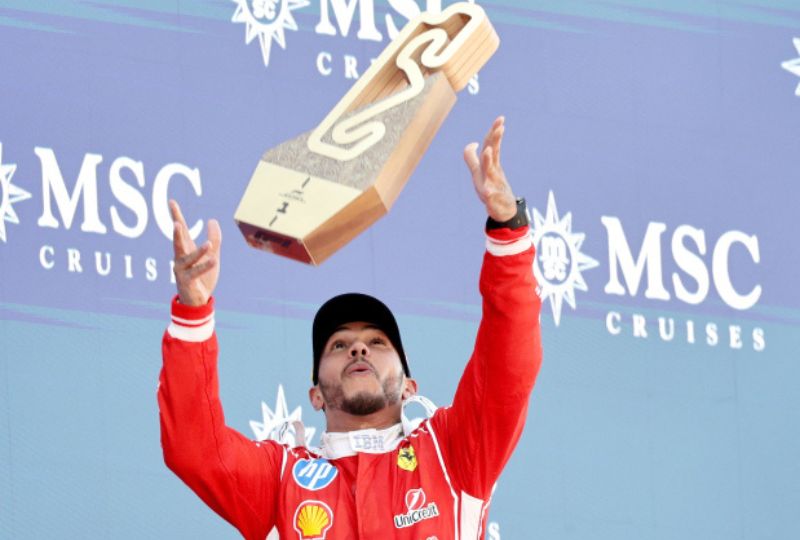
Analysis of the Barcelona-Catalunya Grand Prix, brought to you by Bahrain International Circuit
F1 – After the glitz and glamour of Monaco, F1 returned to Barcelona, for what is now called the Barcelona-Catalunya Grand Prix.
The change in name reflects the fact that Spain now has two races, with Madrid scheduled for its debut race this September, as The Spanish Grand Prix.
Whilst Barcelona will remain on the calendar, it will go on rotation with Belgium, hosting F1 every two years.
The build-up to the race was dominated by the news of the successful appeal by Alpine in overturning Gasly’s penalty for pit lane speeding last weekend in Monaco.
Due to the changes at the pitlane entrance which affected the distance and therefore the calculation of speed, the stewards accepted that the data provided by the team showed Gasly had not exceeded 60kph.
As a result, he was promoted back to third place, at the expense of Hadjar.
That Monaco third place trophy will now have to make the trip from Milton Keynes to its new home in Enstone.
More broadly, it remains to be seen how the other teams, including Mercedes, Red Bull and Mclaren, who were similarly penalised, will react.
Friday and Saturday practice sessions gave few indications on who might lead in qualifying, with Mercedes, McLaren, Ferrari and Red Bull all dominating at different stages of the weekend.
When it mattered in Saturday qualifying, however, it was George Russell who stepped up to deliver a much-welcome pole position for the Englishman.
He has been under pressure since the start of the season compared to his teammate Antonelli and so perhaps this could have been the first sign of a return to winning ways.
Antonelli could only achieve third on the grid, as a revived Hamilton with an upgraded aero package took second, his best qualifying performance for Ferrari.
Norris qualified fourth with his teammate Piastri seventh, with the McLaren pair sandwiching the two Red Bulls of Verstappen and Hadjar in fifth and sixth.
Lawson in the Racing Rull qualified seventh with Hulkenberg in the Audi eighth. Leclerc could only achieve tenth after a crash in Q3 made him unable to set a time in the final qualifying session.
The Barcelona track is notoriously hard on tyre degradation, so a minimum of two stops was expected.
This gave teams plenty of options for creative strategy, ensuring a compelling fight.
At the start of the race, the top five dispatched themselves into turn one in order. Further back, a bad start for Hadjar dropped him to 14th, handing sixth place to Piastri.
Leclerc, having started 10th, made his way through the field and by lap eight had overtaken Piastri for sixth.
Already by lap ten, those on the soft tyres, including Hamilton, were struggling. Hamilton stopped on lap 12 to move to hard tyres and Russell reacted the following lap, together with Verstappen.
Norris also came in with Antonelli on lap 15, followed by Leclerc as the last of the top six.
Perhaps unusually, after the first round of stops there was no change in the top six, as each driver reacted to its closest competitor to avoid the undercut.
As the race developed, Lewis Hamilton put a spanner in the works for those who were nailing on a two-stop strategy, as he stopped on lap 28, meaning he would require a third stop to get to the end. Verstappen followed on lap 30, again confirming a three-stop strategy.
As a result, Antonelli had free air to chase down his teammate leading to some close racing action.
Norris then took his second and final planned stop on lap 37, with Russell soon after, followed by Antonelli and Leclerc on lap 40.
Alonso stopped on the side of the track on lap 41, leading to a virtual safety car.
This triggered Hamilton for his final pit stop, saving him around 10 seconds due to the virtual safety car.
This meant that for the final 24 lap stint to the end Hamilton was leading, followed by Russell, Antonelli, Norris, Verstappen and Leclerc.
The closest battle in the final part of the race was between the two Mercedes.
Antonelli kept his patience and on lap 61 went for an inside overtake and made it stick to take second.
However, just a few corners later Antonelli dramatically had a mechanical failure and stopped on the side of the track. His race was over and another virtual safety car ensued.
Despite this late drama, Hamilton was cruising at the front and took the chequered flag by a significant 29 second margin.
Whilst he may have got lucky with the virtual safety car gifting him a cheap pit stop, his margin of victory would suggest a win in any case.
George Russell finished second, followed by Lando Norris. Verstappen was fourth, followed by Piastri, Hadjar and the two Alpine’s of Gasly and Colapinto.
The two Racing Bulls of Lawson and Lindblad completed the top ten.
The result therefore meant there was an all-British podium for the first time in F1 since 1968.
A bit of patriotism aside, this race was all about the Hamilton victory.
It was his first for Ferrari and his third consecutive podium.
Given the struggles of last year, this will rank as one of his most memorable wins and his emotion showed it.
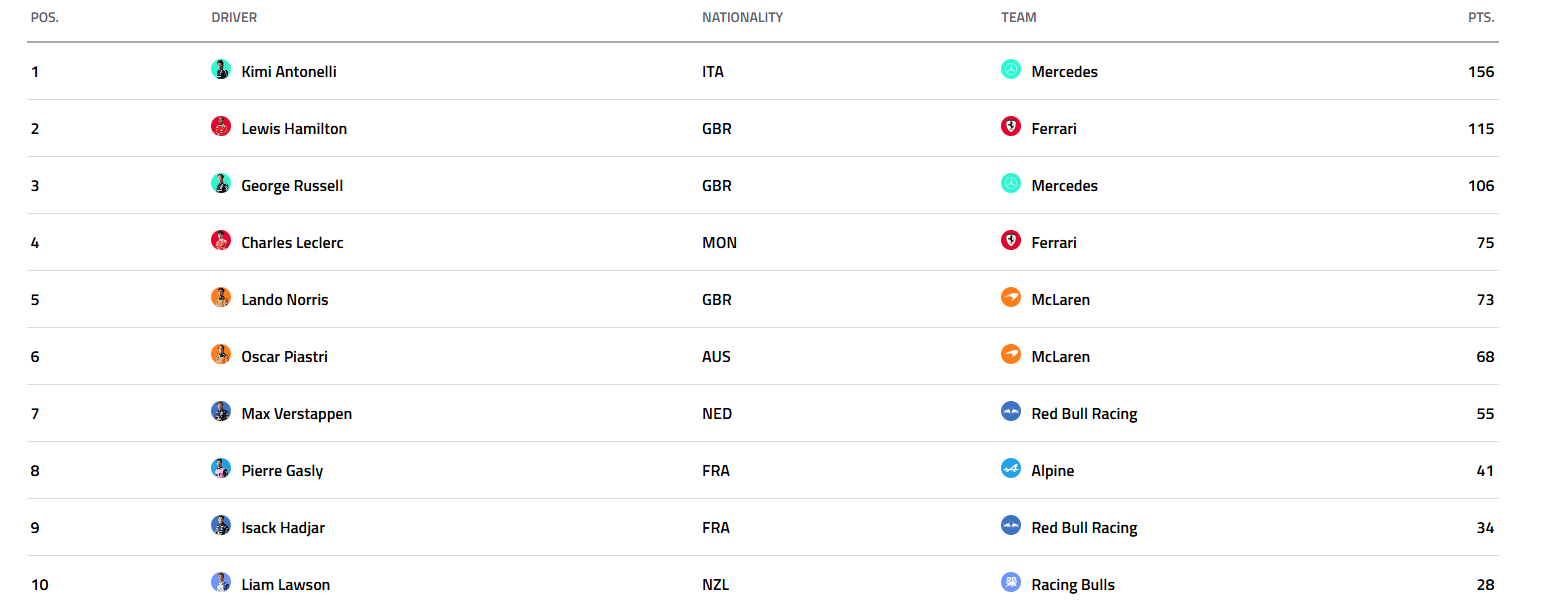
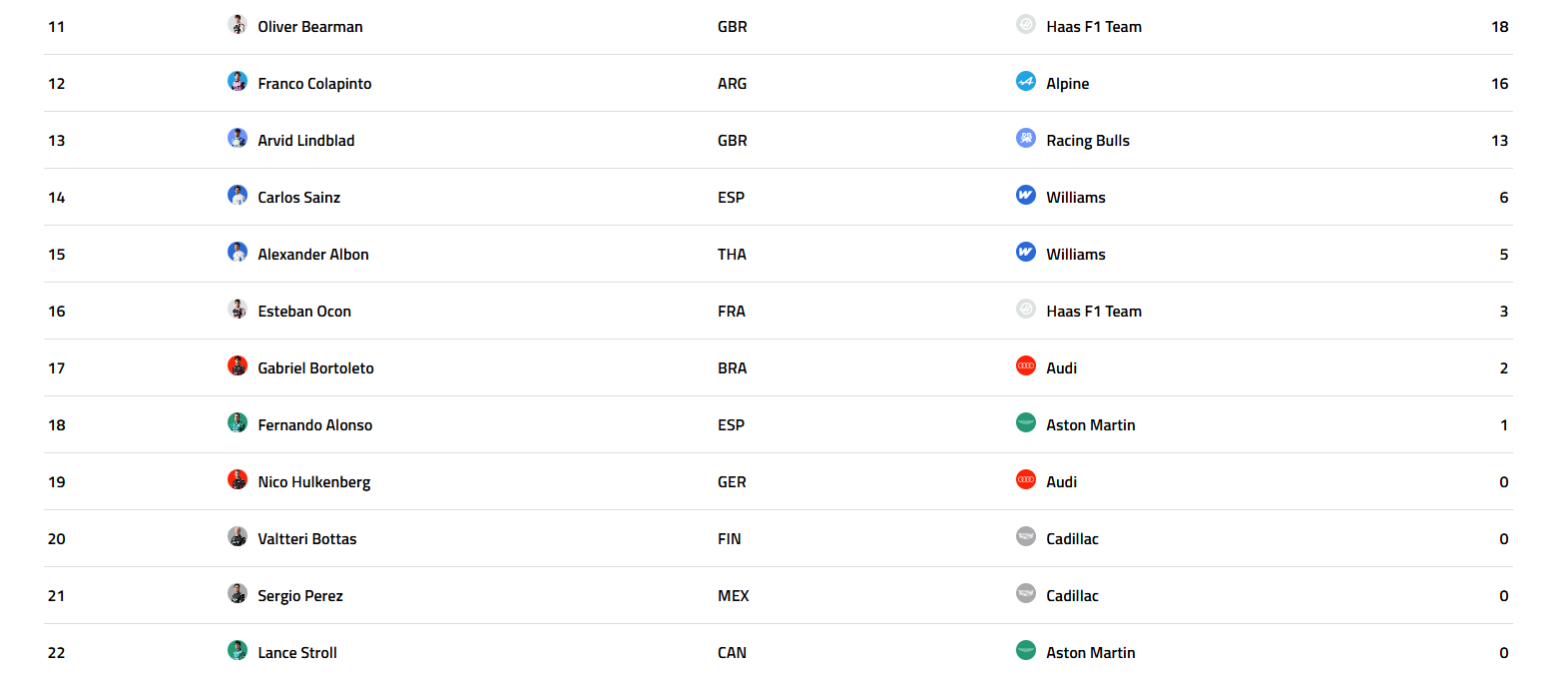
With Antonelli not finishing, it has also opened up the championship table, with Russell and others catching up.
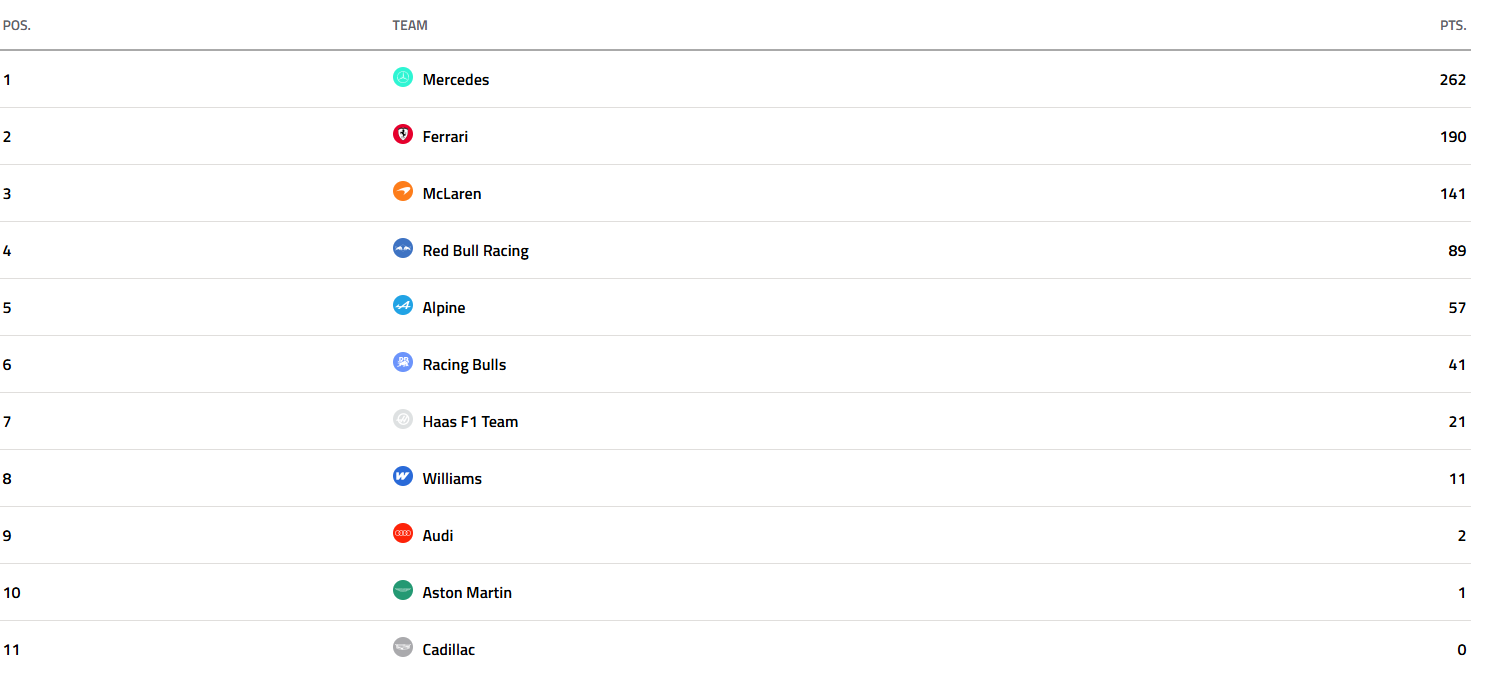
Further, judging by the pace of Ferrari with its recent successful upgrades, racing at the top looks set to be extremely close, which is great news for fans as the championship develops.
F1 returns to action in two weeks for the Austrian Grand Prix on 28 June.
* Laurence Jones is senior manager, Marketing and Communications, Bahrain International Circuit
l.jones@bic.com.bh
&uuid=(email))