

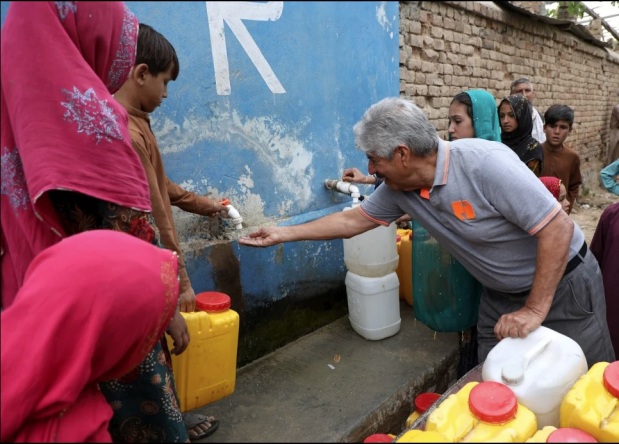
BAHRAIN has announced a $1 million donation to relief efforts in earthquake-ravaged areas of Afghanistan.
The Royal Humanitarian Foundation (RHF) and the UN High Commissioner for Refugees (UNHCR) signed an agreement in this regard, said the UN Refugee Agency yesterday.
The funds will be used to build homes and provide security services and basic aid in areas of south-eastern Afghanistan hit by a deadly earthquake in June that killed more than 1,000 people and injured scores more.
The agreement was signed in Kabul by UNHCR representative Leonard Zulu and RHF Secretary General Dr Mustafa Al Sayed in the presence of UNHCR senior advisor and GCC countries’ representative Khaled Khalifa.
“This generous assistance will support the most urgent needs of earthquake-affected residents in the three worst-affected districts of south-eastern Afghanistan, with the construction of earthquake-resistant homes, protection services, and the delivery of essential relief items,” said Mr Zulu.
Last month, His Majesty King Hamad had ordered urgent humanitarian aid for the quake-hit people in Afghanistan, to be supervised by the King’s representative for humanitarian work and youth affairs and RHF chairman Shaikh Nasser bin Hamad Al Khalifa.
While it remains unclear if the shipment of aid was in addition to the money that has been pledged, the GDN learnt that an RHF delegation led by Dr Al Sayed which visited the affected areas returned to Bahrain yesterday.
“This grant affirms RHF’s commitment to supporting humanitarian efforts worldwide and our confidence in UNHCR’s global relief capacity as an agency that provides humanitarian assistance swiftly and efficiently wherever it is needed,” said Dr Al Sayed.
The 5.9 magnitude earthquake on June 22 resulted in wide-scale destruction across already vulnerable districts in Paktika and Khost provinces.
A second 5.1 magnitude earthquake occurred on July 18 with the epicentre in Spera district, only 3km from the epicentre of the previous earthquake.
Besides loss of life and devastating injury, the earthquakes have resulted in the destruction of critical infrastructure including homes, health facilities, schools and water networks.
The UN has allocated $10m from the UN central Emergency Response Fund. Immediate humanitarian assistance was dispatched to affected areas on the day of the quake, including 10 tonnes of medical supplies sufficient for 5,400 surgeries and medical treatments covering 36,000 people for three months by World Health Organisation.
Meanwhile, Mr Khalifa acknowledged RHF’s pioneering humanitarian role, prompt response and readiness to offer the grant.
“The grant is yet another example of a true humanitarian partnership, ensuring timely assistance wherever it is needed,” he said. “Our partnership with the foundation plays a crucial role in assisting those in need in Afghanistan and around the world.”
Over the past four decades, Afghanistan has been battered by conflicts and natural disasters that have left millions facing famine and starvation. The latest estimates indicate that some 24m Afghans are in need of humanitarian assistance.
There are around 3.5m conflict-displaced people in Afghanistan, as well as 1.57m climate-displaced people, making it one of the most complex humanitarian crises in the world.
raji@gdnmedia.bh
&uuid=(email))