

A decree-law placing all nationality matters outside the jurisdiction of the courts will be debated and voted on during the Shura Council’s final session of the term tomorrow.
It follows a unanimous recommendation for approval by the Shura Council’s legislative and legal affairs committee.
The panel reviewed Decree-Law No 13 of 2024, which amends Article Seven of the Judicial Authority Law, to expressly classify all matters related to nationality as ‘acts of sovereignty’ that fall outside judicial oversight.
Committee chairwoman Dalal Al Zayed said the decree establishes a clear legal principle regarding the sovereign nature of nationality matters.
“Nationality issues relate directly to the core of state sovereignty and national security. The decree-law confirms that such matters are exercised by the government as a ruling authority, not an administrative body, and therefore fall outside the courts’ jurisdiction,” she said.
The committee was tasked with studying the decree-law on April 29 by Shura Council Chairman Ali Saleh Al Saleh.
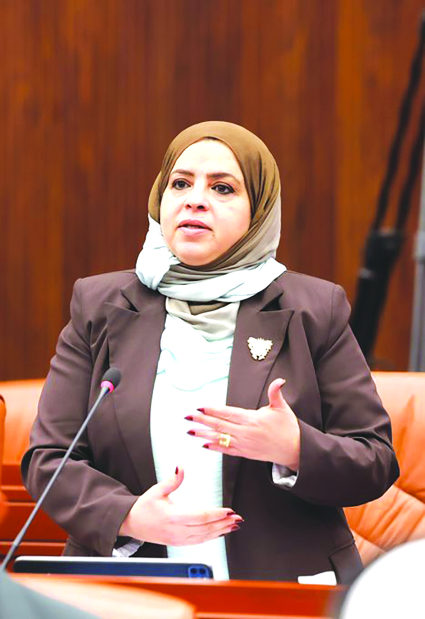
Ms Al Zayed
According to the Shura report, the decree-law was issued on August 27, 2024 under Article 38 of the Constitution during the parliamentary recess, and was presented to the legislature within the constitutionally required timeframe.
It replaces Article Seven of the Judicial Authority Law to explicitly remove nationality disputes from the jurisdiction of the High Civil Court (Administrative Circuit), affirming that decisions concerning granting, revoking, withdrawing or restoring nationality are sovereign decisions.
The amendment also repeals Article 11 (bis) of the Bahraini Nationality Law of 1963 and any provision that contradicts the decree-law.
Ms Al Zayed said it was a necessary legal consequence.
“That article required the Interior Ministry to be a party in nationality-related court cases. With nationality matters now clearly classified as sovereign acts, this provision is no longer applicable,” she said.
The committee report emphasised that the term “nationality matters” covers all provisions of the nationality law, whether original or acquired nationality, including granting, withdrawal, revocation and restoration.
It cited a 2020 ruling by the Constitutional Court affirming that courts may not interfere in political acts entrusted to any of the other two authorities or their discretionary powers, with constitutional limits and parameters being respected.
The report also noted that similar approaches exist in other Gulf states, including Kuwait, Qatar, Oman and the UAE, where nationality issues are excluded from judicial review as matters of sovereignty.
Ms Al Zayed said the decree-law aligns with constitutional principles that entrust the regulation of nationality to legislation, while safeguarding the state’s higher interests.
The committee concluded that the decree-law is constitutionally and legally sound.
&uuid=(email))