

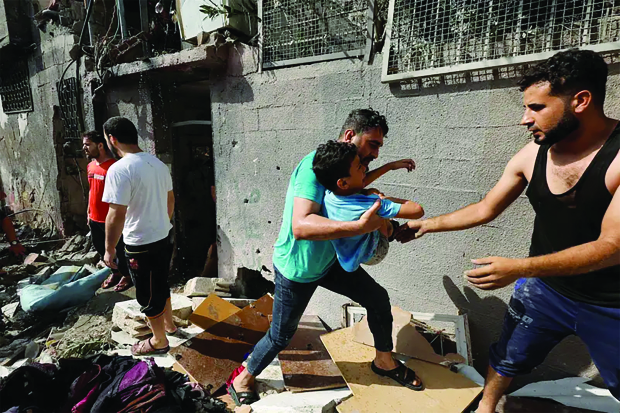
BAHRAIN has condemned Israeli attacks that have killed 41 Palestinians, including 15 children and four women, and injured more than 300 across the Gaza Strip.
The Foreign Ministry expressed concern over the repercussions of such attacks on the security and stability of the region.
It expressed condolences with the people of Palestine and the victims’ relatives.
The ministry also praised Egypt’s efforts to contain the situation.
An Egyptian-brokered ceasefire was to take effect late last night, raising hopes of an end to the most serious flare-up on the Gaza frontier in more than a year.
The truce came at the end of three days of clashes in which Israeli forces pounded Palestinian targets, triggering longer-range rocket attacks against its cities.
“We appreciate the Egyptian efforts that had been exerted to end the Israeli aggression against our people,” an Islamic Jihad spokesman said.
The latest clashes have echoed preludes to previous Gaza wars, though they have been relatively contained as Hamas, the governing Islamist group in the Gaza Strip and a more powerful force than Islamic Jihad, has so far stayed out.
Gaza officials said 41 Palestinians, almost half of them civilians and including children, had so far been killed.
Israel launched what it called pre-emptive strikes on Friday against what it anticipated would be an Islamic Jihad attack meant to avenge the arrest of a leader of the group, Bassam Al-Saadi, in the occupied West Bank.
More than 20 Islamic Jihad fighters have been arrested. In response, Islamic Jihad fired hundreds of rockets at Israel. The group said the truce would involve Al Saadi’s release.
The Islamic Jihad yesterday extended its range to fire toward Jerusalem in what it described as retaliation for the overnight killing of its southern Gaza commander by Israel – the second such senior officer it has lost in the fighting.
Palestinians dazed by another surge of bloodshed – after outbreaks of war in 2008-09, 2012, 2014 and last year – picked through the ruins of houses to salvage furniture or documents.
“Who wants a war? No one. But we also don’t like to keep silent when women, children and leaders are killed,” said a Gaza taxi driver who identified himself only as Abu Mohammad.
&uuid=(email))