

Bahrain’s population crossed 1.5 million last year and its expatriate population has risen by 8.7 per cent in the last seven years as the country continues to be a ‘land of economic opportunities in the region’.
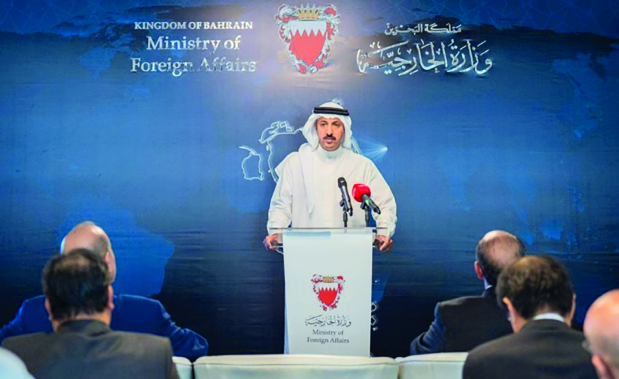
This was revealed in the ‘Bahrain’s Partnership and Contributions Report’ released yesterday by the Foreign Affairs Ministry during a ceremony held at its head offices in Manama.
According to numbers from last year, Bahrain’s population now stands at 1.504m, of which 719,000 are Bahrainis and 785,000 expatriates.
The country has seen its population rise by almost 10pc since 2015, when the population was 1.37m, of which 648,000 were Bahraini and 722,000 were non-Bahraini.
The country’s private sector has also shown strong growth, increasing from 547,000-strong in 2015 to 610,000 in 2022, of which 113,000 were Bahraini and 497,000 were non-Bahraini.
“For decades, Bahrain has been considered a land of economic opportunities in the region, not only due to its strong legal and financial infrastructure, but also for providing universal access to jobs, healthcare, education and security,” the report noted.
“This has made many migrant workers choose Bahrain as a home and source of their household income. Today, non-Bahrainis constitute almost 50pc of Bahrain’s population.
“In the private sector alone, non-Bahraini workers constitute almost 80pc of the total number of workers.”
The kingdom has also been working hard to boost financial inclusion, especially amongst migrant workers, according to UN Development Programme senior programme officer Jehan AlMurbati.
Ms AlMurbati cited, as evidence, the increase in the numbers of retail banks, branches per capita and ATMs per capita.
The number of retail banks rose from 27 in 2015 to 29 in 2019, while branches per 100,000 increased from 12.5 to 13.7.
ATMs increased from 33 per 100,000 to 35, while the number of accounts increased from 1,636,519 to 2,108,637, or 1,421 accounts per 1,000 residents.
As a result of its financial inclusion measures, worker remittances have also continued to rise from BD890.1 million in 2015 to almost BD1.02 billion last year.
However, the 2022 remittances dropped after a high of almost BD1.03 billion in 2020.
India continued to be the top recipient of worker remittances in 2022, with BD374.9m being sent back to the South-Asian country.
Bangladesh was second, with BD148.3m, while Pakistan was third with BD129.2m. The Philippines came fourth with BD90.8m in remittances, and the US was fifth, with BD49.6m.
“Innovations in the banking and financial sector of Bahrain have also opened up opportunities for migrant workers to use more advanced digital platforms to make payments and to send money abroad,” the report added.
naman@gdnmedia.bh
&uuid=(email))