

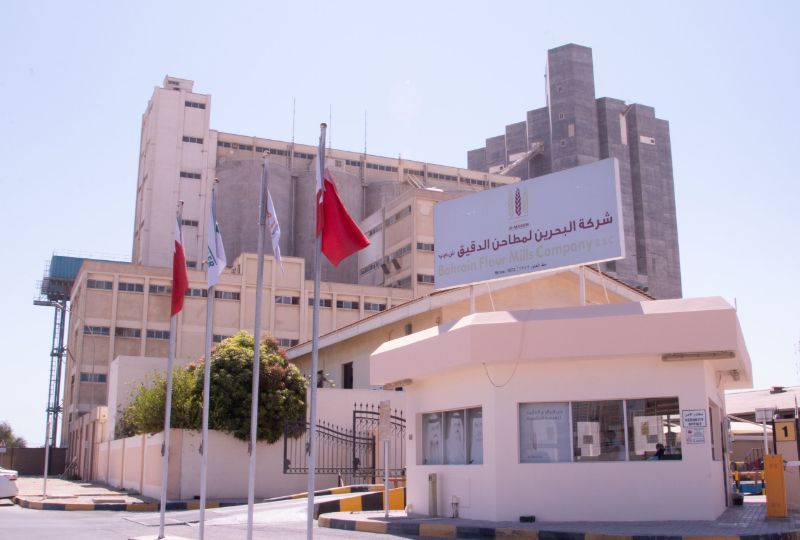
MPs have issued a strong warning to the Bahrain Flour Mills Company (BFM) to reinstate the original prices of flour and other related products distributed across the country or else face the consequences.
A group of members of Parliament, led by Strategic Thinking Bloc spokesman Khalid Bu Onk, are also threatening to quiz Industry and Commerce Minister Abdulla bin Adel Fakhro over the rise should ‘no deal’ be reached to reinstate the prices.
The company earlier announced a significant increase in the prices of most of its flour products, ranging from 35 per cent to 100pc.

File photo: MP Khalid Bu Onk
However, the company has maintained subsidised prices for accredited conventional bakeries, according to a report in our sister paper Akhbar Al Khaleej.
It affirmed that the increase was unavoidable amidst a global rise in wheat prices, which have seen a spike over the past two years due to market disruptions caused by various crises and wars, most notably the Russia-Ukraine conflict.
A meeting scheduled yesterday with senior company and government officials was put off and rescheduled for today.
In a statement issued by Parliament Speaker Ahmed Al Musallam, the decision to postpone has come out of co-operation between the legislative and executive authorities and to allow for an agreement on common visions and solutions.
Today’s meeting will spotlight the repercussions of the price rise on citizens and traders with MPs emphasising the significance of not raising subsidised flour prices ‘subject to or not subject to oversight’.
MPs have expressed concern that the flour price rise could prompt an increase in the prices of many food items, including pastries, sweets, pies and livestock feed, adding to the burden of citizens.
“The price hike will just throw the market into an irreconcilable limbo,” Mr Bu Onk told the GDN yesterday.
“The effect it will have on day-to-day food essentials that have flour in it, besides meals ordered from restaurants and cafés, will be enormous,” he added.
“For example, if shawarma is now sold at an average 500 fils per piece, it will jump to 600 fils and people just don’t buy one, they buy several for the family.
“General prices in Bahrain have already witnessed a rise since the outbreak of the Covid-19 pandemic and instead of protecting them from further increases, here comes this unwarranted decision.”
Mr Bu Onk, a former municipal councillor, claimed a similar flour rise was introduced in 1999.
However, he added, it got cancelled days later as people boycotted flour products.
“We don’t want the company to face a similar fate.
“However, if they do not back down, then under parliamentary powers, there is no other option but to quiz the Industry and Commerce Minister since it is his responsibility to maintain the prices.”
The government’s sovereign wealth fund, Bahrain Mumtalakat Holding Company, owns 60 per cent of the Bahrain Flour Mill Company.
Meanwhile, MP Hamad Al Doy said the government has presented a subsidy of BD10 million this year to the company from the national state budget.
“The company last year made BD2.5m profits and it is getting BD10m in subsidy from the government, so why is it keen on increasing prices, if its finances are all well,” he questioned.
“The government has done an excellent job in maintaining prices and here comes the biggest catastrophe – the basic ingredient of basically everything.”
MP Mohammed Al Rifai said such vital decisions shouldn’t be taken without Parliament’s consent.
“The same disregard to Parliament happened with increases to fuel prices twice, increases to electricity and water bills, and lifting meat subsidies,” he said.
“This needs to stop.
“Even if Parliament is in recess, it is still in power, through the Speaker and active committees.”
Company board chairman Mohammed Al Saie said earlier that although the recent price increase may seem significant, it is still one of the lowest in the region and remains heavily subsidised.
BFM completed a major expansion of its production capacity in March, which was necessary to ensure the company’s ability to continue catering for the country’s future flour needs.
However, the increased capacity has also led to higher consumption costs, which are now impacting the company’s operational performance.
The GDN earlier reported that BFM is planning to build a new factory in a new location with a multi-million dinar investment.
Established in 1970, also known as Al Matahin, the firm currently operates a mill in Mina Salman with a capacity of around 520 tonnes of flour per day.
Mr Al Saie had explained that the new mill was a national food security initiative and would be built to meet the kingdom’s flour needs for the next 30-40 years.
mohammed@gdnmedia.bh
&uuid=(email))