

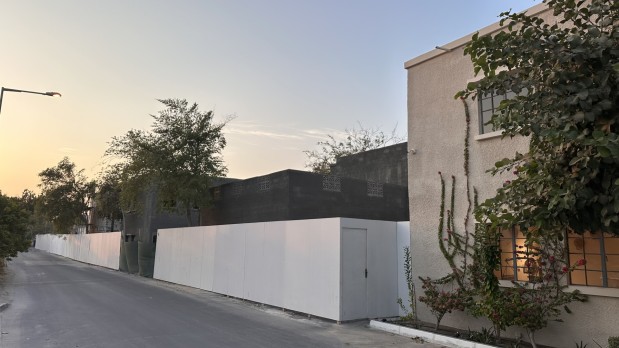
Abandoned homes in a Bahraini village nearby a World Heritage Site are set to become a hub for traditional artisanship as part of an ambitious cultural revival project.
The cluster of 28 derelict properties is being transformed near Bahrain Fort into a new centre dedicated to preserving and promoting traditional Bahraini handicrafts.
This initiative, revealed by Bahrain Authority for Culture and Antiquities (Baca) president Shaikh Khalifa bin Ahmed Al Khalifa, aims to breathe new life into the neglected area.
“The new initiative aims to transform these homes into a vibrant hub for traditional handicrafts, providing a space where artisans can work, exhibit and sell their products,” he said.
“The initiative is being spearheaded by the Bahraini government, with support from cultural organisations and community stakeholders who recognise the value of preserving both the tangible and intangible cultural heritage of Bahrain,” he added.
“The renovation process focuses on preserving the original architecture while making the spaces suitable for modern usage.
“The houses are being restored using traditional building materials and techniques to maintain their authenticity, ensuring the village retains its historical charm.”
The project, which blends heritage conservation with community development, is set to open a new chapter in the history of the area, turning decayed structures into vibrant cultural spaces, he stressed, providing a platform for local artisans to showcase and sustain their crafts.
Bahrain Fort, or Qal’at Al Bahrain, is a Unesco World Heritage site that has been a landmark of Bahraini history for centuries.
The fort has witnessed various phases of Bahrain’s history, from the Dilmun civilisation to the Islamic era, and has been an important archaeological and cultural site.
Housing units built in Bahrain Fort Village in the 1960s are now being revamped while retaining their authentic traditional features.
As a taste for things to come, a unit has been specially set up for a Bahraini basket weaver whose kiosk near the fort was closed and dismantled by the authorities because he did not possess a valid licence to sell his wares.
However, he was offered the first project property and others will follow in the near future. The exact cost of the completed ‘village’ has not been disclosed.
Twenty-eight families residing in the village were moved out in 2014 after the fort was granted a United Nations World Heritage Site status in 2006. Six homeowners, who refused to budge, were evicted by court order shortly before the outbreak of Covid-19 in 2019.
The families moved to new housing units in a new residential area overlooking the fort.
The GDN earlier reported that the government had initially planned to relocate the families in 2006, but land allotted to the Housing Ministry for the purpose was deemed off-limits after builders discovered the ruins of a 400-year-old palace during preliminary excavations.
More than 250 people lived in the village, just metres away from the fort, when it was granted world heritage recognition.
Shaikh Khalifa said the project will house workshops and studios for artisans specialising in traditional crafts such as pottery, weaving and jewellery crafting. “These spaces will allow artisans to demonstrate their skills, engage with visitors, and pass on their knowledge to younger generations,” he said.
“The village will also feature a marketplace where traditional products can be bought, providing an economic opportunity for local craftsmen. This marketplace aims to attract tourists and locals alike, offering unique handmade goods that celebrate Bahraini heritage.”
He added that the centre will host cultural events, exhibitions and hands-on workshops, encouraging public participation and interaction.
“These activities are intended to raise awareness about the importance of handicrafts in Bahraini culture and provide a lively experience for visitors,” he explained.
Shaikh Khalifa said traditional crafts are an integral part of Bahrain’s cultural identity, representing skills and knowledge passed down through generations.
“The initiative ensures that these crafts are not only preserved but also revitalised, adapting to modern contexts while retaining their traditional essence,” he said.
“The project offers local artisans a platform to reach a broader audience, providing economic benefits through the sale of handcrafted goods. It also encourages the growth of small businesses revolving around traditional crafts, contributing to the local economy.”
He explained that by establishing the handicraft hub near Bahrain Fort, the project enhances the overall cultural appeal of the area, offering visitors a more holistic experience.
“Tourists visiting the fort will now have the opportunity to explore the nearby village, learn about traditional crafts and engage in hands-on activities.”
Shaikh Khalifa pointed out that public demands for a public park in the area could also still be met but a jetty suggestion was difficult with no coastal government plots available.
mohammed@gdnmedia.bh
&uuid=(email))