

Private hospitals in Bahrain have surplus beds with an average occupancy rate of only 35 per cent, as opposed to government hospitals, where immediate vacancy is reportedly difficult to find, a top medic has said.
American Mission Hospital (AMH) corporate chief executive and chief medical officer Dr George Cheriyan explained that the difference was due to a ‘disconnect between the public and private healthcare sectors’.
He suggested that the government could come up with strategies to effectively manage the surplus resources.
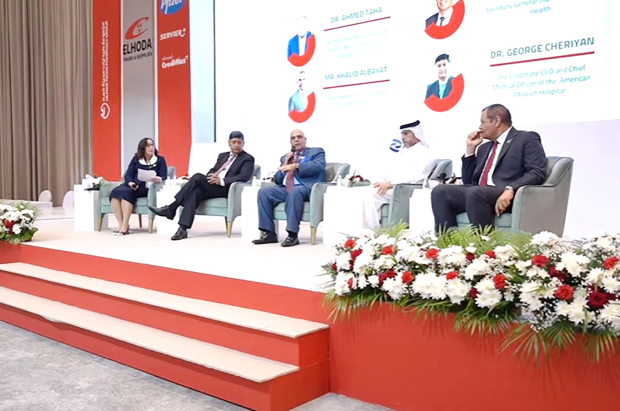
Dr Cheriyan was taking part in a panel discussion on ‘Healthcare Sustainability and Empowerment’, along with Egypt’s General Authority for Healthcare Accreditation and Regulation chairman Dr Ahmed Taha, Tamkeen chief growth officer Khalid Albayat, and Supreme Council for Health secretary-general Dr Ebrahim Al Nawakhda.
“Bahrain’s two healthcare systems, the public and the private, are parallel to each other,” said Dr Cheriyan.
“They may be on the same path, offer the same services, have the same aim, but they will never actually meet.
“There is an overabundance of hospital beds in the private sector, but a vast majority of people prefer to go to the government hospitals instead, meaning private hospitals tend to have an occupancy rate of only 35pc on average.
“This creates sustainability issues and the government needs to be mindful of how to manage surplus resources.”
When asked about the possible reasons for the disconnect, Dr Al Nawakhda said a lack of health coverage programmes for expats play a big role in creating the gap.
“Changing the financial system and the way insurance claims are processed will not solve the problem,” said Dr Al Nawakhda.
“Bahrain goes out of its way to ensure that there is no difference between citizens and expats and the level of healthcare they receive.
“But there are a limited number of programmes for expats that allow them to use services at private hospitals.
“In fact, many blue-collar workers do not even get cover, which is why they flock towards public hospitals.”
Other issues that Dr Al Nawakhda identified included an ageing population and the rise of costs due to external factors.
He assured attendees that the Supreme Council for Health is working tirelessly behind the scenes to ensure healthcare is accessible to everyone.
“We are working on initiatives and plans that will ensure healthcare is easy to access in the future for expats and citizens,” Dr Al Nawakhda said.
“We have built a robust system based on international models that the rest of the GCC is following.
“Change is happening in the right direction, and I am confident that the healthcare system will continuously improve and develop.”
Mr Albayat, meanwhile, reiterated Tamkeen’s desire to help the country’s private healthcare system grow from an employment point of view, and also ensured that Bahrainis will remain the first choice.
“We have released several medical programmes for Bahrainis to be able to grow and progress their careers,” said Mr Albayat.
“This includes fellowship programmes, nursing programmes and more. More than 400 Bahrainis have been integrated into the sector thanks to these initiatives.
“Additionally, we have grants and bundles for hospitals across the country. Recently, we have also extended these grants to hospitals that wish to digitalise. Tamkeen will continue its commitment to create high-quality jobs, provide wage-increment and help the healthcare sector grow further, which is a priority for the government.”
&uuid=(email))