

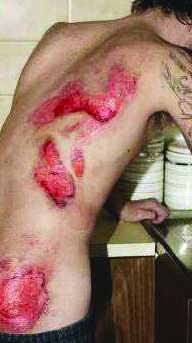
Even the most common of injuries can have serious implications to the victim.
Trauma to the skin and soft tissue resulting from friction with a road surface is often referred to as ‘road rash’.
The degree of injury ultimately depends on the bodies in motion, the speed of the skin when it hits the road, the texture and condition of the surface, and the sliding distance, according to The Bulletin of the American College of Surgeons.
For example, first-degree road rash injuries are considered minor injuries but second-degree and third-degree road rash injuries are serious injuries that require prompt medical attention.
These primary injuries can also lead to secondary health complications. They include:
Infection: The breadth and depth of the injuries from road rash, which often become embedded with dirt, can introduce dangerous bacteria into the wound, leading to life-threatening infection.
Tissue and nerve damage: Deep and severe cases of road rash can damage nerve cells and muscle tissue.
Disfiguring scars and traumatic tattoos: A wide abrasion typically will leave a scar. If doctors cannot remove dirt and other material from the wound, it may cause permanent discoloration of the healed skin, known as a traumatic tattoo.
One of the major issues in Bahrain is that few motorcycle delivery riders wear protective leather clothing.
Top stories for today:
RECORD INVESTMENT: Bahrain EDB secured record investments worth BD680 million last year
Lack of training and safety gear ‘putting riders at risk’
Hidden dangers of motorcycle accidents
&uuid=(email))