

The public hospital system recorded more than 1.2 million visits in 2024, including more than 400,000 emergency cases and 509,000 outpatient consultations.
Bahrainis accounted for 82 per cent of the visits, Government Hospitals chief executive Dr Mariam Al Jalahma said.
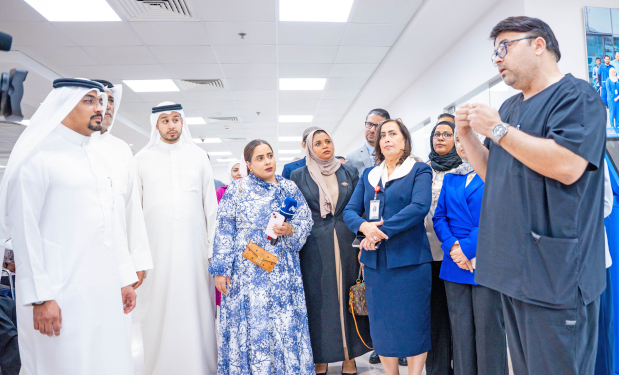
The details were revealed yesterday when Dr Al Jalahma conducted a media tour with local newspaper editors to highlight key achievements made by government hospitals in 2024.
The visit aimed to showcase service improvements, capacity upgrades, and the impact of ongoing reform efforts across Bahrain’s public healthcare sector.
Dr Al Jalahma said government hospitals have completed 80pc of their self-management reform plan, a major step towards improving operational autonomy and service delivery. She emphasised the commitment to expanding service quality and efficiency through strategic planning that prioritises integrated, patient-centred care.
Salmaniya Medical Complex (SMC), the kingdom’s largest hospital, recorded an average occupancy rate of 80pc, with intensive care units reaching 90pc, a clear indicator of demand and throughput, she pointed out.
“To meet rising healthcare needs, 56 additional beds were introduced, and specialised units launched, including a short-stay facility for women with sickle cell anaemia and a psychiatric emergency wing, further supporting efforts to provide more tailored and responsive care,” she said.
“The hospital performed more than 22,000 surgeries, 7,600 births, and more than 20m lab tests. Radiology services conducted 316,000 scans, reflecting the breadth of clinical operations.
“Training and development continues to advance, with 46 doctors sent for fellowship programmes, 304 doctors enrolled in board qualifications, and more than 1,500 nurses trained across various specialties, enhancing the capacity of national medical staff,” Dr Al Jalahma added.
In support of government digital transformation goals, 23 new e-services were launched, including sick leave requests, appointment changes, and medical report applications. Remote clinics were also introduced in correctional facilities.
“Institutional performance was reinforced through 145 development projects and the monitoring of 47 key performance indicators,” Dr Al Jalahma said. “Enhanced risk management and clinical audit systems were introduced alongside a strategic planning division and a digital dashboard to support governance and accountability.”
Dr Al Jalahma noted several major recognitions earned in 2024 – SMC was named an official exam centre for the Royal College of Physicians (UK), earned Australian accreditation, ISO certification for its laboratory, national platinum-level accreditation from Bahrain’s health regulator, and institutional approval from the Saudi Commission for Health Specialties. The hospital also won three regional awards for patient safety.
&uuid=(email))