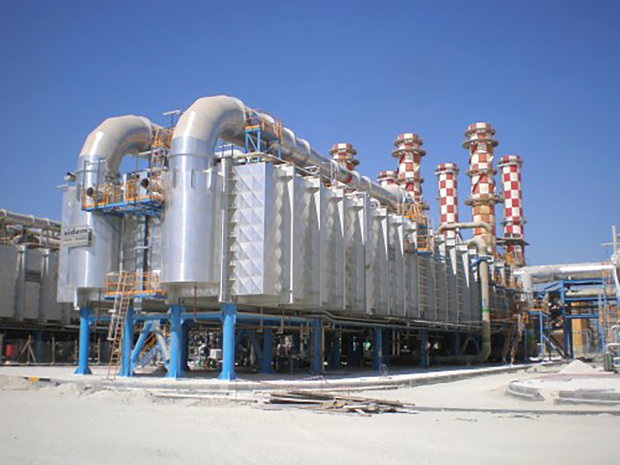
Bahrain should utilise renewable energy to power its desalination plants, diversify water sources and implement dynamic pricing to better manage its water resources, according to a recently published study.
The research paper, titled ‘Analytical Study to Achieve Water Resource Sustainability in Bahrain: Strategic Challenges and Opportunities’, was authored by Applied Science University PhD researcher Salem Alrowaili and published in the scholarly periodic International Journal of Public Policy in Egypt.
“This study analyses the most prominent challenges facing water resource management in Bahrain, which suffers from an increasing water crisis due to the scarcity of natural resources and heavy reliance on seawater desalination to secure fresh water,” Mr Alrowaili noted in the abstract.
“It reviewed the impact of climate change and rapid population growth on the increasing water demand, which places significant pressure on the sustainability of this vital resource.”
The study is based on previous literature and field data on water consumption patterns and desalination technology efficiency, in addition to examining the role of treated water in reducing the demand for fresh water. It identified increasing reliance on desalination, rising population demand and limited natural resources as the primary threats to water security in Bahrain.
Desalinated seawater currently supplies more than 60 per cent of the kingdom’s total water needs. While it has played a critical role in ensuring water availability, the study describes the process as costly and unsustainable. It highlights the heavy dependence on fossil fuels, particularly natural gas, which raises operational costs and contributes to higher carbon emissions and environmental degradation.
The report states that “desalination costs range from $1.5 (BD0.564) to $2.5 per cubic metre using traditional methods, compared to $0.2–$0.5 for treated wastewater”.
The environmental cost is also significant, with desalination plants releasing large volumes of heated and saline wastewater into the sea, impacting marine ecosystems and increasing water salinity.
Over the last 19 years, the average daily water consumption in Bahrain has increased from 100.41 litres in 2006 to 163.75 litres per person in 2023, according to open source data published by the Electricity and Water Authority (EWA).
The production of distilled potable water has also increased to match this demand, standing at 60,991.55 million gallons in 2023, while groundwater production has dropped from 10,568.62 in 2006 to zero in 2020 and onwards.
The study identifies treated wastewater as a mostly untapped opportunity.
The volume of treated wastewater in Bahrain rose from 169,000 cubic metres per day in 2005 to more than 471,000 cubic metres by 2022. Much of it is already being used in agriculture and landscaping, but the study argues its wider adoption could help alleviate pressure on freshwater sources.
“Treated wastewater represents an important solution to ease pressure on freshwater, especially in agricultural and industrial sectors,” the study says, though it acknowledges public hesitance and infrastructure challenges.
It recommends upgrading treatment systems, increasing public awareness and encouraging its use in non-potable applications.
According to the EWA, 19pc of Bahrain’s population remains unconnected to the unified wastewater collection network, and has to instead rely on septic tanks and other independent wastewater treatment options.
The study calls for an overhaul of Bahrain’s water management strategy.
It proposes a multi-pronged framework, including the adoption of desalination technologies powered by solar and other renewables, expansion of treated wastewater networks and establishment of a national water co-ordination council.
It also urges the implementation of dynamic pricing systems to encourage conservation and investment in rainwater harvesting as a supplementary source.
These pricing mechanisms adjust the cost of water based on real-time or near real-time conditions, such as time of day, water scarcity or demand levels, encouraging efficient use and resource management.
Bahrain’s situation is not unique, and the study draws on international examples such as Singapore’s NEWater programme and Saudi Arabia’s solar desalination projects.
The report also highlights the need for closer co-operation among GCC countries to exchange knowledge and jointly invest in water technologies, noting that ‘enhancing co-operation among GCC countries to exchange technologies and best practices’ is key to regional resilience.
naman@gdnmedia.bh