

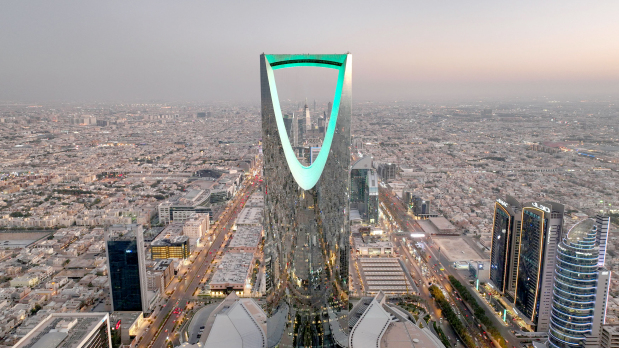
THE World Bank has upgraded its 2025 economic growth forecast for Saudi Arabia to 3.8 per cent, an increase from its previous estimate of 3.2pc, citing renewed momentum in both oil and non-oil sectors.
In its latest Gulf Economic Update, the bank noted that while softer oil prices have widened the kingdom’s fiscal deficit and raised its debt-to-GDP ratio toward 32pc, Saudi Arabia benefits from low overall public debt.
“Economic momentum is strengthening across oil and non-oil sectors,” the World Bank said, adding that “ongoing Vision 2030 reforms and liberalized foreign ownership rules should support investment inflows.”
It noted that historical data showed that while all GCC countries are pushing forward with diversification plans, those that are “demonstrating the benefits of early and sustained diversification are still reaping the benefits.”
The recent upward trends in Saudi Arabia and Kuwait are promising, according to the Group, indicating that policy reforms are starting to take effect. “Continued monitoring of non-oil GDP shares will be essential to assess the success of these transformative reforms,” it added.
The positive outlook for Saudi Arabia is part of a broader regional upswing. Economic growth across the GCC is accelerating, driven by structural reforms and rapid digital transformation.
The UAE led with a forecast of 4.8pc growth in 2025.
Titled ‘The Gulf’s Digital Transformation: A Powerful Engine for Economic Diversification,’ the report assessed a decade of efforts to reduce oil dependence. It found that while hydrocarbons remain central to fiscal planning, diversification is advancing, with the digital sector making particularly strong gains
The World Bank emphasised that reducing reliance on hydrocarbon revenues is a key challenge as tax revenue remains low.
“In a period marked by global uncertainty and ongoing geopolitical tensions, the Gulf Cooperation Council countries are accelerating national reform programmes to transition towards more diversified and sustainable economies,” the report added.
The GCC is emerging as a digital frontrunner, with 5G coverage exceeding 90pc and major investments in data centres and high-performance computing. Data plans and devices are highly affordable, supporting broad digital inclusion.
“Significant investments in data centres and high-performance computing systems, especially in Saudi Arabia and UAE, underpin the region’s digital economy and AI readiness,” the World Bank remarked.
The two countries were highlighted as regional and global leaders in artificial intelligence readiness, supported by vibrant startup ecosystems and strong government commitment to integrating generative AI.
“The number of AI startups and venture funding is growing rapidly, and generative AI applications are increasingly adopted by Governments,” the report said. “Investments in data centres, cloud computing and the Graphic Processing Units – microchips indispensable to AI – are on the rise in both countries. Investments in tertiary education for AI specialised skills are on the rise.”
It noted that e-government services “are highly advanced” in Saudi Arabia and UAE who are among the top ranked in the UN E-Government Development Index, but still uneven across the region.
The World Bank urged other GCC countries to implement a comprehensive set of policies to help maximize AI’s productivity gains, mitigate labour market disruptions and ensure environmental sustainability. It also noted the nations’ readiness and position to harness the benefits of digital transformation and AI stressing that it must proactively address labor and environmental challenges.
Safaa El Tayeb El Kogali, World Bank Division director for the GCC said that “diversification and digital transformation are no longer optional. They are essential for long-term stability and prosperity.” She noted the region’s “remarkable digital leap” but emphasised the need to proactively address labour market and environmental challenges.
&uuid=(email))