

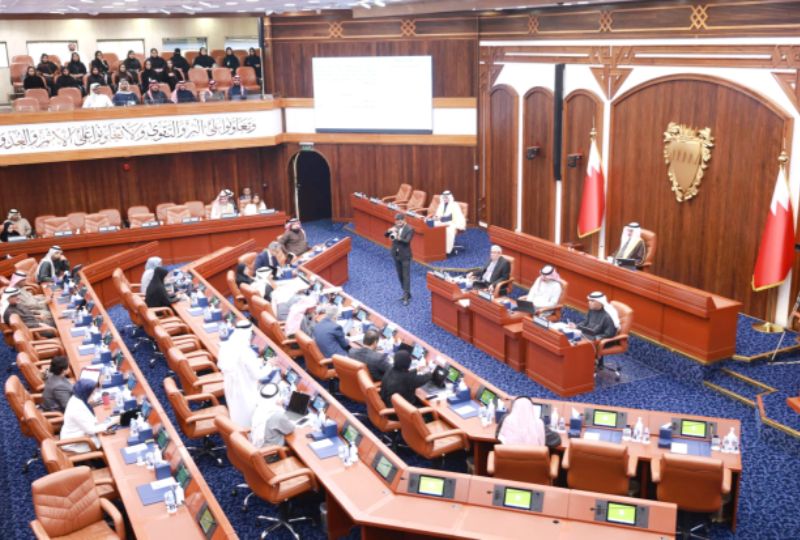
A call for a crackdown on bogus employment practices involving people with disabilities has been unanimously approved by MPs, who warned that some employers are exploiting the law by registering workers ‘on paper only’ without providing ‘real’ jobs, productivity or workplace integration.
The proposal has been referred to the Cabinet for review.
The motion was submitted by five MPs led by MP Mohammed Al Olaiwi, who was absent from the session due to the death of his sister. His position and remarks were formally presented to the chamber during the debate yesterday.
Mr Al Olaiwi stressed that the Decree Law on the Care, Rehabilitation and Employment of People with Disabilities was enacted to ensure genuine empowerment – not symbolic compliance.
“The objective of the law is empowerment, not formality,” he said. “Bogus employment empties the legislation of its substance and turns a right into a statistic.”
He praised the strong and consistent support extended to people with disabilities by His Majesty King Hamad, the Cabinet chaired by His Royal Highness Prince Salman bin Hamad Al Khalifa, Crown Prince and Prime Minister, and Parliament Speaker Ahmed Al Musallam, noting that this commitment has translated into initiatives such as specialised exhibitions, inclusive activities and parliamentary simulation exercises involving people with disabilities.
However, Mr Al Olaiwi claimed that serious structural gaps remain – most notably the lack of accurate, transparent data.
“There are no official figures detailing the number of job-seekers with disabilities or real employment outcomes over the past three years,” he said. “There is also no unified national database that is regularly updated and aligned with labour market needs.”
Citing feedback from disability centres and civil society organisations, he claimed that people with disabilities continue to face multiple barriers, including ‘sham hiring arrangements’, poor workplace accessibility, weak alignment between qualifications and market demand, limited specialised pre-employment training, and lingering misconceptions among some employers about their capabilities.
“These practices harm the individual and undermine the credibility of national employment policies,” he alleged.
The proposal incorporates recommendations put forward by people with disabilities and specialised associations, including the creation of a unified national employment database, tighter legal oversight and inspections to detect fictitious employment and linking government incentives and support to actual productivity and genuine workplace inclusion.
It also calls for obliging employers to meet universal accessibility standards, expanding tailored vocational training programmes based on different types of disabilities, providing meaningful incentives for serious employers, and formally involving disability organisations in shaping policies and regulations.
Mr Al Olaiwi revealed that more than 15,000 people were receiving monthly disability allowances as of December 2025, while a Labour Ministry statement showed that 766 people with disabilities had been employed over the past three years.
“Despite these figures, associations representing people with disabilities confirm that bogus employment exists,” he claimed. “This requires firm intervention.”
Second Deputy Speaker Ahmed Qarata, voiced strong support for the proposal and its objectives. “This Parliament is clear: the dignity of people with disabilities must be protected,” Mr Qarata said. “Employment must be real, productive and empowering – not a paper exercise to bypass the law.”
He said the unanimous vote reflected Parliament’s determination to ensure accountability and urged the government to act decisively.
“The issue is not about numbers,” Mr Qarata added, “It’s about real jobs, real inclusion and real accountability.”
mohammed@gdnmedia.bh
&uuid=(email))