

Bahrain is set to host the world’s first International Date Observatory, placing the kingdom in the global spotlight within the agricultural and food security sectors.
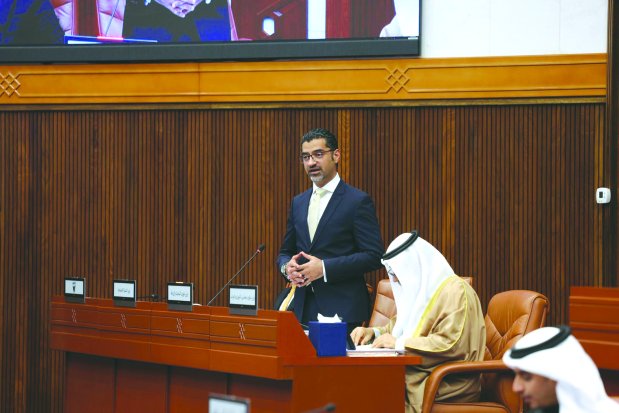
The Shura Council yesterday approved a draft law ratifying the agreement between Bahrain and the International Date Council to establish the observatory’s permanent headquarters in the kingdom.
Municipalities Affairs and Agriculture Minister Wael Al Mubarak explained that the observatory would serve as a global hub for collecting, analysing and publishing data related to date production and markets.
“All data will be collected on the ground through Bahrain, giving the kingdom global exposure,” he said.
“The observatory is the first of its kind in the world. It’s governmental, and once fully operational, the private sector will be invited to partner with us.
“Bahrain has the resources and expertise to develop, enhance and grow the date and palm sector.”
Mr Al Mubarak highlighted Bahrain’s broader agricultural achievements, noting that environmental and planting targets had been exceeded.
“Mangrove planting targets were achieved eight years ahead of schedule, with 1.6 million mangroves planted, in addition to more than 600,000 trees including palm trees in open spaces,” he said.
The minister added that the government continued to support farmers through land allocation and other initiatives.
“Around 140,000 agricultural plots were distributed to farmers last year, and we are working to provide more,” he added.
“Bahraini farmers are innovative and active, and we will continue to support them as directed by the leadership.”
Foreign affairs, defence and national security committee rapporteur Nancy Khadoury said hosting the observatory would enhance Bahrain’s standing as a regional and international centre for agricultural research and specialised statistical data.
“The observatory will play a vital role in supporting food security and sustainable agricultural development by serving as a trusted international reference for data and information related to the date sector,” she said.
Ms Khadoury stressed that the agreement would not impose any direct financial obligations on Bahrain, as all establishment and operational costs – including administrative, technical and logistical expenses – would be borne by the International Date Council.
During the debate, public utilities and environment affairs committee chairman Dr Mohammed Ali Hassan said the project was strategically important for Bahrain, given the kingdom’s long-standing commitment to palm cultivation and agricultural development.
“Bahrain has played a major role in developing this industry and protecting palm trees from pests,” he said.
“Hosting the observatory will have significant economic benefits and contribute to strengthening food resources.”
Meanwhile, services committee vice-chairman Talal Al Mannai proposed establishing a national joint-stock company involving the government and private sector to produce and market dates.
“Bahrain has been known for the quality of its dates for generations, and this would help create a national agricultural industry for this product,” he said.
Dr Ahmed Al Arrayedh highlighted the fact that thousands of Bahrainis grow palm trees at home, suggesting mechanisms to collect, market or utilise household date production in various industries.
The Shura Council approved the draft law and referred it to His Majesty King Hamad for ratification.
&uuid=(email))