

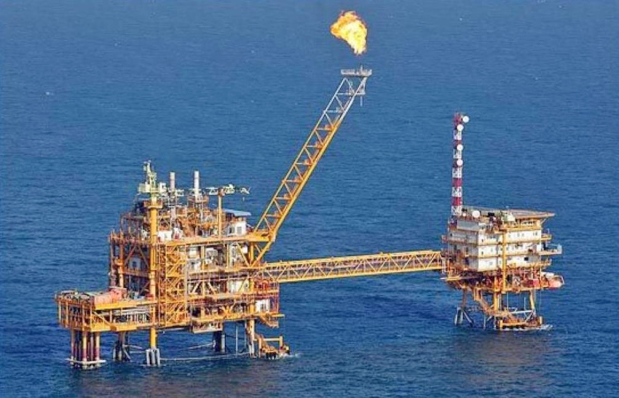
Investors in the region are bracing for more volatility, with mounting friction between Washington and Tehran raising fears of potential disruptions to oil flows through the Strait of Hormuz, a critical chokepoint for global energy trade.
Brent crude prices rose on Friday and settled at $71.76 a barrel, up 10 cents, 0.14 per cent. US West Texas Intermediate crude finished at $66.39 a barrel.
“We’re caught in between anticipation what’s going to happen with the US and Iran and denial an attack’s going to happen,” said Phil Flynn, senior analyst with Price Futures Group.
Over the week, Brent and WTI were both up more than 5pc.
Trump said this week that “bad things” would happen to Iran if there was not a deal to end the Islamic Republic’s development of nuclear weapons.
Iran’s foreign minister said on Friday he expected to have a draft counterproposal ready within days following nuclear talks this week as Trump said he was considering limited military strikes.
Iran, a major oil producer, lies opposite the oil-rich Arabian Peninsula across the Strait of Hormuz, through which about 20pc of global oil supply passes. Conflict in the area could limit oil entering the global market and push up prices.
“We’re waiting for a potential binary outcome, if we should take Trump’s words at face value,” said Ole Hansen, head of commodity strategy at Saxo Bank. “The market is nervous, it’s going to be a wait-and-see day.”
Traders and investors ramped up purchases of call options on Brent crude in recent days, betting on higher prices, Saxo Bank analysis shows.
Also supporting oil were reports of falling crude stocks and limited exports in the world’s biggest oil-producing and exporting countries.
Markets were also considering the impact of ample supply, with talks of Opec+ leaning towards a resumption in oil output increases from April.
The oil surplus that was evident in the second half of 2025 continued in January and is likely to persist, JP Morgan analysts Natasha Kaneva and Lyuba Savinova said in a note.
“Our balances continue to project sizeable surpluses later this year,” they said, adding that output cuts of two million barrels per day would be needed to prevent excess inventory builds in 2027.
Oil is spiking on the latest bout of tensions, and Goldman Sachs’s top commodities researcher said more volatility may be coming.
Daan Struyven, the bank’s co-head of global commodities research, told CNBC that he thinks the market sees tensions escalating further between the US and Iran, a likely catalyst for price hikes and longer-term volatility.
“Both prediction markets and oil markets are pricing some near-term moderate escalation as the base case,” he said.
Struyven also highlighted the Strait of Hormuz’s importance for international oil flows, adding that Goldman’s base case assumes shipping through the strait will continue and that his team is not anticipating any long-term disruptions.
If tensions were to curtail flows by 1m barrels per day for an entire year, Struyven predicted that would justify an $8 per barrel price increase. However, he also noted that fear among traders could push prices even higher, adding to the volatility in the market.
“Markets are continuously reassessing, not only the base case, but especially the probability of this tail risk of large oil disruptions in the Middle East,” he said.
&uuid=(email))