

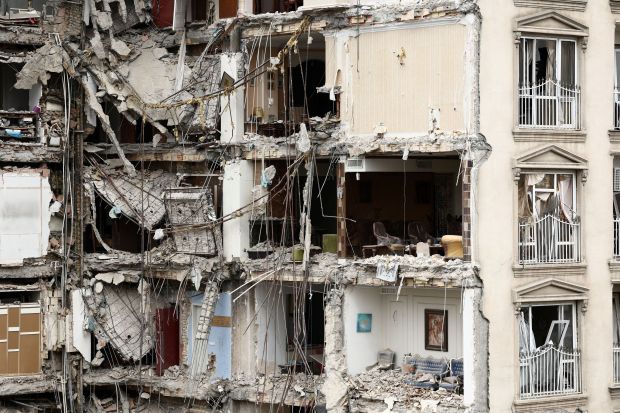
US President Donald Trump said he has postponed planned military strikes on Iranian power facilities for five days, signalling a potential opening for diplomacy just hours before a deadline that had raised fears of further escalation in a conflict now in its fourth week.
Trump had earlier warned Iran to reopen the Strait of Hormuz by Sunday, after its closure following US-Israeli strikes on Tehran on February 28. He cautioned that failure to comply could lead to attacks on Iran’s energy infrastructure.
In a social media post, Trump said Washington and Tehran had begun “new and constructive” talks over the past two days aimed at reaching a comprehensive agreement to halt the fighting.
However, Iran denied yesterday that it had engaged in negotiations with the US.
Axios reported that senior officials from Türkiye, Egypt and Pakistan have held separate meetings with US envoy Steve Witkoff and Iranian Foreign Minister Abbas Araqchi as part of mediation efforts.
A US official, speaking to Reuters on condition of anonymity, said discussions are focused on ending the war and resolving outstanding disputes.
Iran’s semi-official Mehr News Agency reported that Tehran is considering “de-escalation initiatives” and may be open to direct talks with Washington.
The White House has not commented on the substance, participants, or venue of the negotiations.
A European official said that while there had been no direct negotiations between the two nations, Egypt, Pakistan and some regional states were relaying messages. A Pakistani official and a second source told Reuters that direct talks on ending the war could be held in Islamabad as soon as this week.
Trump’s announcement sent share prices higher and oil prices sharply lower to below $100 a barrel, a sudden reversal to a market swoon caused by his weekend threats and Iran’s vows to respond.
In Memphis, Trump said Washington had been negotiating with Iran “for a long time, and this time they mean business,” adding: “I think it could very well end up being a good deal for everybody.”
He did not identify the Iranian official in touch with Witkoff and Kushner, but said: “We’re dealing with the man who I believe is the most respected and the leader.”
An Israeli official and two other sources familiar with the matter said the interlocutor on the Iranian side was Iran’s powerful parliament speaker Mohammad Baqer Qalibaf.
However, Qalibaf also claimed on X that there had been no such talks with the United States, and ridiculed the suggestion as an attempt to rig financial markets.
“No negotiations have been held with the US, and fake news is used to manipulate the financial and oil markets and escape the quagmire in which the US and Israel are trapped,” he wrote.
“Iranian people demand complete and remorseful punishment of the aggressors. All Iranian officials stand firmly behind their supreme leader and people until this goal is achieved.”
Iran’s elite Revolutionary Guards said they were launching fresh attacks on US targets, and described Trump’s words as “psychological operations” that were “worn out” and having no impact on Tehran’s fight.
Israeli Prime Minister Benjamin Netanyahu said in a video statement that he spoke with Trump yesterday and that Israel would press on with attacks in Lebanon and Iran.
It said that Araqchi reviewed developments related to the Strait of Hormuz with his Omani counterpart and agreed to continue consultations between the two countries.
&uuid=(email))