

Thousands of expatriates continue to rely heavily on Bahrain’s public healthcare system each year, according to new figures released by the Health Ministry.
Health Minister Dr Jalila Al Sayyed revealed that more than 276,000 non-Bahraini visits were recorded at government hospital clinics and emergency rooms between 2023 and October 2025, with more than 47,000 admissions registered during the same period.
The data also shows that expatriates made 67,000 visits to primary healthcare centres in three years, while tens of thousands were granted fee exemptions annually on legal and humanitarian grounds.
Despite the exemptions, the government collected more than BD4.28 million in health service fees from non-Bahraini patients during the period under review.
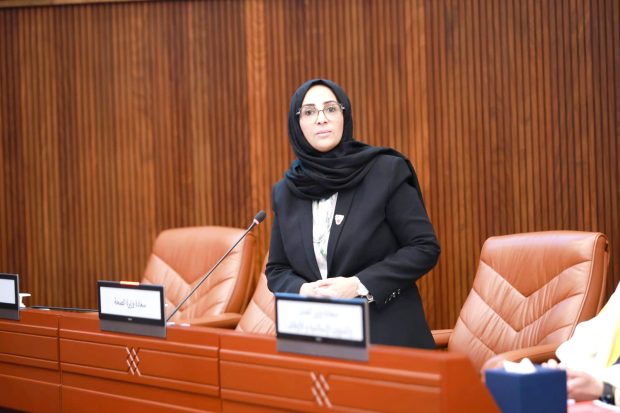
Dr Al Sayyed revealed the details in a written reply to a question by legislative and legal affairs committee chairman Mahmood Fardan.
“The Health Ministry remains committed to transparency with Parliament and to ensuring that health services are delivered within a clear legal and financial structure that balances humanitarian considerations with sustainability,” Dr Al Sayyed said.
A detailed breakdown of the number of expatriates using public health services – and the revenue this generated – has been laid out in the ministry’s response.
In 2023, there were 91,363 visits by foreigners and 15,590 were admitted for treatments.
The year 2024 witnessed 93,368 visits and 15,372 admissions while in 2025 (until October), 91,503 visits by foreigners were registered and 16,143 were admitted.
Bed occupancy by non-Bahraini inpatients ranged between four to five days on average.
Revenue collected from hospitals reached BD1.245 million in 2023, BD1.371m in 2024 and BD902,353 until October 2025.
At primary healthcare centres, the number of expatriates patients has gradually declined – dropping from 27,767 in 2023 to 21,222 in 2024 and 18,039 in 2025.
Revenue collected from these visits totalled BD194,371 in 2023, BD148,554 in 2024 and BD126,276 in 2025.
The reply also revealed that tens of thousands of non-Bahrainis were exempted from fees each year.
Exemptions at government hospitals – 15,647 (2023), 13,509 (2024) and 16,795 (2025).
Exemptions at health centres: 70,633 (2023), 69,609 (2024) and 72,572 (2025). The figures represent patients who received services during the year and do not necessarily indicate new cases.
Dr Al Sayyed explained that exemptions are granted on legal and humanitarian grounds, including foreign spouses and children of Bahrainis, widows and divorcees, GCC citizens, emergency cases, inmates, individuals born and residing in Bahrain without citizenship, government employees and their families, and newborns awaiting documentation.
“These exemptions reflect Bahrain’s humanitarian commitments and social fabric, while still operating within the framework of Resolution No 2 of 2017 regulating fees for non-Bahrainis,” she said.
The minister attached the official price list for services under Article 3 of the 2017 Resolution, updated in 2019 and currently under review in line with the rollout of the national health insurance system.
Among the key charges for non-Bahrainis at health centres:
l Doctor consultation: BD7
l Dentist consultation: BD7
l Physiotherapy session: BD10
l ECG: BD5
l Ultrasound (MCH): BD7
l Nursing procedures may cost BD1 to BD6 depending on the service
l Cost of vaccinations range from BD3 to BD14
l Social services assessments are priced between BD5 and BD20
l Licensing services for controlled medicines and narcotics range between BD3 and BD100 depending on the permit type.
“As we transition into the health insurance framework, service pricing and cost recovery mechanisms are being modernised to ensure fairness, clarity and sustainability,” Dr Al Sayyed added.
The minister will appear during the Parliament session on Tuesday to further respond to any queries Mr Fardan may have.
mohammed@gdnmedia.bh
&uuid=(email))