

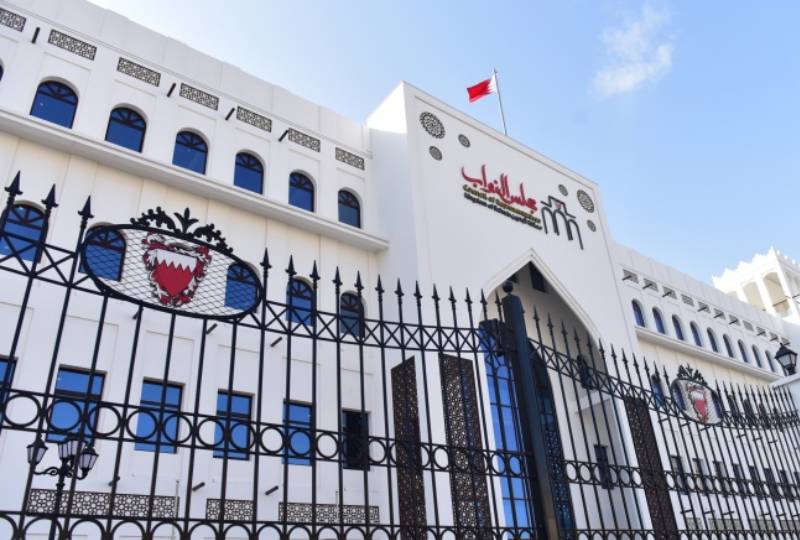
Bahrain’s legislators are seeking to modernise the allocation, use and regulation of industrial land and are proposing fines of up to BD50,000 for violations.
Parliament is set to discuss sweeping amendments to Bahrain’s 27-year-old industrial zones law during its session on Tuesday.
The urgent government-drafted bill, referred by Deputy Prime Minister Shaikh Khalid bin Abdulla Al Khalifa, amends key provisions of Decree-Law No 28 of 1999 on the establishment and regulation of industrial zones.
MPs are set to vote on referring it to Parliament’s financial and economic affairs committee for detailed review.
At the core of the draft law is a new principle: industrial land must be actively developed and operated – or it can be withdrawn without court action.
The amendments give the Industry and Commerce Ministry far wider powers to deal with unused, underused or non-compliant industrial plots.
For the first time, the ministry will be able to:
• Terminate industrial plot leases without a court ruling in defined cases of violation,
• Withdraw unused portions of plots and amend lease areas,
• Increase rent on unused or violating parts for investors who wish to retain them,
• Impose administrative fines of up to BD50,000,
• Suspend commercial registration or temporarily close facilities,
• Permanently close facilities in serious cases,
• Publicly publish violations after due process.
Legal drafters at the Legislation and Legal Opinion Commission said the objective is to end long-standing problems of land hoarding, speculative holding of industrial plots and failure to operationalise projects after allocation.
The bill introduces a strict, step-by-step timeline for investors.
Lessee obligations will now include: Obtaining building permits within set regulatory deadlines, Starting construction within a defined period, Completing construction and equipping facilities on time, Commencing actual operations within the specified timeframe, Fully utilising the plot strictly for its approved purpose.
Failure at any stage - without an excuse accepted by the Ministry - becomes grounds for lease termination.
Suspending operations for more than six months without approval also triggers action.
The draft law closes loopholes that previously allowed plots to be informally reassigned.
Investors will be prohibited from Assigning leases, Sub-leasing plots or facilities, Mortgaging any real rights over the plot without written approval from the Ministry.
New technical and environmental obligations are introduced, requiring investors to:
Appoint engineering offices to assess and report on facilities,
Carry out repairs identified in technical reports – or face Ministry intervention at their cost,
Pave plots, install signage and provide internal parking,
Follow environmental protection standards and sustainable practices,
Adhere to occupational health and safety rules,
Remove waste promptly,
Commit to all plans and studies submitted to and approved by the Ministry.
Inspectors appointed by the Ministry will be granted judicial officer status in relation to violations of the law, with powers to enter premises, request documents and verify compliance.
An appeal mechanism is also formalised: violators may appeal to the Minister within 30 days, but if no decision is issued within another 30 days, the appeal is considered rejected.
While enforcement powers are strengthened, investor protections are retained.
Industrial facilities and equipment may only be expropriated by a Cabinet decision and must be accompanied by fair compensation.
The Ministry may also exempt lessees from rent for periods if they have improved or reclaimed land, and temporary rent exemptions may be granted to encourage specific industries.
The amendments reorganise how industrial zones are categorised into main and sub-zones, linking allocations to regulatory development requirements across Bahrain’s regions and to studies submitted by investors assessing their space needs.
Officials say the reforms are designed to eliminate the phenomenon of plots allocated for projects that never move beyond paperwork, while genuine investors struggle to secure space.
By linking continued benefit of industrial land directly to operational performance, the government aims to free up idle land, improve industrial productivity and raise the overall efficiency of Bahrain’s industrial ecosystem.
“With stronger enforcement, clearer investor duties and faster administrative action, the amended law is expected to fundamentally change how industrial real estate is managed in the kingdom,” said the Cabinet.
&uuid=(email))