

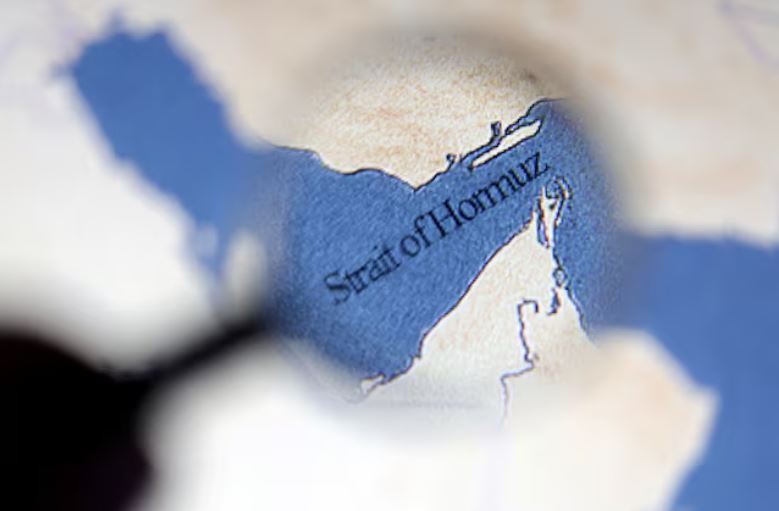
Amid conflicting reports over the fate of the Strait of Hormuz and mounting economic pressure on Tehran, which is raising growing concerns within ruling circles about a potential deterioration of already fragile internal conditions plagued by chronic economic and social crises, the central question remains: who governs Iran?
Since the clerical legion came to power after the Iranian revolution, religious figures have remained the primary force controlling the political landscape, with ultimate authority resting in the hands of the Supreme Leader. In this context, the Islamic Revolutionary Guard Corps (IRGC) continues to act as the executive arm, taking its directives from the religious establishment, particularly in the absence of a dominant internal figure capable of challenging clerical rule.
For the first time, Iran is experiencing intense and confrontational internal struggles over governance. Clerics dominate political decision-making and appear willing to sacrifice anything to maintain power. In contrast, the IRGC shows little inclination to serve as ‘cannon fodder’, a stance similarly reflected in the regular Iranian army, despite both operating under the same military hierarchy.
The clerical leadership views its rise to power as the culmination of a long historical struggle, making it less inclined to compromise under any circumstances. Meanwhile, some factions within the IRGC are seen as more open to negotiating with the United States, driven by pragmatic considerations rather than purely ideological motives.
Since the assassination of Qassim Soleimani, the IRGC has been facing a leadership vacuum in terms of figures capable of playing a significant political role. This has reinforced its continuous subordination to clerical dominance and underscored the absence of a military model capable of bringing about a radical change to the regime’s structure.
At the same time, available indicators suggest that any internal or external setback would directly impact the religious establishment, even though the burden of confrontation is often borne by military forces – especially given their repeated targeting in external operations, alongside targeting Ali Khamenei. This reinforces the perception that the IRGC functions as a shield, while real decision-making power remains in clerical hands.
Demographic composition adds further complexity. Iran includes diverse regions such as Baluchistan, Kurdistan, and Arabistan, raising the possibility of fragmentation along ethnic and geographic lines should internal crises deepen.
This reality raises fundamental questions about the nature of relationship between clerics and the military: is it one of absolute subordination or a necessary partnership? In practice, it appears to be a delicate balance – the religious establishment relies on military force to maintain its grip, while the IRGC derives its legitimacy from this political umbrella.
Within this complex landscape, several scenarios can be envisioned for Iran’s future. The regime may preserve its fragile balance between clerics and the military while enduring continued economic pressure without a full-scale internal collapse. Alternatively, tensions between power centres could escalate, particularly if public pressure intensifies, potentially leading to divisions within the regime itself.
Despite the absence of a charismatic figure, major developments could push the IRGC towards a more prominent political role, especially if it perceives the costs of confrontation as exceeding its capacity to endure.
Another scenario, still considered by some amid worsening economic conditions, is the emergence of broader internal protests and potential instability, possibly accompanied by ethnic and regional fractures.
In sum, Iran seems to be facing a highly complex equation: a religious authority determined to retain power, a strong yet constrained military institution, and growing external pressures. At the heart of this lies a deeper issue concerning the mindset guiding the regime – one that some observers believe leans towards maximalist choices to the extent of adopting costly confrontational policies. This reflects an approach willing to risk significant destruction to preserve total control.
Against this backdrop, Iran’s trajectory remains open to multiple possibilities, ranging from the continuation of a fragile equilibrium to a slide towards deeper transformations that could reshape the system entirely.
It is widely known that the number of political detainees in Iranian prisons has exceeded tens of thousands. A clear indication is Tehran’s notorious Evin Prison, originally built in the 1970s to accommodate 4,000 inmates, yet reportedly holding more than 40,000 before recent events.
The absolute silence of the Iranian people in recent times does not signify approval, but rather reflects fear of repression and executions imposed by the regime.
Today, many Iranians appear caught in uncertainty. Some had hoped that ongoing conflict might serve as a turning point to relieve the country from its rulers, yet indicators suggest that the United States has opted to preserve the current regime. This implies that the path to change remains long, as the clerical establishment continues to maintain its grip on a nation still searching for a way forward.
We should admit that the core issue facing the Iranian people is not the Strait of Hormuz or conflict with the United States, but rather the nature of governance imposed upon them.
Many of Iran’s intellectuals remain imprisoned, while millions more – more than seven million expatriates — are dispersed across global cities from San Francisco to Sydney, including academics and professionals in law, commerce, science, and economics at leading Western institutions, yet they are largely disregarded by the ruling clerical establishment.
Even if the war ends, the nature of the regime is unlikely to change. It entered the conflict as a repressive system domestically and a destabilising force regionally and internationally. It is expected to emerge unchanged after the war, regardless of leadership losses through assassinations.
The region’s challenges will not end with the conclusion of war as long as Iran’s current system remains intact. It is likely to continue exporting its crises beyond its borders. For Gulf states, this underscores the need for preparedness and a unified strategic vision to confront future risks and avoid being vulnerable again.
&uuid=(email))