

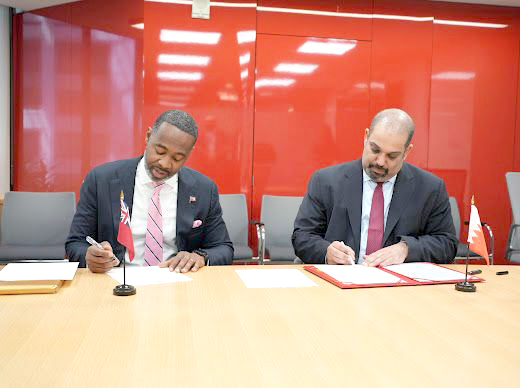
A protocol amending the agreement for avoidance of double taxation and prevention of fiscal evasion with respect to taxes on income between Bahrain and Bermuda was signed by Finance and National Economy Minister Shaikh Salman bin Khalifa Al Khalifa and Bermuda Prime Minister David Burt.
The protocol was signed on the sidelines of the Spring Meetings of the International Monetary Fund (IMF) and the World Bank Group, convened in Washington.
Shaikh Salman underscored the importance of further strengthening the longstanding bilateral relations between Bahrain and Bermuda, and advancing them towards broader horizons across various sectors, particularly in the financial and economic fields.
He affirmed Bahrain’s commitment to fostering a supportive economic environment that encourages joint investments with partner countries, enhancing the kingdom’s competitiveness and supporting the achievement of its development objectives.
During the meeting, the minister conveyed the greetings of His Royal Highness Prince Salman bin Hamad Al Khalifa, Crown Prince and Prime Minister, along with his wishes for continued growth and prosperity for Bermuda.
The minister noted that the signing of the protocol reflects the strength of the bilateral partnership and the shared commitment to its continued development. He highlighted the importance of such steps in enhancing co-ordination and co-operation, and in supporting economic and investment opportunities between the two friendly countries, in line with shared aspirations.
The protocol aims to amend the double taxation agreement, originally signed on April 22, 2010, to align it with the standards of the Inclusive Framework on Base Erosion and Profit Shifting (BEPS), including measures to prevent treaty abuse and improve mechanisms for resolving tax disputes.
Bahrain joined the Inclusive Framework on BEPS in 2018 and remains committed to implementing the necessary measures to ensure its bilateral tax agreements comply with the framework’s standards, reinforcing transparency and international co-operation in tax matters while preventing tax avoidance and evasion.
&uuid=(email))