

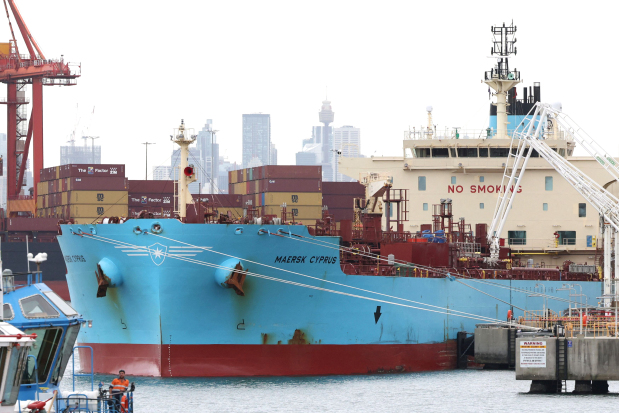
Companies from consumer goods to travel and mining warned yesterday that the US-Israeli war with Iran is driving up costs, disrupting supply chains and hurting consumer confidence, clouding financial outlooks.
The cautious tone in the earnings season highlights the pressure on businesses already hit by US tariffs, higher input costs and weak demand before the conflict erupted in late February.
While some companies stuck to their full-year forecasts, executives flagged rising transport and raw material costs, particularly linked to disruption in the Strait of Hormuz, and sharply reduced visibility. Dulux paint maker AkzoNobel said the conflict was pushing up supply costs, though higher pricing and cost savings helped it beat market expectations.
“Our raw material basket is going to go up by something like the high teens (percentage), given the disruption of the Strait of Hormuz,” CEO Greg Poux-Guillaume told Reuters, saying the full impact would be felt over the next two quarters.
AkzoNobel’s branded products used on cargo ships and Formula 1 cars give it greater scope to pass on price increases than more commodity chemical-exposed peers.
Investors and economists are watching to see whether companies can absorb the shock, or if prolonged uncertainty over energy, transport and geopolitics forces more firms to raise prices further or rein in forecasts.
Much hinges on how long the conflict lasts and whether the strait – a conduit for about a fifth of global oil and LNG flows – fully reopens, easing supply constraints.
“Sustained high energy prices would materially increase risks. First-quarter results capture only one month of Iran-related impacts, making forward guidance and management commentary especially important,” said Larry Adam, chief investment officer at Raymond James.
According to a Reuters review of company statements since the start of the war, 21 companies have withdrawn or cut financial guidance, 32 have signalled price hikes and 31 have warned of a financial hit from the conflict.
Jet fuel has doubled in price since the start of the US-Israel war with Iran as the conflict has slowed its production and transportation across the Middle East.
Several airlines, including KLM-France and Delta, have also temporarily cut some flights while others have raised ticket prices as they pass on expenses to customers.
German airline Lufthansa will cut 20,000 European short-haul flights over the summer, saying soaring fuel prices have made many journeys ‘unprofitable’ for the firm.
US carrier United Airlines flagged pressure on demand, forecasting second-quarter and full-year profits below Wall Street estimates on Tuesday.
Analysts have warned that travellers should expect further ticket price rises and more cancelled flights as the conflict continues.
&uuid=(email))