

.jpg?20260625')
As the kingdom heads into the hotter summer months, families are being urged to exercise extra caution around pools and on the beach, amid warnings from a water safety expert that tragic accidents can occur ‘in the blink of an eye’.
Parents are also being urged to learn CPR and basic rescue skills, while ensuring that one adult is always assigned as the dedicated ‘water watcher’ whenever children are near water, as immediate bystander action can make the difference between life and death before emergency services arrive.
According to the World Health Organisation, drowning is the fourth leading cause of unintentional injury death for children aged one to four globally.
In countries such as the US, it is the leading cause of accidental death among toddlers.
Royal Life Saving Bahrain (RLSB) general manager Sam Rahman told the GDN that water safety is not just the responsibility of lifeguards or parents alone – it requires constant awareness from everyone.
“Drowning can happen in as little as 20 seconds, or in the blink of an eye, particularly for young children, and it is often silent,” he said.
Mr Rahman explained that one of the most dangerous misconceptions surrounding drowning is the belief that victims will shout, splash or wave for help.
“In reality, a child struggling in the water may not be able to call out,” he said. “In many cases, adults were only a few metres away when an incident occurred. This is why constant, close supervision is critical. Seconds matter.”
With beaches and pools expected to draw large crowds during the coming months, he stressed that preparation can make all the difference.
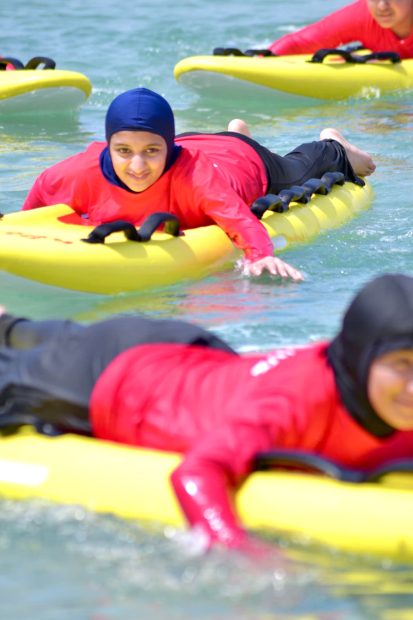
Children learning water skills
“Children should always be supervised by a responsible adult, with one designated ‘water watcher’ who is fully focused and not distracted by phones, conversations or other activities,” he said.
“Ensure children use properly fitted flotation aids if needed, stay hydrated and take regular breaks to avoid heat exhaustion.”
Mr Rahman also stressed the importance of learning CPR and first aid, establishing clear rules before children enter the water and swimming only in designated areas monitored by lifeguards.
“Lifeguards are there not only to respond to emergencies, but to prevent them from happening in the first place,” he said, adding that designated swimming areas are assessed for hazards and monitored for changing conditions. “Qualified lifeguards can identify risks early, provide safety advice, enforce safe behaviour and respond immediately if someone gets into difficulty.”
Swimming in unpatrolled areas, however, can be far more dangerous due to hidden hazards, strong currents, sudden drops in depth and slower emergency response times.
Mr Rahman also cautioned against becoming complacent around private swimming pools, noting that villas with pools can create a false sense of security. “Many serious incidents happen in private settings because families believe they are in a safe environment,” he explained.
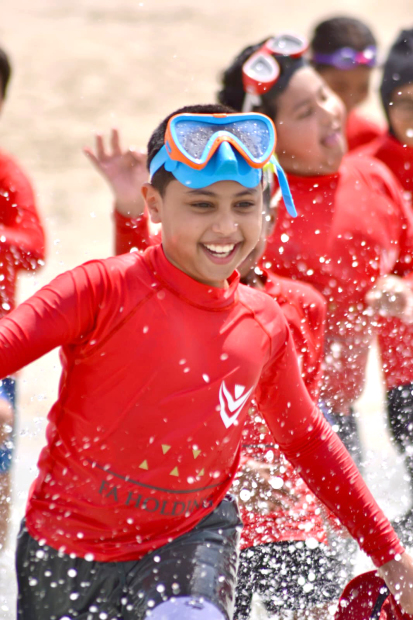
Children entering the water as part of the programme
He strongly advised parents never to leave children unattended near pools, even briefly, and to assign a dedicated adult supervisor during swimming activities. Doors leading to pools should also be secured.
“Parents should remove toys from the pool after use to prevent children returning unsupervised, keep rescue equipment and a first aid kit nearby, avoid relying on inflatable toys as safety devices and ensure at least one adult knows CPR,” he said.
He also recommended considering barriers, alarms and safety covers for home pools.
Mr Rahman encouraged families to help children build confidence and develop lifesaving skills around water from an early age, noting that water safety awareness can begin in infancy through parent-and-child programmes.
One way to do this, he said, is through structured activities that teach children how to stay safe while enjoying Bahrain’s beaches and water environments.
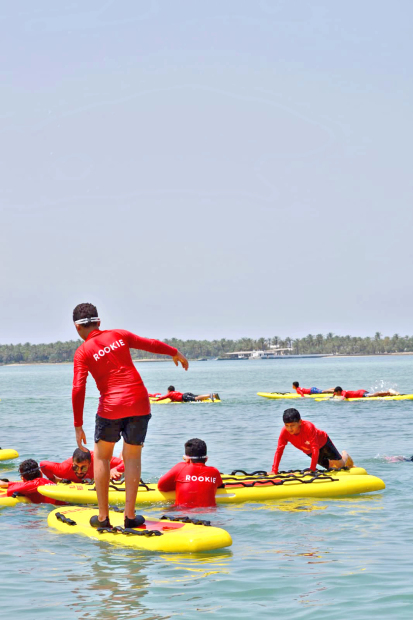
RLSB’s Rookie Programme
RLSB currently runs a Rookie Junior Beach Lifesaving Club at Budaiya Beach for children aged five to 16. The programme teaches water safety, beach awareness, first aid, teamwork, rescue skills and confidence in and around the water in a fun and supportive environment.
“We would encourage families to consider enrolling their children, especially as we approach the busy summer season,” he said.
However, he stressed that swimming lessons do not replace supervision. “Even children who can swim are still at risk and should always be supervised around water,” he said.
Mr Rahman also encourages all families across Bahrain to learn CPR and basic rescue skills. “In an emergency, immediate bystander action can make the difference between life and death before emergency services arrive,” he added.
More than 180 people were rescued from potential drowning incidents in Bahrain last year, thanks to the efforts of the kingdom’s pioneering water safety organisation.
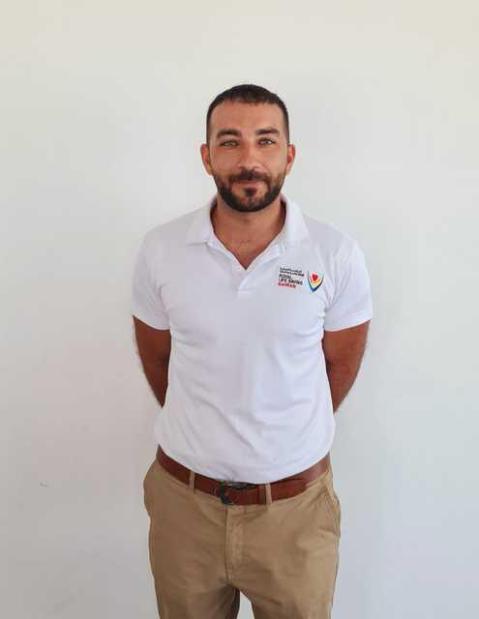
Mr Rahman
These cases involved a range of situations, including swimmers venturing beyond their depth or suffering cramps to individuals falling from kayaks while unable to swim or not wearing life jackets.
Established in 2016, RLSB works to promote lifesaving services across the country, encouraging authorities and developers to implement safety measures along the country’s coastline.
As a result of these efforts, the organisation now provides lifeguard services at six beaches – Sama Bay, Bilaj Al Jazayer, Solymar Beach, Address Beach Resort Bahrain, Marassi Beach and Vida Beach Resort Marassi Al Bahrain.
RLSB also recently provided new water safety services at Eagle Hills Marassi Beach.
julia@gdnmedia.bh
&uuid=(email))