


A new Lawyers’ Law designed to modernise how attorneys are trained, regulated and held accountable was unanimously approved by the Shura Council yesterday.
The draft legislation replaces a framework that has governed the profession for more than four decades, introducing tighter standards, clearer career pathways and stronger ethical oversight.
Justice, Islamic Affairs and Endowments Minister Nawaf Al Maawda said the law would overhaul the bar sector and raise its professional standing.
Legislative and legal affairs committee vice-chairman and rapporteur Dr Shaikh Adel Al Maawda said the law establishes an advanced legislative framework that supports the kingdom’s comprehensive development march in line with Economic Vision 2030.
“The legal profession, by its nature, is an independent profession that supports the judiciary in upholding the rule of law and achieving justice,” he said. “This law provides a modern structure that enhances professional standards, raises efficiency and strengthens competitiveness in the legal field, which in turn improves the investment environment through a robust justice system.”
The committee’s chairwoman Dalal Al Zayed said the reform keeps pace with rapid legal developments locally and internationally while preserving the dignity and independence of lawyers.
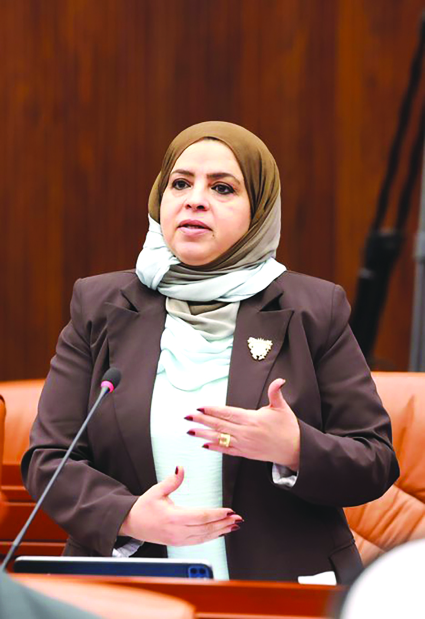
Ms Al Zayed
“This law enhances professional standards, protects clients’ rights and preserves the independence of lawyers as partners in achieving justice,” she said.
Among the most notable changes is the restructuring of lawyers’ registers into three tiers linked to court levels – lower courts, appeal courts, and the Cassation and Constitutional Courts – with scope for specialised registers by language or legal field.
l Entry requirements are also tightened. Trainee lawyers must complete two years of supervised training at a licensed office, pass a training course and sit an additional exam before joining the practising register.
l Lawyers renewing their registration may be required to prove they have actively practised over the previous two years.
l To strengthen financial governance and align with anti-money laundering rules, every law office must operate a dedicated professional bank account for legal fees and transactions.
l The law formally permits contingency fees of up to 25 per cent of awarded amounts, extends the time limit for claiming unpaid fees from one year to five years, and gives lawyers’ fees priority status after public treasury debts.
l The draft also regulates foreign participation. Non-Bahraini lawyers may appear in specialised commercial cases under reciprocity and only in partnership with a Bahraini lawyer authorised before higher courts. Criminal, Sharia, personal status, rental and labour cases remain reserved for Bahrainis.
Ethical standards are reinforced with clearer conflict-of-interest rules, updated disciplinary procedures and safeguards protecting lawyers’ constitutional rights.
First vice-chairman Jamal Fakhro praised the collaborative spirit behind the draft. “This law is a model of co-operation between the executive authority, the legislative authority and civil society represented by the Bahrain Bar Society,” he said. “No party was rigid in its position, and balanced solutions were reached.”
Member Ali Al Aradi described the profession as ‘the standing judiciary’ that supports courts in safeguarding rights.
Member Dr Hani Al Saati said the law is part of a broader reform package that aims to ‘strengthen the justice system and the investment climate’.
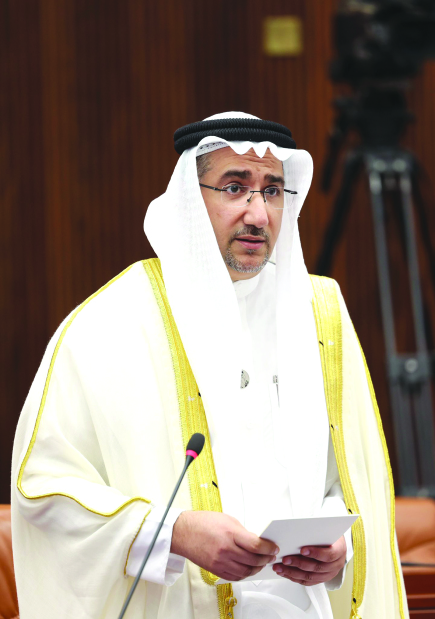
Dr Al Saati
The legislation has been referred to His Majesty King Hamad for ratification following unanimous approval by both chambers.
&uuid=(email))