

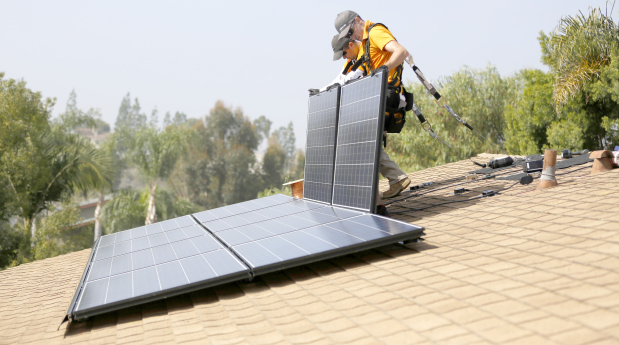
Top solar companies, banks and insurers have stopped doing business with at least a half dozen recently built US panel factories because of uncertainty over whether their ties to China could disqualify them from clean-energy subsidies, according to industry executives and documents reviewed by Reuters.
The shift, driven by new Trump administration policies, jeopardises more than a third of US solar capacity in factories initially built by Chinese firms. Details of how the policy uncertainty is driving installers and insurers away from US solar factories with China ties have not been previously reported. The emerging effects dovetail with US President Donald Trump’s broader efforts to block Chinese companies from the US market and to slash government support for green energy.
However, the policy could backfire by imperilling growth in US manufacturing jobs and power generation at a time of rising utility bills and soaring electricity demand from data centres serving the artificial intelligence industry, industry experts say.
Sunrun, the largest US residential solar installer, is among the companies now avoiding Chinese suppliers.
“It’s holding up financings of desperately needed solar and storage projects,” said Keith Martin, an attorney at Norton Rose Fulbright who advises on renewable energy tax deals.
The potentially far-reaching effects on US manufacturing underscore the difficulty of decoupling from China’s global dominance of renewable energy and green technologies, driven largely by Beijing’s own heavy subsidies for Chinese firms.
The global reach of China’s industrial policy creates a dilemma for US regulators who want to block Chinese firms without imperilling US solar manufacturers that depend on Chinese equipment and technology to produce competitive and affordable products. Without robust growth in domestic solar manufacturing, the US has few options for expanding renewable power beyond importing panels made by Chinese companies, which will lead to higher prices, US executives say.
“This is undoubtedly going to continue to increase the cost of power in the United States,” said Aaron Halimi, CEO of Renewable Properties, a San Francisco developer of small-scale utility projects that has shifted most of its sourcing to Tempe, Arizona-based First Solar to avoid suppliers with China links.
The fresh uncertainty in US solar investments stems from provisions in the Trump-backed ‘One Big Beautiful Bill’ that the Republican-controlled Congress passed in 2025. The legislation slashed Biden-era clean-energy subsidies and restricted certain foreign countries, including China, from securing those that remained.
&uuid=(email))