

India yesterday lodged a second formal protest with the US over a strike on a commercial tanker off Oman that killed three Indian sailors, a rare diplomatic escalation more than three months into the Iran war.
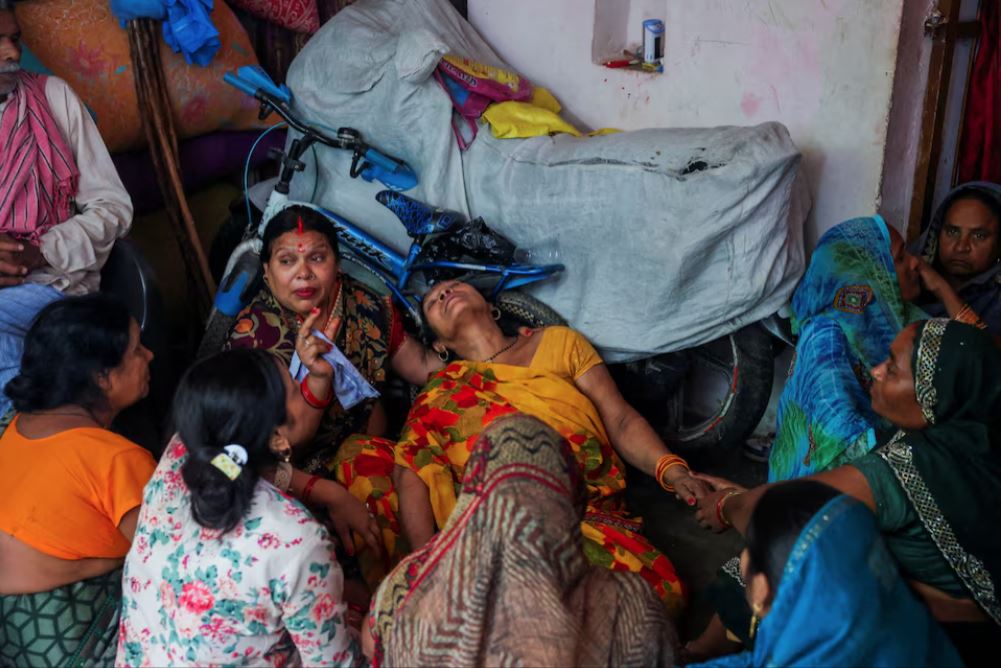
The move comes as families of the dead are grieving and pressing New Delhi to do more to protect its mariners working in the Gulf.
With hundreds of thousands of Indians employed at sea, the deaths have intensified calls for stronger government advisories and safeguards for crews transiting conflict zones.
The strike off Oman killed three sailors in total, all Indian nationals, according to Indian officials.
The remaining 21 Indian crew members aboard the Settebello survived.
The US military’s Central Command said an aircraft fired precision munitions into the vessel’s engine room after the crew “repeatedly failed to comply with directions from American forces”.
It said the strike was part of an ongoing blockade targeting oil shipments from Iran launched after Tehran sharply curtailed shipping through the Strait of Hormuz, which carried a fifth of the world’s oil and liquefied natural gas before the conflict.
India’s foreign ministry said it had summoned the US chargé d’affaires to convey “its deep concern over the use of lethal and deadly force against civilian shipping”.
The US embassy in Delhi did not respond to a request for comment.
The deaths have prompted calls on India’s Prime Minister Narendra Modi to go beyond registering protests.
India – the world’s second-largest supplier of seafarers behind the Philippines according to government figures – has had to pay a huge cost for the conflict it played no part in starting, say opposition and other critics.
Such attacks could deter workers from taking up seafaring jobs, potentially worsening labour shortages in the industry, said Manoj Yadav, general secretary of the Forward Seamen’s Union of India.
&uuid=(email))