

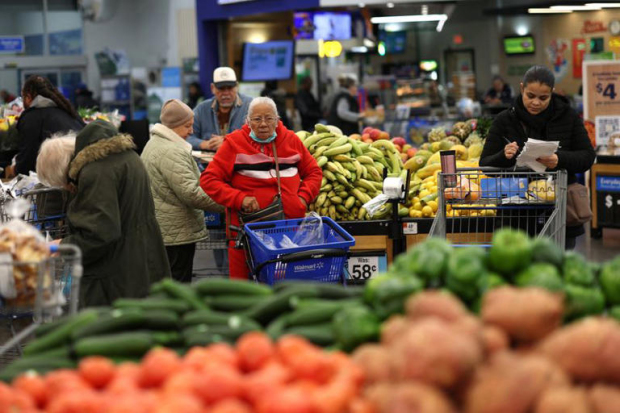
US consumer sentiment bounced off record lows in early June as easing petrol prices offered households some relief, though concerns about inflation stoked by the Middle East conflict lingered.
Lower-income households led the broad improvement in sentiment reported by the University of Michigan’s Surveys of Consumers yesterday. Petrol prices have dropped from four-year highs over the past three weeks, according to data from motorist advocacy group AAA, as oil prices stayed below $100 a barrel despite a fragile ceasefire. Labour market resilience, marked by three consecutive months of above-expectations job growth and a stable unemployment rate, also likely contributed to the increase in the sentiment.
But the US-led war against Iran, now in its fourth month, still poses a risk to the economic outlook. President Donald Trump denied yesterday that the US had made major concessions to Iran.
“It looks like gasoline prices peaked around the Memorial Day holiday as often happens each year,” said Christopher Rupkey, chief economist at FWDBONDS. “There is still a cost-of-living crisis and goods prices are not going to be coming back down. The economic risks are still out there but at least the outlook is less dire than it was before.”
The University of Michigan said its Consumer Sentiment Index increased to 48.9 this month from an all-time low of 44.8 in May. Economists polled by Reuters had forecast the index climbing to 46.0. Sentiment increased across age groups, education and political party affiliation.
The national average retail gasoline price dropped to $4.11 this week from $4.56 on May 21, the highest in four years, AAA data showed. The pain at the pump has disproportionately hurt lower-income households, with higher-income consumers cushioned by a stock market rally, which is boosting their wealth.
The higher cost of living is fuelling unhappiness with Trump’s handling of the economy, and weighing on his approval rating. Consumer inflation jumped above 4pc in May for the first time in three years, the government reported this week.
Easing petrol prices led to a moderation in consumers’ inflation expectations this month, though the conflict will determine the future trajectory.
“We expect inflation pressures to ease after the Iran conflict simmers and the subsequent improvement in supply chains,” said Jeffrey Roach, chief economist at LPL Financial. “But if the conflict in Iran remains throughout the summer, we should expect stronger inflation headwinds will put a damper on the growth trajectory.”
The survey’s measure of consumer expectations for inflation over the next year slipped to a still-high 4.6pc this month from 4.8pc in May. Consumers’ expectations for inflation over the next five years dropped to 3.4pc from 3.9pc last month.
&uuid=(email))