

In 1968, while visiting Hyde Park in London, I came across an Israeli man shouting: “Are there any Arabs here?” When I answered yes, he turned to me and asked: “Why are you against Israel?” He then launched into a defence of Israel, claiming it was the only democratic state in the region.
All these years later, I wonder whether that man is still alive to witness the true nature of the Israel whose democracy he so enthusiastically praised. He might then realise that Israel is far less committed to democracy than to Zionist ideology, which it places above all else.
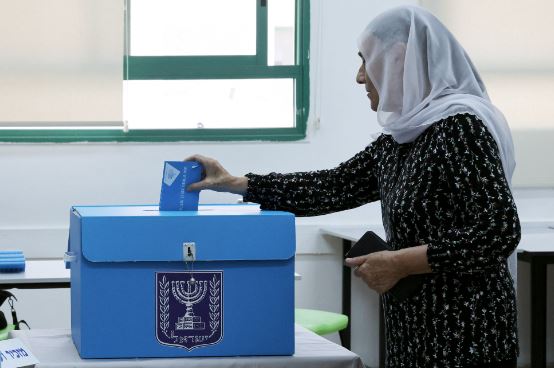
This is evident in its current attitude towards Arab parties and the voters who backed them in the recent elections. Their votes are denied the political respect they deserve, while their representatives are denied the right to participate in political life and government formation.
We live in an age when neither friend nor foe can conceal their shortcomings or hide behind false claims. Actions and positions increasingly expose the reality behind the slogans.
The results of the US congressional elections have also demonstrated Israel’s declining popularity in the United States. Its claims no longer enjoy the same acceptance among sections of American public opinion, including voters. Continued US financial and military support for Israel, despite its war crimes in Gaza, is also facing growing criticism, as reflected in American political and electoral debates.
I must stress that we do not confuse Jews, as human beings and followers of a divinely revealed religion, with Israeli policies and Zionist ideology, which are rooted in discrimination and a sense of superiority. The problem lies in the belief that one is superior to others and in denying them their rights. This contradicts the most basic principles of a state that claims to champion democracy in the region.
We highlighted this contradiction on the front page of today’s newspaper to draw attention to practices that expose the reality within Israeli society. While settlers practise racism against Palestinians in the occupied territories, some Israeli politicians are no less discriminatory, denying Arab citizens their full political rights and rejecting their participation in any new government.
The world has watched Benjamin Netanyahu walk through the streets of Tel Aviv with a loudspeaker, urging Israelis to vote for him to prevent Arabs from entering the Knesset. After the results were announced, he sought to cast doubt on the integrity of the elections, accusing Arab-led parties of stealing votes.
The Israeli Central Elections Committee, however, confirmed that the integrity of the elections had not been compromised. Its chairman, Supreme Court judge Noam Sohlberg, urged elected officials to protect public confidence rather than undermine it.
Meeting Israeli President Isaac Herzog, Sohlberg said: “This is a real danger, as one of the foundations of democracy is the peaceful transfer of power.”
Netanyahu’s far-right allies went further. Among them, National Security Minister Itamar Ben-Gvir called for Arab party leaders to be arrested and interrogated immediately, exposing the extent of the political targeting of these parties.
Such practices have no place in a sound democratic system. Respecting election results and voters’ right to choose their representatives is a fundamental obligation that cannot be compromised.
If the votes of Arab citizens have given their parties an influential presence in the Knesset, this reflects their growing political weight, making them impossible to ignore in the formation of future governments.
Yet, some Israeli political forces seek to court the Arab bloc and use its votes to secure their interests, while refusing to give its representatives a genuine role in government. Arabs are apparently expected to support future coalitions without sharing responsibility or receiving ministerial representation.
This is the ugly face of Israeli democracy: one that places Zionism above democratic principles, welcomes Arab votes when they are needed, then denies Arabs the right to participate when power is shared.
Another striking paradox is that the children of immigrants have secured seats in the US Congress and taken part in decision-making, while Israeli parties continue to deny Arab citizens a role in the new government. This is despite urging them to vote and participate in elections, and despite the potential of their votes to reshape the political landscape and bring an end to Netanyahu’s rule and policies.
Democracy is not measured by the slogans states proclaim, but by how far they respect their citizens’ rights, particularly when election results do not suit those in power.
