

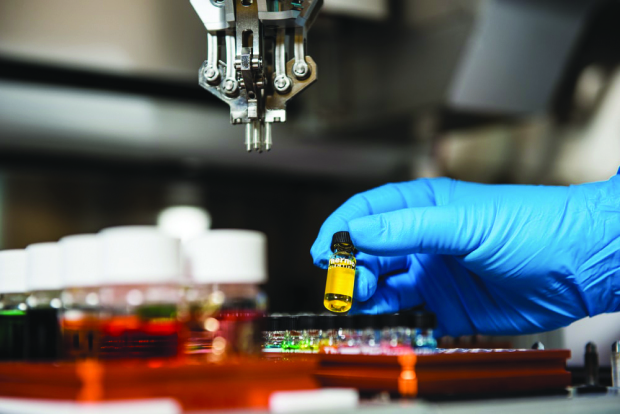
BAHRAIN has published 23 crucial and ground-breaking studies on coronavirus (Covid-19) in the last 12 months outlining the country’s successful pandemic policies, a senior medic has revealed.
The list of research papers updated by the National Taskforce for Combating Covid-19 include 12 on clinical and treatment protocols of Covid-19, six on epidemiology and public health, three on Covid-19 vaccines and two on diagnostic topics.
The analyses are published on regional and international scientific journals and platforms and could prove essential reading for other countries tackling the pandemic, as well as offer methodology and good practice guidelines to help tackle any future health crises.
The country has also published four pre-prints which are versions of scientific manuscripts posted on a public server prior to formal professional review. It has also five that have been submitted for publication, while studies are underway on another five.
Task force monitoring committee head Lieutenant Colonel Dr Manaf Al Qahtani has taken part in all of the studies. He says there is a ‘large amount of data’ now related to the pandemic which was first highlighted in December 31, 2019, when the World Health Organisation was informed of cases of pneumonia of an unknown cause in Wuhan City, China. A novel coronavirus was identified as the cause by Chinese authorities a few days later.
“We have translated all of our Covid-19 related policies into a data-driven approach,” Lt Col Dr Al Qahtani, the BDF hospital microbiologist added.
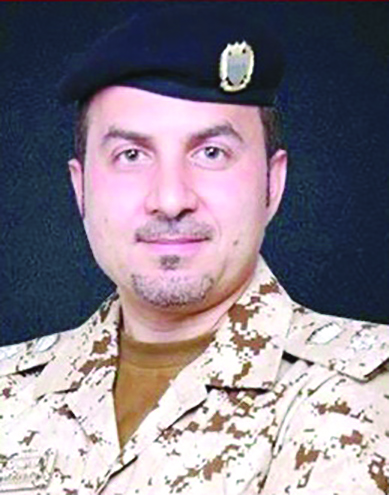
Dr Al Qahtani
Six of the papers (out of the 23) were carried out last year while the remaining 17 were published this year. Among the four pre-prints, three were written last year, while the latest on morbidity and mortality from Covid-19 post-vaccination and the emergence of variants in Bahrain was staged in collaboration with Columbia University, published by Research Square.
The first Bahrain study published on July 8 last year was a narrative review on the use of radiological imaging alongside reverse transcriptase Polymerase Chain Reaction (RT-PCR) test in diagnosing the novel coronavirus. The research featured on Future Medicine under the UK-based Future Science Publishing Group.
A Bahrain experience on Acute Kidney Injury in Covid-19 Pneumonia published as early as August last year called for awareness of kidney disease in patients as ‘crucial’. It was featured in California -based Cureus Journal of Medical Science.
A subsequent study in September, also a diagnostic paper, on the utility of serological rapid test kits for screening during disease progression and following recovery was published in the Indian Journal of Science and Technology.
Two papers featured recent advances in vaccine and immunotherapy for Covid -19 (August) and viral load as an indicator for Covid-19 patients’ hospital stay (November). The former appeared in England’s Taylor and Francis Online Peer Reviewed Journal and the latter in Medrexiv a free online portal for health studies.
In December on Covid-19 and Sickle Cell Disease (SCD) in Bahrain was published in the International Journal of Infectious Diseases. The study under clinical and treatment segment, crucial to the Bahraini population concluded that the infection rate, clinical course and viral clearance was no different for the SCD patients with Covid-19.
The pre-prints published in October, November and December last year focused on implications of religious events and holidays on the virus transmission, a comparison of nasal antigen tests to nasopharyngeal RT-PCR in mildly symptomatic patients and diagnostic and monitoring utilities of saliva for coronavirus, respectively.
March of this year saw the maximum number of four papers published, followed by three each in January, May and July and two in February, while April and June were one each.
The topics under epidemiology and public health included the prevalence of asymptomatic and symptomatic Covid-19, Bahrain experience of quarantining travellers, prevalence of asymptomatic and symptomatic Covid-19 in quarantined subjects, airborne transmission of Covid-19, clinical and epidemiological characteristics of Covid-19 in the Middle East and on Covid-19 reinfection.
The 11 clinical and treatment studies this year dealt with the efficacy and safety of hydroxychloroquine in Covid-19 patients, SCD risk factor, the effect of ABO blood group and antibody class on the risk of infection, viral load as an indicator for hospital stay, randomised controlled trial of convalescent plasma therapy, a study on the infection as a global health crisis, viral load and disease severity, Covid-19 and mucormycosis superinfection, the psychological impact of Covid-19, RT-PCR Ct Values and new daily cases and glucose-6- phosphatase dehydrogenase deficiency and its association with patients.
A vaccine study carried out this month is the latest, which dealt with trials during a pandemic and potential approaches to ethical dilemmas.
raji@gdn.com.bh
&uuid=(email))