

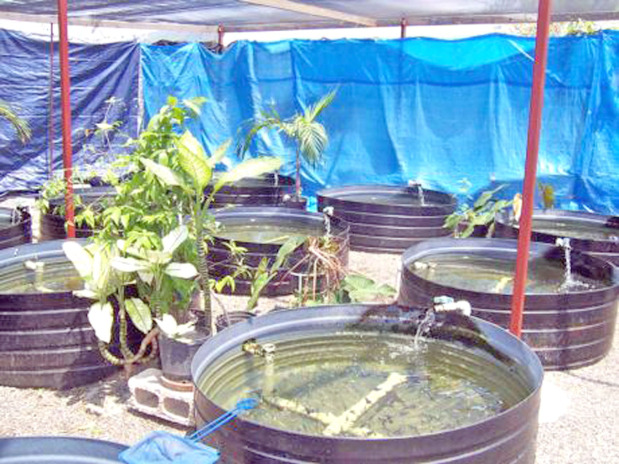
THE government has been urged to support domestic fish farmers after many of them wound up their businesses in Muharraq owing to alleged lack of funds.
The Muharraq Municipal Council gave a go-ahead for the business in 2016 after a group of pensioners started it on a small scale in their homes.
However, most of them have shut down the project with the pensioners claiming that they were not presented with the necessary loans to expand or maintain the facilities.
Councillors have alleged that while Tamkeen provides financing to young Bahrainis, the elderly are largely ignored.
“Muharraq is an island that is famous for its fishing and pearling industry but now with limited access to the sea and low yield leading to higher prices, it is time to seek new ways to get fish on the table,” said council financial, administrative and legislative committee chairman Bassem Al Majdami.
“The pensioners’ project was amazing, considering their limited resources.
“Most of them used medium-sized tanks and even re-routed internal water supplies innovatively, leading to two hammour fish multiplying into dozens.
“However, they were not given the financial support to expand or achieve success and profitability.”
Mr Al Majdami called for new laws to encourage and support home-based fish farmers across the country as the business would, in long-term, help the kingdom achieve food security.
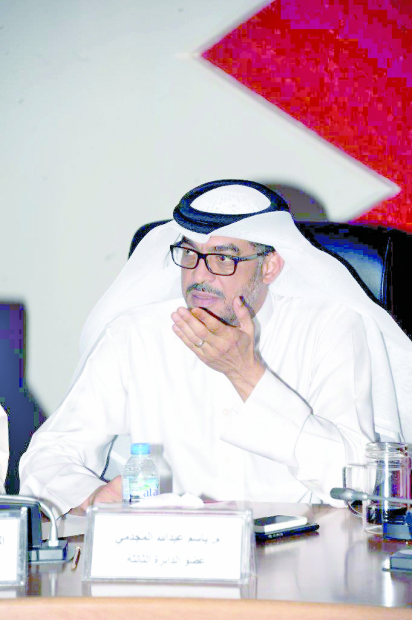
Mr Al Majdami
“There is no law banning aquaculture at homes, but there are no rules to help it too,” he said.
Old Muharraq MP Ebrahim Al Nefaei said small-scale fish farming – often taken up as a hobby – could not be classified as a business.
He, however, added that aquaculture had tremendous scope and potential if it’s implemented in the right manner.
He stressed the need to guide the elderly and the young on modern, cost-effective technologies and techniques to boost the yield.
“A comprehensive feasibility study is vital before embarking on such projects,” he said.
“Homes in Muharraq, and Bahrain in general, are small for aquaculture. The production rate will be too low for it to be considered as a business, but that could change if cutting edge technologies are implemented on par with international standards.”
Parliament public utilities and environment affairs committee chairman Mohammed Buhamood said hammour, safi, maid, shaari, subaity, shrimps and lobsters could be easily grown in tanks, barrels or other cost-saving mediums.
He also dismissed claims that cultured fish were less tasty than those coming from natural environments.
“Cultured fish may be a bit skinnier because they don’t have unlimited species to feed on like in the sea, but they are just as tasty,” he said.
Bahrain has been significantly affected by declining fish stock, caused by land reclamation, overfishing, increased number of fishing licences awarded and a 30 per cent reduction in fish stock in the GCC since the late 90s.
The GDN earlier reported that Parliament was studying a proposal to increase investment in fish farms to ensure food safety and replenish stocks.
It aims to create a national strategy for fish farming through a public-private partnership to increase the sector’s contribution to the country´s gross domestic product.
mohammed@gdn.com.bh
&uuid=(email))