

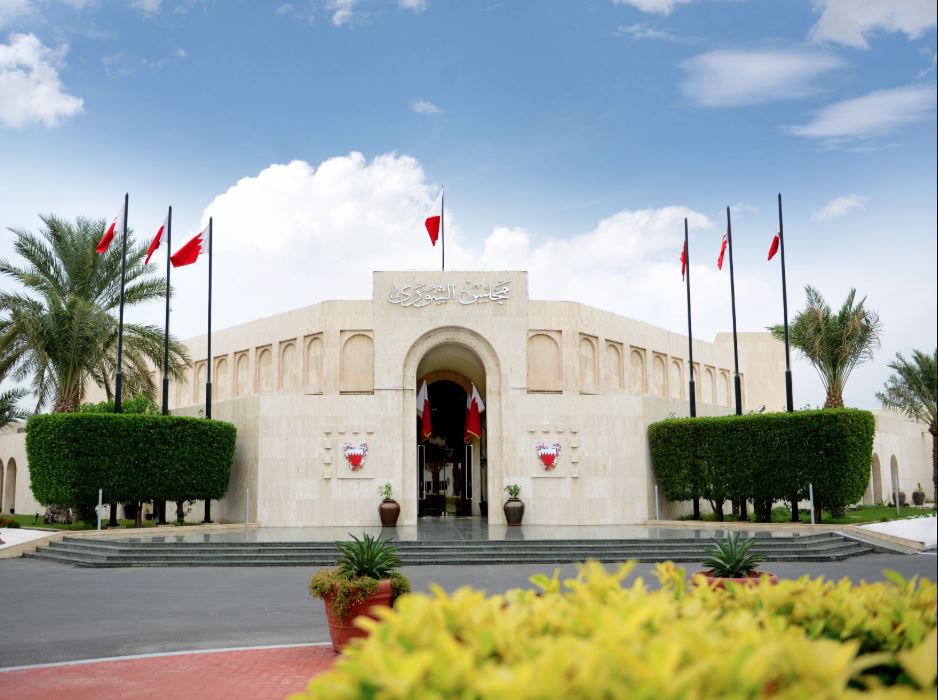
SHURA Council members are pushing to scrap a controversial legal loophole that allows convicted rapists to marry their victims to escape punishment.
They are awaiting a fresh Sharia ruling from the independent Supreme Council for Islamic Affairs – that includes top clerics – as requested by Parliament’s foreign affairs, defence and national security committee in May.
This follows an earlier ruling in 2016 that was taken without the Sharia clergy’s explanations for or against the move.
Legislators in both chambers maintain that Article 353 of the 1976 Penal Code was ‘offensive and degrading’ to the status of women.
The matter was raised again for discussion as the Shura Council’s committees returned to work following their weekly session held at the National Assembly Complex in Gudaibiya yesterday. “The article is outdated and doesn’t represent the true status of women in Bahrain,” said the upper house’s foreign affairs, defence and national security committee vice-chairman Yousif Al Ghatam.
“Offering a way out to a rapist to escape punishment because a victim is forced into a marriage because of community stigma concerns or family pressure should not be stated in law, in our opinion.
“It should be scrapped completely and the matter be left to a judge’s assessment when handling the specifics of a particular case.”
Committee member and former Parliament first vice-chairman Ali Al Aradi said sparing rapists from punishment shouldn’t be an option, even if the victim agrees marriage.
He asked incredulously how someone who committed a serious crime could be spared punishment in addition to ‘receiving his victim as a prize’?
“Perhaps the only issue is when the victim gets pregnant as a result of the attack and she agrees to marry the rapist, with child rights laws stating the father should provide all necessary needs for the baby,” he added.
“Although this also should be left to a judge to decide, considering there is state welfare to provide support to the child until the sentence is completed.”
Under amendments proposed in May 2019, MPs wanted judges to have the power to decide on the issue of marriage, mentioned in the article, rather than scrapping the clause altogether.
It said a judge should have the right to choose whether a rapist should be jailed, even if he marries his victim, something it said could help protect the victim’s reputation.
The article, however, has a clause that states that the choice of marriage is not applicable in cases surrounding multiple rapists.
Meanwhile, Parliament foreign affairs, defence and national security committee chairman Mohammed Al Sissi said a Sharia ruling was expected this year.
“A Sharia ruling is necessary for us to decide what direction we should take with the article and, for that, a fresh comprehensive explanation is needed from the Supreme Islamic Council.
“We are an Islamic country and we have to ensure that scrapping the article would not harm one of the pillars of society – the family – should the victim willingly decide to marry the perpetrator. At the same time we also have to ensure that rapists are punished.
“The subject of debate or controversy is not related to the crime itself, but its complications involving virginity, chastity and possible pregnancy.”
The Bahrain Women’s Union has been campaigning for the clause to be dropped since 2018, arguing that the current law not only allows rapists to escape punishment, but also rewards them by handing their victims over.
Five years ago, the Supreme Council for Islamic Affairs said it had no objection to scrapping the article but the Shura Council, at the time, said the topic was ‘too sensitive’ and left it to MPs to resolve.
MPs, who were in office in 2016, approved an initial proposal to scrap the clause based on concerns that it allowed rapists to escape punishment.
However, in May 2019, MPs looked set to abandon plans to scrap the clause and the proposal was withdrawn for further study following a government request.
Parliament’s foreign affairs, defence and national security committee then said the article was adopted 45 years ago not to protect the rapists but to protect families from stigma.
The Cabinet backed the committee’s U-turn after asking MPs to rethink scrapping the article, arguing it simply needed amending, as dropping it altogether would not prevent rape.
It also warned that rape victims could be stigmatised by society if they did not marry their rapist, adding that if they conceived and did not agree to marry the rapist, their child could end up in the care of the rapist’s father.
In a further twist to the debate, the government feared that scrapping the clause contravened the Convention on the Elimination of All Forms of Discrimination against Women, saying women should have the right to choose their partner.
The government’s main concern was that victims of gang rape should not be allowed to marry one of their assailants, since that would allow one to evade punishment while the rest were jailed.
Its position at the time was supported by the Legislation and Legal Opinion Commission and the National Institution for Human Rights.
The Supreme Council for Women, however, has backed calls to scrap the clause altogether.
mohammed@gdn.com.bh
&uuid=(email))