

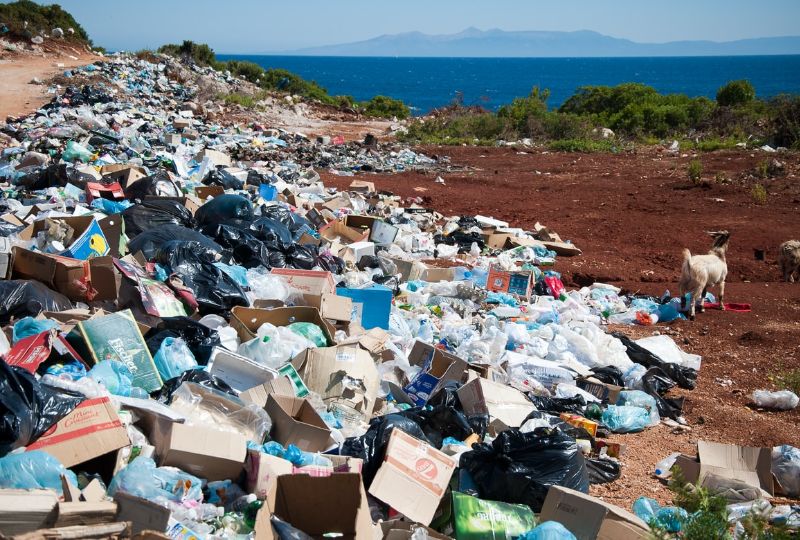
HUMANS generate more than two billion tonnes of garbage worldwide based on statistics published by the World Bank in 2018. About 3.4bn tonnes garbage is being forecast by 2050 globally.
Dumping of garbage in landfills could cause leakage of green house gases which is harmful for our climate.
In 2019, 15 per cent of methane was released from landfills into the atmosphere which was equivalent to the emissions from approximately 21.6 million passenger cars.
As basic principle of recyclying involves collection, sorting, mechanical processing and delivering the recycled materials to the manufacturing industries.
Among all, manually collecting and sorting of materials are necessary and expensive but with the use of technologies like robotics or automatic collection, a huge margin can be extracted out of it.
Artificial Intelligence (AI) could be the solution as it is increasingly finding its way into the public realm. In addition, the pervasive issue of AI-based discrimination against minerals becomes more and more apparent and also vital for developing urgently needed solution approaches.
Magnets (to separate metals) and wind sifters (to separate light materials from heavy materials) could be more useful if they are integrated with AI.
In 2020, more than 1bn recyclable materials had been processed in a year by the US company named Autonomous Manipulation and Perception Robotics integrated with AI.
In Bahrain, approximately 100,000 tonnes of garbage are being thrown out into the Askar landfill yearly and 50pc of that rubbish is food waste. According to the UN Environment Programme 2021, this wastage (food) makes Bahrain among the top Arab countries and fourth in the world.
To curb the menace of garbage, recycling of garbage with advanced technologies integrated with AI could be the possible solution which also helps to achieve Bahrain’s environmental protection goals laid out in the country’s Economic Vision 2030.
Dr Muhammad Faisal Irfan,
Assistant Professor of Chemical Engineering,
University of Bahrain
&uuid=(email))