

Children in Bahrain will be able to learn Mandarin for the first time as part of a set curriculum at a new school opening in the kingdom … taught by a Bahraini teacher who received a scholarship to specialise in the Chinese language.
Mandarin is a group of Sinitic languages natively spoken across most of northern and southwestern China boasting 920 million native speakers and around 200m who use it fluently as a second language.
Abdulrahman Kanoo School (ARKS) is set to open its doors this September and its senior management believes it will be an essential subject for students offering them potentially golden career opportunities as China expands its global influence in technology and other major sectors.
“Our strategy is to focus on listening and speaking before anything else,” said Fatima Sahwan who will be at the helm of Mandarin Chinese instruction at the impressive BD10 million campus at Diyar Al Muharraq.
“The language will be introduced to students through ways that engage and interest them. Students will hear spoken Mandarin through fun and interactive ways like cartoons, songs and videos. As for speech, we will start small – practising simple words and phrases and moving on from there.”
Ms Sahwan, who currently teaches Chinese part-time at Bahrain University’s Confucius Institute, explained the importance of verbal learning as the language can prove challenging.
All spoken Chinese dialects, including Mandarin, are tonal based. Learning to pronounce and hear the subtle tonal distinctions can be quite difficult for native English speakers. Adding to the confusion are the many homophones (words that are pronounced similarly but have different meanings) found in modern Chinese. Depending on the meaning, the same spoken syllable can represent many characters, and a single written character can possess a range of meanings depending on the context in which it is used.
“It is absolutely crucial to be able recognise and pronounce different tones in Mandarin, getting a tone wrong can completely change the meaning of what you are trying to say!” she explained.
Children between the ages of three and 10 will start on the mighty Mandarin road at kindergarten level.
School principal Kate Moskwa told the GDN why introducing the Chinese language has excited parents keen to sign up their children at the school.
“Childhood is the perfect time to learn a new language,” she said. “It is much easier for young students to absorb information, especially in comparison to adults. Furthermore, learning Mandarin will create countless opportunities for the children in the future, China is Bahrain’s biggest trading partner when it comes to importing after all!”
Ms Sahwan, an avid lover of languages, said she started her journey to becoming a teacher after receiving an Education Ministry scholarship to learn both Chinese and English in Jordan.
As the 26-year-old’s interest in China grew, she continued her language studies in Liaocheng University and Shanghai International Studies University to completely master the magic of Mandarin.
“While I found Chinese grammar and syntax fairly straightforward, the writing system is quite complex even for native speakers,” said Ms Sahwan.
“This is why the initial classes will focus on understanding the language first and later approach reading and writing once the students have a good grasp of the verbal aspects.
“We are putting together a curriculum, planning lessons and choosing a diverse selection of material for the different levels that will continue to catch the students’ interest and imagination.”
The ARKS branch opens with seven levels from nursery to fourth grade in the upcoming 2022-2023 academic year. It will be a sister complex to the well-established school opened in 1997 in Salmabad by Abdulrahman Kanoo.
“Each year the Diyar campus will accommodate an additional grade, growing with the students,” said Ms Moskwa.
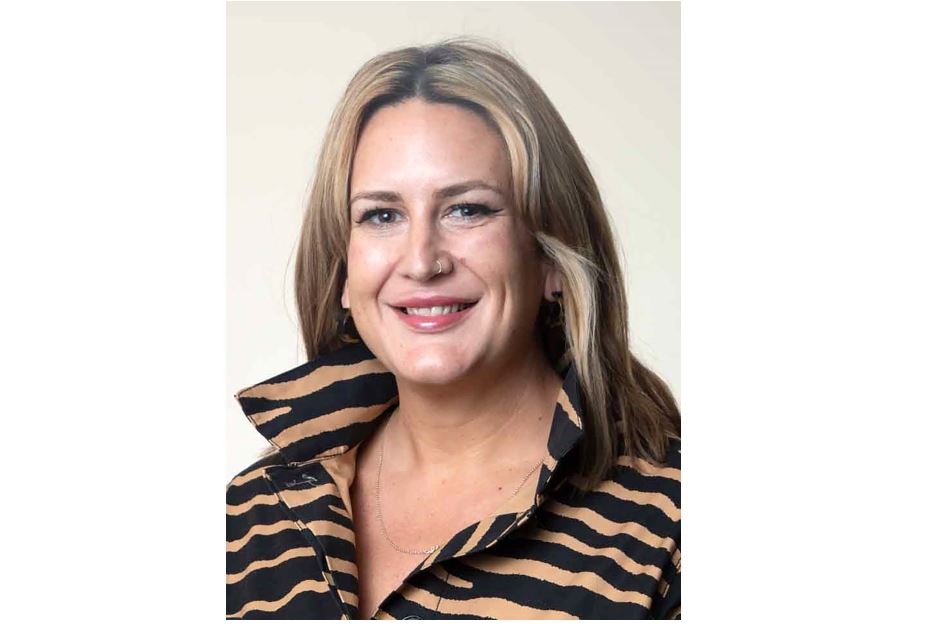
Ms Moskwa
“In the coming years, our students will be able can take Chinese-language classes on the International General Certificate of Secondary Education (IGCSE) and International Baccalaureate (IB) levels.”
“And, as our faculty expands, in my opinion, there will not be an issue recruiting well-qualified additional teachers given the growing number of Chinese-educated Bahrainis.”
&uuid=(email))