

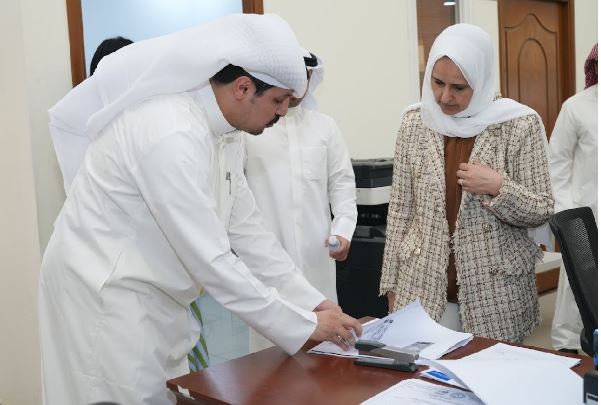
Kuwaiti State Minister for Development and Sustainability Affairs Dr.Reem Al-Fulaij conducted Monday an inspection tour of the Agricultural Plots Department, Fodder Distribution Hall, and the main administrative building of Public Authority for Agriculture Affairs and Fish Resources (PAAAFR).
In a press statement on the sidelines of the tour, she announced a comprehensive package of reform decisions aimed at ensuring the sustainability of national food security, restructuring subsidies, and directing them to actual beneficiaries.
Dr. Al-Fulaij underlined the importance of justice, the rule of law, protecting public funds, and combating waste to improve the business environment.
Regarding agricultural plots, she decided to immediately stop accepting new applications for land holdings of all types and to cancel all previous applications She warned that holders must strictly comply with laws and regulations, with no tolerance for violations or random practices.
A specialized technical team was formed to conduct field verification of breeders' records and refer any manipulation cases to the competent authorities, she explained.
On the fodder system, she announced the reallocation of fodder types, requiring that mixed fodder constitutes no less than 50 percent as an alternative to barley to strengthen strategic reserves.
Dr. Al-Fulaij set a minimum eligibility threshold of 50 heads for sheep and goats, and 15 for camels and cows.
Support will now be directed exclusively to livestock contributing to food security, excluding horses, and stopped for non-compliant holdings, she added.
Regarding administrative development and protection of public funds, she revealed the formation of an investigation committee to examine financial and administrative violations in the authority.
Based on its findings, cases of suspected embezzlement have been referred to the Public Prosecution, she pointed out.
Dr. Al-Fulaij described these measures as the first step in a comprehensive plan to reactivate the authority's vital role in enhancing national food security on sustainable and transparent foundations.
&uuid=(email))