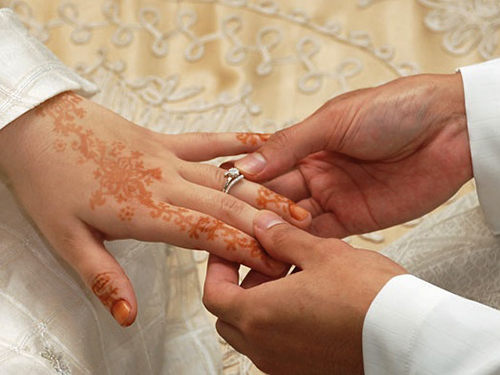
A court has allowed a woman to marry her sweetheart without her father’s blessing for only the second time in Bahrain’s legal history.
Lawyer Abdullah Al Shamlawi, who represented the 23-year-old Bahraini woman, filed a case at the High Jaffari Sharia Court on her behalf after she complained that her father suffered from mental health issues and was unfairly denying her the chance of happiness.
Her 55-year-old father suffered from schizophrenia, the court heard, a serious mental disorder in which people interpret reality abnormally. It can sometimes result in a combination of hallucinations, delusions and extremely disordered thinking and behaviour that impairs daily functioning.
The woman told judges that a man, who had proposed to her, was the ‘perfect partner’ and her father refused to allow her to marry him for ‘no logical reason’. Mr Al Shamlawi successfully argued that his client’s father was not able to make a rational decision due to his lack of mental stability and requested the woman be allowed to wed the man without her father’s consent.
Judges accepted the plea. “There is no rational reason for the woman’s father, who suffers from schizophrenia, to reject the man who proposed to her,” read the court ruling.
“Therefore, the court will take the matter into account and allow the woman to marry him. The woman can make her own decision, because she is old enough and her grandfather is dead.
“Her father suffers from a mental illness, which allows her to take the sole decision to marry the man she chooses.”
Mr Al Shamlawi said that this was only the second time a court in Bahrain had delivered such a decision.
“My client is delighted that love won the day,” he told the GDN. “She really loves the man who proposed to her and he was ‘perfect’ for her. His financial status was good, he did not have any major faults and had a great reputation.
“Therefore, she should make her own decision whether to marry him or not, it should not be left for her ill father to decide. We presented medical documents to the court to prove the father’s condition.
“This is the second time in Bahrain’s history that such a decision was made by the court. The first case was more than 15 years ago.”