

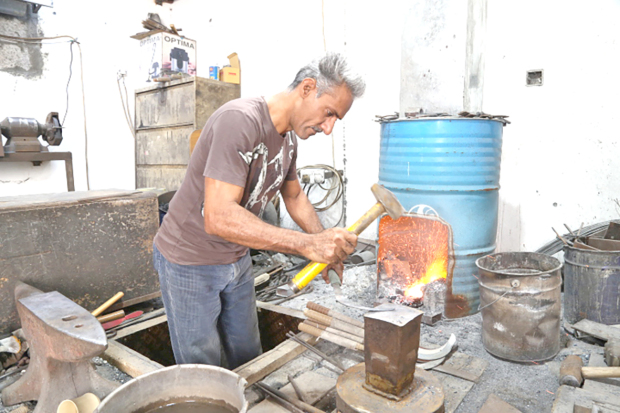
COUNCILLORS have proposed allocating a government plot to traditional Bahraini craftsmen to hone their skills and showcase their near-extinction professions.
Members of the Southern Municipal Council also want these artisans to be allowed to train interested young Bahrainis, international artists, fashion designers and architects.
Several blacksmiths, bladesmiths, brownsmiths, coinsmiths, locksmiths and tinsmiths were removed from their location near Al Farooq Junction.
However, according to councillors, these experts were not provided with an alternative location despite repeated calls that their professions were on the verge of dying with only a handful experts remaining.
Council services and public utilities committee chairman Abdulla Abdullatif said providing these craftsmen with a dedicated space would not only revive the handicrafts industry but also give the dying professions a much-needed exposure.
“We are the richest in traditional handicrafts amongst all GCC countries, but due to lack of attention we are at risk of becoming just pictures in social studies books in schools,” said Mr Abdullatif.
“Traditional handicrafts have been passed from one generation to another and as time passed it was refined and has become better with more artistic input that strengthens the heritage while modernising it to meet needs.
“Pottery in A’ali or embroidery in Bani Jamra are still popular amongst tourists, but are now being handled by aging Bahrainis, who can barely walk, while their children are preoccupied with work in other sectors.
“There are centres like Al Jasra Home for Handicrafts and the Capital Mall in Karbabad but they all aim to serve tourism purposes – it has nothing to do with preserving the smithy professions.”
Mr Abdullatif said the proposal could lead to investments in the traditional handicrafts industry.
“Having a professional centre in Bahrain that provides training to people from all around the world on traditional handicrafts will ensure that current generations that are presently not interested return to their roots knowing that they will be paid instructors,” he explained.
“There is huge attention from all around the world to learn whether it is artists, fashion designers or architects who are seeking to mix heritage with modernisation.
“Such skills nowadays are profitable and could be introduced within modern products and merchandise, while integrating them as décors in homes, buildings and shops.
“Traditional handicrafts are potentially strong industries that can bring Bahrain millions of dinars, it could have been billions had quicker action to rescue those professions been taken years ago.”
Artisans in Bahrain have received a major push as their works are displayed at handicrafts festivals in Manama Suq.
They include fabric-weaving, pottery, leather crafts, doll and puppet-making, gypsum engraving, traditional chests, Bahraini spices, palm paper, enamel paintings and Arabic coffee pots, among others.
A controversial legislation that would have seen the introduction of 20 per cent tax on imported products that compete with local handicrafts was rejected by the Shura Council in November last year.
The National Traditional Handicrafts Protection Law was suggested by 2014-2018 MPs to safeguard and revive Bahrain’s dying professions.
mohammed@gdnmedia.bh
&uuid=(email))