

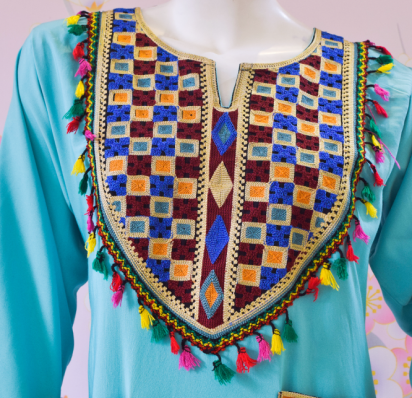
A JALABIYA factory owner has been accused of making an employee work without pay and profiting from forced labour.
The Egyptian man did not appear at the High Criminal Court to admit or deny the charges and is believed to be at large, as described in court documents.
According to a detective, the 44-year-old factory manager had brought the alleged victim over to Bahrain to work in his factory that manufactures jalabiyas (a traditional gown worn by Arab women).
“The defendant reached out to the victim, offering him a job to work at a clothes factory and sent him a contract on WhatsApp,” the Interior Ministry investigator told prosecutors.
“He booked a ticket for the victim to fly from Egypt to Bahrain, greeted him at the airport and provided him with lodging – but never paid his wages,” he added.
In prosecution hearings, the Egyptian employee claimed that he had reached an agreement with the manager that he would be paid per piece produced instead of a regular wage. He also said the deal stated that he would work for six months continuously and then take a month off.
The worker further alleged that the employer promised to send 5,000 Egyptian pounds (BD61) to his family in Egypt, in addition to covering his rent and food expenses.
However, the manager did not follow the terms of the agreement, the alleged victim said, claiming that he fell behind on payments to his family and later wired an amount which was much less than what was agreed upon earlier.
He claimed that he did not receive payments during his work at the factory, and had no days off in 2022.
The employee raised a labour suit against his fellow national, demanding his salaries.
The Labour Court ruled in the worker’s favour, ordering the defendant to pay the wages and time-off compensation. The case was referred to the High Criminal Court.
Although the defendant denied the accusations in pre-trial hearings, he was nowhere to be found for the High Criminal Court trial.
Two other individuals, including the defendant’s brother, were earlier accused in the forced labour case, court files showed. But they did not appear as co-defendants in the trial.
The clothes factory owned by the defendant and his brother is located in Hamala and consists of a shop that sells various styles of jalabiyas.
As per official records, the status of the commercial registration belonging to the factory and the boutique currently reads ‘under liquidation.’
The court will continue to hear the case tomorrow.
zainab@gdnmedia.bh
&uuid=(email))