

A MAN was rescued after he suffered a heatstroke while kayaking off the Karzakan coast yesterday.
The Interior Ministry said the Coastguard patrols responded after receiving a distress call. They were joined at the site by paramedics from the National Ambulance.
The 39-year-old man was said to be in stable condition.
Meanwhile, health experts have called on citizens and residents to take precautionary measures to avoid heatstrokes as the kingdom experiences an intense summer with humidity at times reaching 90 per cent.
Typically, July and August are the hottest months of the year in the kingdom, with temperatures averaging around 40C this month, reaching 46C at times.
A heat stroke is a severe illness that occurs when the body’s temperature exceeds 40C due to it being unable to regulate its own temperature.
It is a serious condition, and can cause permanent disability or death if not treated immediately.
Symptoms include confusion, loss of consciousness, hot skin, seizures, headaches, and rapid heartbeat.
“It’s important for everyone from beach-goers to workers not to expose for a long duration under the sun,” said Dr Babu Ramachandran, a general physician at the American Mission Hospital (AMH) Bahrain.
“Staying hydrated and wearing sun screen is the key here for everyone at all times.”
The doctor said over-exposure to sun especially during the humid conditions in the country could lead to serious complications.
“If you feel dizzy or tired outdoor, then one should slow down and rest for a bit rather than continuing with their activities.”
To protect labourers working outdoors, Bahrain implements an annual summer work ban, making it illegal for labourers to work in the direct sun from noon to 4pm during July and August.
The GDN reported recently that electricity consumption reached 3,819 megawatts on August 13 as the temperature hit 44C with a humidity of 60.5pc.
Another record was set on August 3 when the highest electricity consumption in its history reached 3,798MW.
The highest electricity consumption last year was 3,708MW on August 18.
This is at a time when the kingdom’s power network is stable and operating with high efficiency.
Temperatures in the UAE crossed the 50C threshold on July 16, with the highest temperature reading at 50.1C in Bada Dafas, located in Abu Dhabi’s Al Dhafra region.
According to the United States’ National Aeronautics and Space Administration (Nasa), large parts of the Gulf region as a whole will become almost unliveable by 2050 due to rising average temperatures.
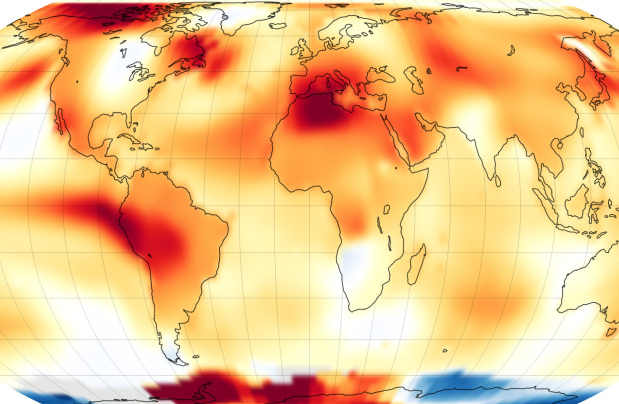
Nasa also stated that July 2023 was the hottest month on Earth since at least 1880.
Other climate studies released in 2022 predict that temperatures in the Middle East may increase by 5C by the end of the century, meaning that local populations, including in the GCC, will face major health and livelihood challenges.
The newspaper also reported this month that data gathered by the World Resources Institute (WRI) Aqueduct Water Risk Atlas listed 25 countries that are currently suffering from extreme water stress every year – with Bahrain, Cyprus, Kuwait, Lebanon and Oman being the worst-affected.
Water stress is a measure of how much of its available water supply a country must use to meet the demand.
The WRI says countries are experiencing ‘extreme water stress’ when they are using more than 80 per cent of their renewable water supply every year.
According to its report, the higher the water stress, the more vulnerable a country is to water shortages, especially during periods of peak demand – such as during a heat wave.
&uuid=(email))