

Two new studies by Bahraini experts that help to identify the specific cause of infertility have come to light, ensuring more accurate treatments for those longing for a baby and thwarted by formerly unaccounted for genetic challenges.
Senior project manager Mohamed Salman, who works at BioLAB – a local diagnostic and genetic testing laboratory – has completed the first ever comprehensive genetic study of infertility in the kingdom using whole exome sequencing (WES). It examines the protein-coding regions of the genome that harbour the majority of disease-causing mutations.
Data for the research was collected from 245 individuals between 2017 to 2025.
“The aim of the study was to identify pathogenic genetic variants associated with infertility in both males and females within the Bahraini population,” Mr Salman told the GDN.
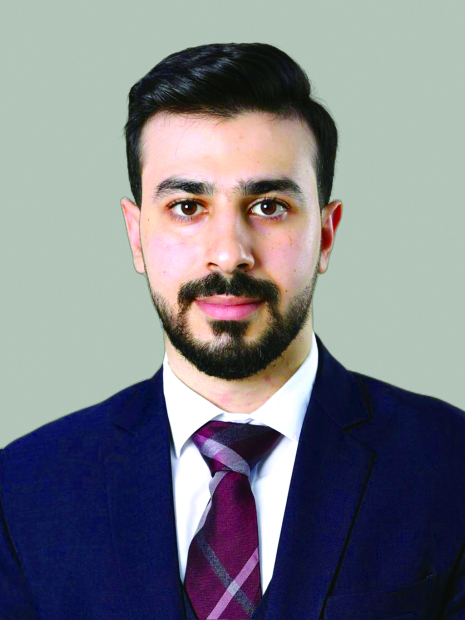
Mr Salman
“Particular emphasis has been placed on cases of unexplained infertility, where conventional diagnostic approaches fail to identify a clear cause.
The research also evaluates how these genetic findings influence clinical outcomes and treatment strategies, especially in assisted reproductive technologies such as in vitro fertilisation (IVF) and intracytoplasmic sperm injection (ICSI),” he added.
Elaborating on some preliminary findings, Mr Salman revealed that males had a significantly higher number of infertility-associated variants compared to females.
“I have found that males had an average of 2.3 variants compared to females, who have 1.7 mutations on average, and WES identified infertility-associated genetic variants in approximately 85 per cent of males and 51pc of females.”
Several online studies point to decreasing fertility rates among men in the region.
According to a recent online report, dated 2023, the total fertility rate (TFR) in children per woman in Bahrain stood at 1.82. The figure has dropped by 5.44 between 1960 and 2023.
Another United Nations report focused on estimated fertility rates indicated a decreasing trend in TFR in Bahrain since the 1950s.
Infertility is defined as the inability to achieve pregnancy after 12 months of regular, unprotected intercourse and can arise from multiple factors, including hormonal imbalances, infections, lifestyle influences, and importantly, genetic abnormalities.
According to the World Health Organisation, one-in-six adults globally experiences infertility at least once in their life, making the new studies timely.
“Currently, when a patient decides to test for infertility, his or her medical history is checked and routine tests such as hormonal testing and semen analysis, as well as imaging testing such as ultrasound are done. However, 70pc of the cases are idiopathic, which means the cause remains unknown.
“WES helps us identify which specific gene has the variant so we can diagnose the problem and deliver the accurate treatment.
“If there is a gene that is causing low levels of hormones, for instance, we could administer hormonal injections, or if there is a defect in the sperm, we could look at assisted reproductive technologies (ART),” explained the Bahrain University student, who is pursuing his Master’s degree in biological sciences, majoring in cellular and molecular biology.
The expert further highlighted that treatments like IVF are expensive, with the price of one session ranging from BD1,500 to BD3,000. However, many a time, as patients do not know the exact cause, they might decide to continue treatment – some couples performing 10 or even up to 20 sessions.
Additionally, the process can take a toll on the patient’s physical and mental wellbeing.
“This research is particularly significant in Bahrain and the wider Middle East region, where consanguineous marriages are relatively common and may increase the risk of inherited genetic disorders, including those affecting fertility,” he noted.
In the same vein, BioLAB project manager Salman Ameer’s study investigates the prevalence and distribution of chromosomal variations among infertile patients in Bahrain using patient data from 900 infertile individuals, with a mean age of 37.8 years.
“Chromosomal variations were identified in 26pc of the study population, with male patients demonstrating a significantly higher prevalence of chromosomal abnormalities compared to females,” said Mr Ameer, also a Bahrain University Master’s degree candidate, pursuing biological sciences and majoring in cellular and molecular biology.

Mr Ameer
He highlighted that the percentage is considerably higher than the internationally-reported rates, recommending that global treatment guidelines be adjusted to better reflect regional data trends, particularly in the Gulf region.
His study also indicated that multiple chromosomes were affected.
It is recommended that both the chromosomal and WES genetic testing be done in tandem in order to get the best diagnosis, especially if patients are planning to go for treatment.
melissa@gdnmedia.bh
&uuid=(email))