

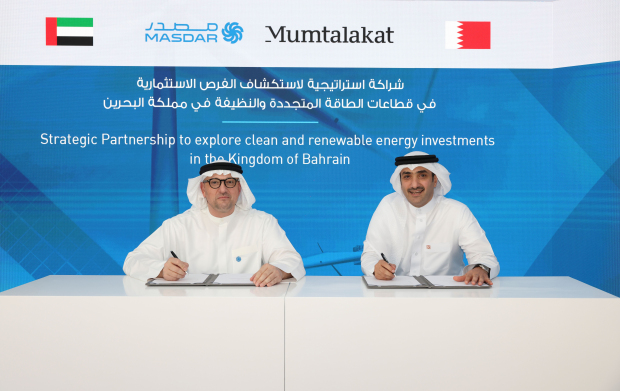
Mumtalakat, Bahrain’s sovereign wealth fund, and Abu Dhabi Future Energy Company (Masdar) have signed a memorandum of understanding (MoU) aimed at exploring collaboration opportunities in the development of clean and renewable energy projects in the kingdom.
Under the terms of this MoU, Mumtalakat and Masdar will collaborate to develop a pipeline of renewable energy projects, supply cost competitive green energy to Bahrain, build local capabilities and foster innovation in Bahrain by utilising their complementary expertise and know-how. In addition, they will explore co-investment opportunities in other markets of common interest.
Commenting on the announcement, Mumtalakat chief executive Shaikh Abdulla bin Khalifa Al Khalifa said: “We are pleased to embark on this exciting journey with our counterparts at Masdar to explore investment prospects in the clean energy sector, as we believe that environmental preservation and economic growth go hand in hand.
“We firmly believe that through strategic partnerships with industry leaders and investing in sustainable technologies, we can contribute towards creating a lasting positive sustainable impact for future generations,” he added.
Mohamed Al Ramahi, chief executive of Masdar, said: “Masdar is delighted to be partnering with Mumtalakat to drive clean energy initiatives in Bahrain. At COP28, we have seen the powerful role of collaboration and shared expertise in driving positive solutions and Masdar in turn looks forward to working with our strategic partners in Bahrain to explore the development of renewable energy projects in support of the kingdom’s sustainability goals.”
This MoU serves as a key milestone in the collaborative efforts of Mumtalakat and Masdar in promoting sustainable development for a greener future.
This MoU has the potential to support the creation of high skilled job opportunities in Bahrain by training and enabling local talent to actively engage in the clean energy industry.
This aligns with the afforestation plan of the kingdom, which aims to double tree planting by 2035 and achieve net zero carbon emissions by 2060.
&uuid=(email))