

THE Shura Council could make a U-turn on a proposed legislation to punish healthcare workers, teachers and caretakers who fail to report suspected cases of domestic violence within 48 hours.
Several ministries and community authorities have asked the upper chamber of the National Assembly to vote in favour of amendments to the 2015 Protection from Domestic Violence Law, during its weekly session on Sunday, to ensure that such professionals step forward and seek action as soon as they come across suspected victims of violence or abuse in homes.
Under the amendments, the punishment would include jail or fine, or both.
In November last year, there was a stalemate among the Shura Council members over the proposal, after MPs rejected it in October.
The Shura Council woman and child committee is refusing to reconsider its rejection of the proposal despite meeting officials from all concerned parties.
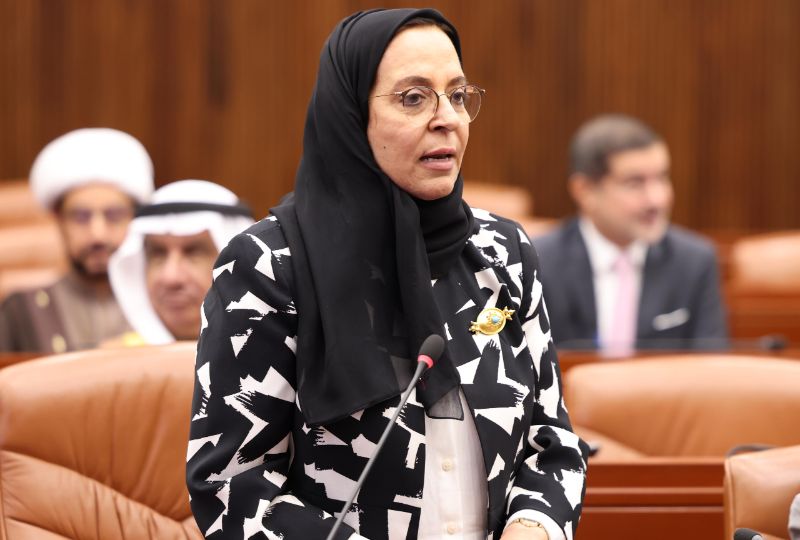
“The legislation violates the basic pillars of stability, sacredness and special status of family as it creates disintegration and division amongst members rather than resolve any case of domestic violence,” said committee chairwoman Dr Fatima Al Kooheji.
“The idea of ‘best interest’ is subjective and a healthcare worker, teacher or caretaker may decide to report a case or cases immediately without giving chance for things to be resolved,” she explained.
“The current law already gives people, regardless of their position or social status, the right to complain or alert authorities about any suspected crime.
“Also, by law domestic violence cases can’t be opened without it being a direct proven complaint from the actual victim and not anyone else even if others raise the alarm.”
Dr Al Kooheji said identifying the three professionals was unfair since others working in other jobs may come across domestic violence cases and remain silent.
“To cite examples of misinterpretation, failure to report a domestic violence case is punishable without the option of closure, while the case itself is not, should the victim decide to drop charges against the perpetrators.
“When we reviewed existing regional and international legislations notably in the UAE, Lebanon, Qatar, Jordan, Saudi Arabia, Tunisia and Kuwait, we have not found any similar punishment for failure to report incidents of domestic violence.”
Meanwhile, Social Development Minister Osama Al Asfoor told the Shura Council that there is a loophole involving such professionals and their responsibility to report cases of domestic violence.
“Not having this legislation would mean that offenders would be let off the hook,” he said.
“It is an additional protection for family and individuals and not something to be misused to report cases whenever someone feels like it or has a grudge against anyone.”
He pointed out that not every case reported would be taken on face value; there will be a thorough investigation and review.
In April last year, debate on the law in Parliament was suspended after second deputy speaker Ahmed Qarata sparked a row by criticising the Bahrain Women’s Union for its feedback on the definition of domestic violence.
Supreme Council for Women secretary-general Hala Al Ansari urged Shura Council members to accept the proposal, saying that the three professions mentioned in law had a bigger role to play than anyone else in the community to report cases.
She also requested that the 48 hours be changed to 24 hours to help step in and provide assistance to victims.
Social Development Ministry assistant under-secretary for care and social rehabilitation Zainab Al Owainati said that the new amendment was the right approach to tackle cases of domestic violence.
Justice, Islamic Affairs and Endowments Ministry legal advisor Dr Shaikha Noora bint Khalifa Al Khalifa, and Bahrain Women Association vice-chairwoman Fareeda Darwish have also backed the amendments.
mohammed@gdnmedia.bh
&uuid=(email))