

A research paper showcasing ancient remains of irrigation channels and freshwater springs in Bahrain, and suggesting ways to bring them back to life, was presented at a conference about the ‘Soul of the Earth’.
The three-day Archaeology of Irrigation Technology and Water Management in the Islamic World Conference, ends today, with archaeologists from at least four continents participating.
Research papers about archaeological features in the Gulf, Iraq, the Levant, Türkiye, Central Asia, North Africa, Iberian Peninsula (Andalusia) and Indonesia have been highlighted during the conference.
The first-of-its-kind initiative has brought together scientists to explore solutions for climate change challenges ahead by learning how ancient civilisations saved, stored and distributed fresh water.
The first research paper presented at the conference was co-authored by Bahrain Authority for Culture and Antiquities’ (Baca) archaeology and museums director Dr Salman Al Mahari and Exeter University researchers Dr Timothy Insoll and Dr Rachel MacLean.
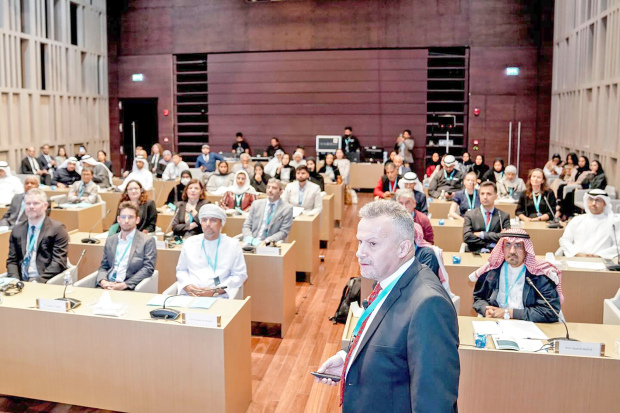
Dr Insoll presenting the paper to archaeologists from all over the globe
Titled ‘The Archaeology of Irrigation Systems and Water Management in Bahrain,’ it helps shed light on examples of water sites in Bahrain, exploring their construction, purpose and significance.
With a focus on calls to preserve the sites by turning them into eco-tourism attractions, the paper also highlighted several possibilities of using ancient technologies with a modern twist.
“Bahrain has a rich but threatened archaeological waterscape,” Dr Insoll said. “The purpose of this research is to assess how these water sites might be revitalised, interpreted, preserved and presented.
“Even though all the irrigated land has now disappeared, there are traces of the archaeology still there which we desperately need to record. Our immediate priority is creating a full inventory of remaining archaeological water management and irrigation systems.”
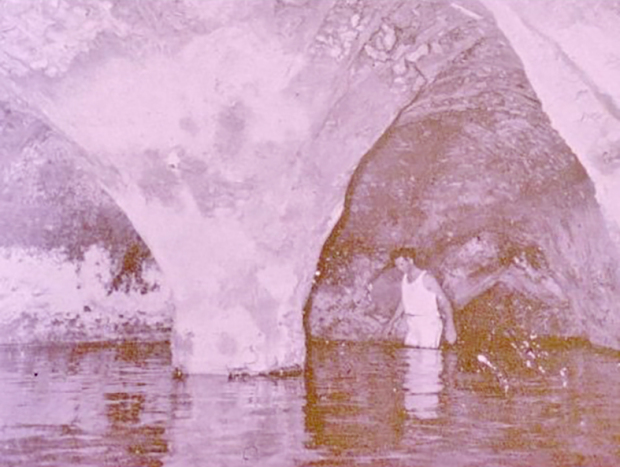
A historical photograph of an interior chamber in Bahrain’s formerly-extensive qanat irrigation system.
Another actionable recommendation in the paper is to develop strategies to safeguard and present key examples within the framework of water heritage and tourism. Among the sites discussed were the spring at Barbar Temple, Ain Abu Zaydan, Ain Adhari, Al Sayah Island, Hunainiyah Spring, and qanats in Saar, Shakhura, Hamad Town and more.
Water sources include qanats (channels), ains (springs) and kawkabs (offshore freshwater springs).
Qanats were one of the main irrigation sources covered by the research, once a densely interconnected network of underwater canals that today only survive in small sections scattered in different parts of the country.
“The people who built the channels really knew what they were doing and really wanted to conserve the water,” Dr Insoll said. “The channels were lined with a waterproofing layer, under a narrow flat base covered with layers of plaster.
“Those who constructed them utilised a mixture of bitumen and charcoal for the lining – they also had an awareness of the hydrophobic properties of charcoal.”
Other ingenious technologies used in building the qanats were described in the paper, including insulation, maintenance shafts and angled interiors to allow water to flow to desired areas.
The dangers of waterborne illnesses and parasites were also outlined, thanks to recent archaeological discoveries of diseases and disease-carrying organisms in the channels.
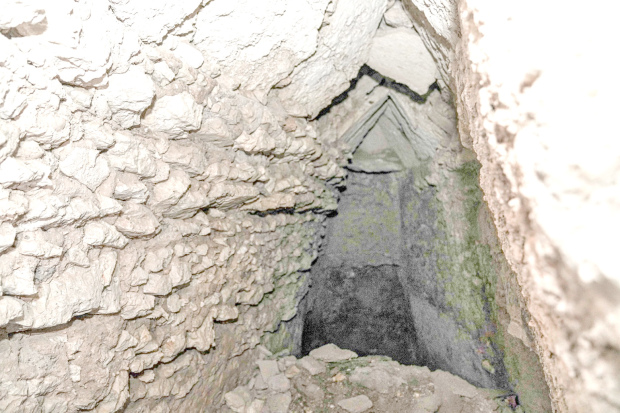
A recently-discovered section of an underground channel in Saar
“The discoveries gave us a good insight into past diseases,” Dr Insoll said. “The brackish, stagnant waters of Bilad Al Qadeem contained disease vectors that carried infections like bilharzia and Chinese liver fluke.”
These channels were home to infection-transporting micro-molluscs and mosquito larvae, he added. The authors went on to express interest in further exploring and perhaps one day restoring a number of historical springs that fell into disrepair, like Ain Abu Zaydan in Bilad Al Qadeem.
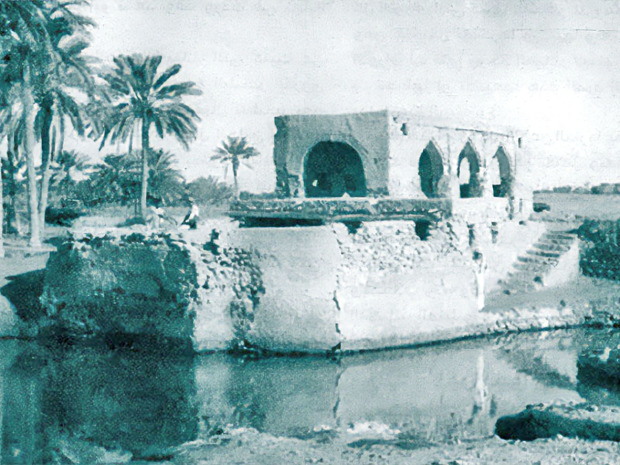
Ain Abu Zaydan in the present, fallen into disrepair
“A lesson we can take from the past is not taking water for granted,” concluded Dr Insoll. “It is becoming increasingly important to integrate the waterscape with the contemporary environment, and there is an interest in protecting what is left of these sites. However, it is unlikely that they will be brought back to use, given that the aquifers were damaged by oil drilling. The aquifers were also depleted as they have been everywhere in the world.”
After the presentation, researchers from the US, Spain, Tunisia and Indonesia shared their insights with the authors, and proposed ways to collaborate on further research.
The conference will conclude with a tour to Madinat Hamad Qanat, Dilmun Burial Mounds and the A’ali Royal Mounds.
The event has been organised by the Baca, in co-operation with the Exeter University’s Institute of Arab and Islamic Studies (IAIS) in the UK.
Held under the patronage of His Royal Highness Prince Salman bin Hamad Al Khalifa, Crown Prince and Prime Minister, the aim has been to address the lack of research about Islamic water technology in archaeological literature.
A book containing all the papers has been unveiled at the conference in order to provide a reference as future research into the subject takes place. British-American poet W H Auden described water as the ‘Soul of the Earth’ and another anonymous scribe rallied with the cry that water was a ‘priceless gift of nature, so save it for the future’ during last year’s World Water Day campaigning.
zainab@gdnmedia.bh
&uuid=(email))