

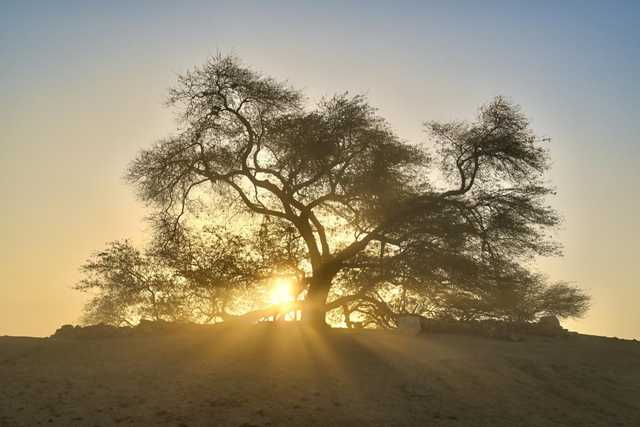
A call to turn The Tree of Life into a landmark tourism destination has been made by municipal councillors.
The Southern Municipal Council is proposing that the site gets special colourful lighting, attractions, activities and programmes that matches its ‘potential value’ to the sector.
“If this monumental tree was in any other country in the world, they would have built a theme park revolving around it,” said council chairman Abdulla Abdullatif.
The Tree of Life in Bahrain is a 9.75 metres high Prosopis Cineraria tree that is more than 400 years old, proudly sitting on a hill in a barren area of the desert, around 2km from Jebel Dukhan, the highest point in Bahrain, and 40km from Manama.
The legendary tree is richly covered in green leaves and considered a ‘wonder of the world’.
Due to its age and the fact that it is the only major example growing in the area, the tree has long been a local tourist attraction, a ‘must visit’ for foreign visitors visiting family members working in the kingdom, and attracts approximately 65,000 people every year.
It is not certain how the tree survives. Bahrain has little to no rain throughout the year. Its roots are 50m deep, which may be long enough to reach the water.
Others believe the tree has learned to extract moisture from grains of sand.
Some claim that the tree is standing in what was once the Garden of Eden in Biblical myths and so has a more mystical source for survival.
In 2009, the tree was proposed and nominated among entries to the global ‘New Seven Wonders of Nature’ list but missed a final accreditation.
In October 2010, archaeologists unearthed 500-year-old pottery and other artefacts around the vicinity of the tree.
A soil and dendrochronology analysis conducted in the 1990s concluded that the tree was an Acacia planted in 1582.
The Tree of Life’s other claim to fame is a mention in the 1991 film L A Story. Actor Steve Martin calls it ‘one of the most mystical places on Earth’.
And, Pope Francis described the popular tree as an ‘outstanding emblem of vitality’ during his visit to Bahrain in November, 2022.
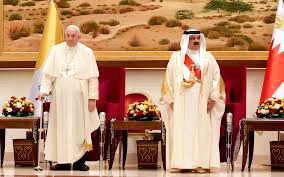
Pope Francis, left, with His Majesty King Hamad during the historic visit in November 2022
“Unfortunately, in my opinion, over the years, the site has not fulfilled its potential and to most tourists it’s a five-minute stopover to take pictures and leave,” added Mr Abdullatif. “There are no attractions, activities or programmes that may interest visitors to stay longer.
“To date it’s a missed opportunity to showcase the place and at the same time generate much needed tourism revenue.”
Mr Abdullatif, who proposed the ‘attraction investment’ for The Tree of Life, suggests the closest regional visitor competitor to Bahrain is Al Ahsa in the eastern province of Saudi Arabia.
“Real tourism to Al Ahsa only started 20 years ago, when natural sites such as Al Qarah Mountain and the Oasis became real attractions with marketing, showcasing and associate activities,” he said.
“Al Ahsa has become such a notable destination for nature lovers that the top GCC Ramadan series this year was about its history.
“We have to make The Tree of Life a main attraction and other natural landmarks in the country to the level of Al Ahsa and develop a proper tourism strategy surrounding it.”
He added that this should be a collaborative effort between the council, the Tourism, Information Affairs, Housing and Urban Planning and Oil and Environment Ministries, alongside the Bahrain Authority for Culture and Antiquities (Baca) and the Bahrain Tourism and Exhibitions Authority (BTEA).
“If we succeed, The Tree of Life will take its place amongst the immortal visitor sites in the world,” said Mr Abdullatif. “Whenever, we turn the place into a proper tourist destination, Pope Francis should be invited again to witness beforehand how his inspirational speech has helped evolve the place.
“It is a long way until then, as we work together on plans to bring renewed tourism momentum to The Tree of Life.”
mohammed@gdnmedia.bh
&uuid=(email))