

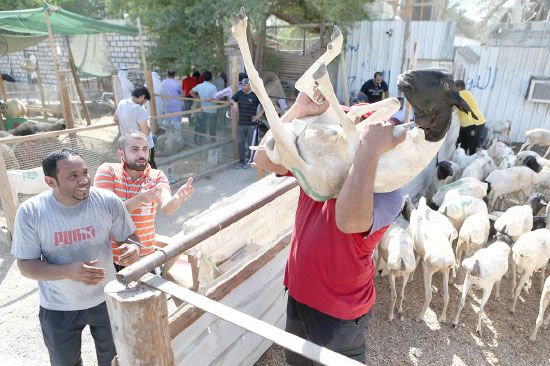
More than 43,000 cattle heads are set to be slaughtered during Eid Al Adha, it was revealed yesterday.
Municipalities Affairs and Agriculture Ministry Under-Secretary for Agriculture and Animal Wealth Dr Khalid Hassan said more than 26,636 heads of sheep and cows have been imported, while 16,600 heads were expected to arrive before Eid Al Adha on Sunday.
He added that 6,735 tonnes of frozen red and white meat have also been imported, while 228 permits have been approved to import frozen red meat and white meat (poultry) ahead of the festival.
Dr Hassan confirmed the readiness of technical teams to issue licences for the import of live animals and fresh, chilled and frozen meat, and to open more food supply chains for Eid.
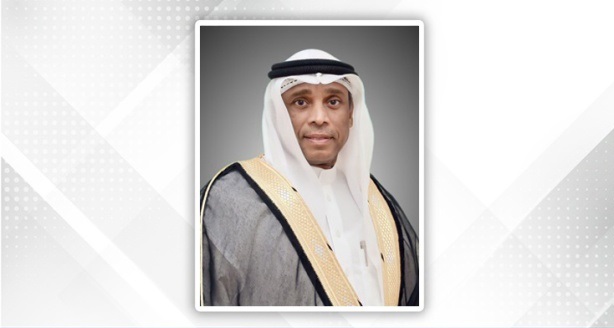
Dr Hassan
“The number of livestock and quantities of meat that are being provided cover local needs during Eid Al Adha as this period witnesses an increasing demand for meat,” he said.
“A meeting with livestock dealers has been held to inform them about health requirements that must be provided in slaughter places on the days of Eid Al Adha and the livestock initiative to provide doctors to examine the carcasses to ensure their safety for human consumption.
“A deal has also been reached on authorised slaughter sites that will be monitored by veterinarians.
“These sites were also visited by specialists from the Veterinary Quarries Department to ensure their readiness for slaughter from a logistical and technical standpoint.”
Dr Hassan indicated that in the process of co-operating with temporary private slaughterhouses in providing the requirements of religious rituals, teams were formed for veterinary health inspection of the carcasses on the days of Eid Al Adha. It also involves the process of distributing them to the slaughter places and scheduling their work throughout the Eid period.
“Efforts are also being co-ordinated with cleaning companies to provide containers for proper sanitary disposal of slaughter waste.”
Meanwhile, Dr Hassan pointed out that the local animal production administration has doubled its work during this period, to verify animal consignments arriving in Bahrain.
“The veterinary quarry is considered the first line of defence to ensure the safety of imports of these kinds of consignments, whether live or slaughtered, based on procedures and regulations applied in animal control management supervised by highly experienced veterinarians,” Dr Hassan explained.
“We warn people not to deal with random slaughter places because of the great danger they pose to public health, in addition to their negative repercussions on the environment.”
He called on citizens and residents to deal with licensed slaughterhouses located in Hamala and Sitra.
“This is due to the availability of health requirements at all stages of work, in addition to the presence of a specialised veterinarian who supervises the slaughter process and examines the carcasses before and after the slaughter process to ensure that they are free of any diseases that may affect human health.”
People were also being advised not to buy animals from cattle yards without having them checked by veterinary inspectors to ensure they are healthy and fit to be slaughtered by Bahrain’s municipal councils and the Capital Trustees Board.
Southern Municipal Council chairman Abdulla Abdullatif urged people to refrain from buying animals from cattle yards and having them slaughtered there.
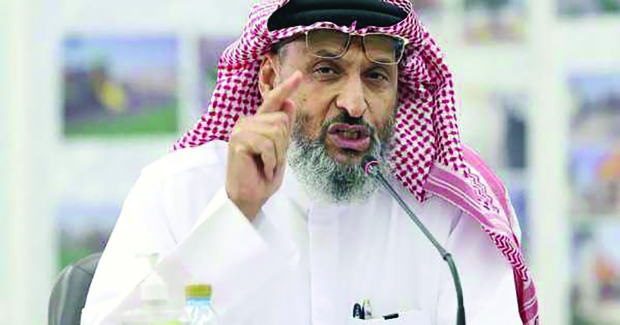
Mr Abdullatif
“Not every disease is apparent or visible; an authorised veterinarian and a government inspector have to be present to either give the go-ahead for slaughter or reject the animal,” he said.
“I realise it is much cheaper to have animals slaughtered at the same cattle yard where they are bought, but the cost to health might be much higher if those eating the meat fall sick and it turns out that the animal was not healthy.
“The government doesn’t ban cattle yards from slaughtering animals, but that doesn’t mean they are following proper standards.
“The butchers could be non-Muslim or lacking in proper skills as has happened in several cases.”
Meanwhile, Muharraq Municipal Council chairman Abdulaziz Al Naar said animals were being slaughtered by ‘cheats’ who were only concerned with profiteering.
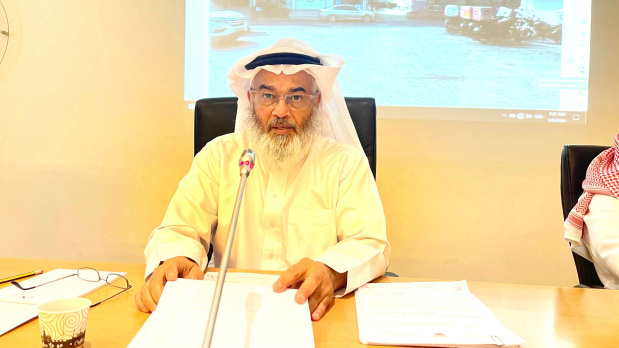
Mr Al Naar
“Some Bahrainis and expatriates try to convince customers that the sheep they are buying is healthy, pat on it and offer it as the best, while in reality it could have illnesses that are not apparent and would only surface in the consumer of the meat after days, making it difficult to trace,” he said.
“This is happening in the market because slaughtered animals don’t come under any kind of supervision unless it goes to the slaughterhouses in Hamala or Sitra.
“Unfortunately, the market is led by cheats who are using the current season to profiteer and con people by mixing sick sheep with the healthy ones.”
Mr Al Naar said it was worth paying more to have peace of mind about the quality of the sheep.
mohammed@gdnmedia.bh
&uuid=(email))