

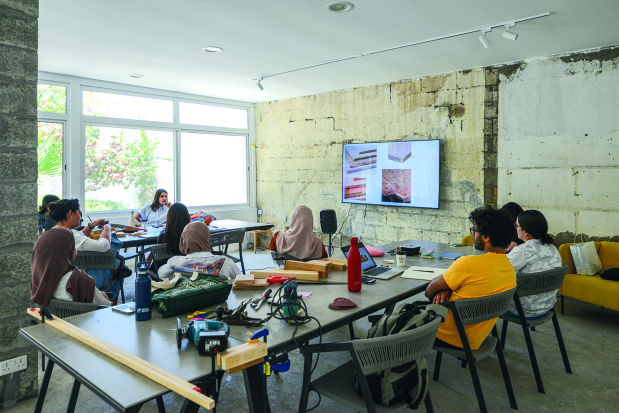
Nine Bahraini artists and architects have been drawing on the kingdom’s local storytelling as they highlight craft traditions and archive oral histories in a series of projects to go on display later this year.
Creatives participating in the second iteration of the Majal design incubation initiative will be discussing the progress on their installations during a showcase on Tuesday at Al Riwaq Art Space.
“‘Majal: Design as Storytelling – Crafting Meaningful Narratives Through User-Centred Design’ aims to create impactful designs that resonate with users and audiences by employing a storytelling approach and user-centred design principles,” a spokesperson from Al Riwaq explained in a statement.
The 13-week-long Majal programme included weekly meet-ups, guest lectures and field trips, during which the nine artists honed their ideas, using community interviews, colour exploration, prototyping, testing and feedback.
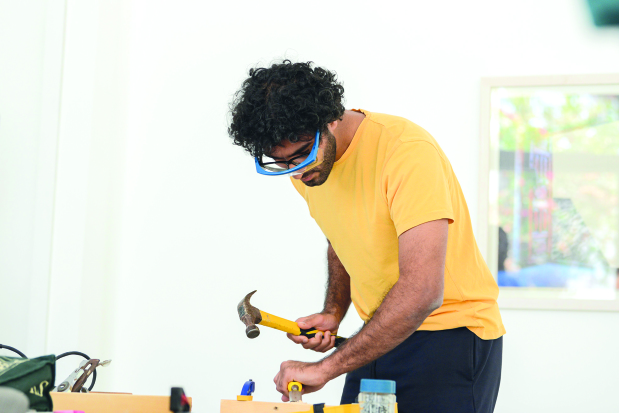
Mr Albasri during one of the sessions
The artists who are participating in the second edition of the symposium since it was launched in 2022 include Hasan Albasri, Deema Al Tharman, Saryeh Al Rumaihi, Sumana Buhasan, Aysha Abdulqader, Maryam Al Khalifa, Huda Aldaqaq, Waleed Alfadhel and Yasmeen Al Rumaidh.
Visual artist and Parsons School of Design assistant professor Yama Dimitrova has been the lead instructor for the course, which was co-ordinated by award-winning Bahraini product designer Maryam Al Khalifa.
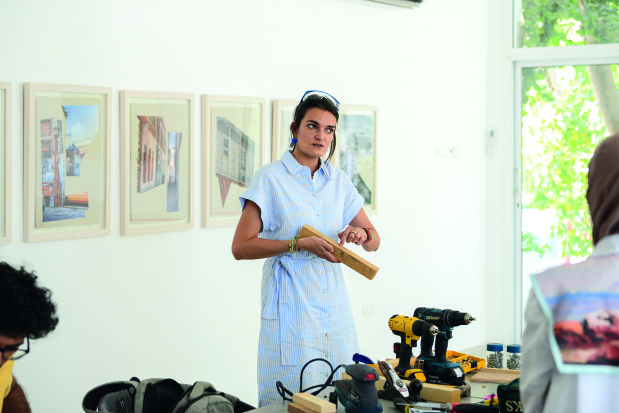
Ms Dimitrova conducts a workshop for the students
“Through context-based ethnographic and design research, engaging with local traditions and practices on this land, we have seen how the design process as storytelling is immensely valuable for a young designer,” Ms Dimitrova told the GDN.
“In the discovery phase, Majal designers identified and unpeeled many traditions and histories through interviewing their relatives and extended communities. This process helped build ways towards expanding their personal agencies, their own creative voice, through the discovery of the history and traditions in their communities.”
The initiative was organised in partnership with the Bahrain Authority for Culture and Antiquities’ Made in Bahrain programme as well as the Saudi Arabia-based King Abdulaziz Centre for World Culture (Ithra).
Mr Albasri, for example, took a deeper dive into Bahrain’s boat-building tradition, and is working on ‘Al Jizmah’, a simplistic vessel which used to be popular amongst children and those who did not have advanced seafaring boats.
“Al Jizmah is a direct explanation of the relationship between the people and the sea and their symbiotic connection before land reclamation began in the 1960s,” he explained.
“After studying local archival maps of Bahrain shore, paired with onsite investigations, and collecting oral histories by my family members and extended community, I felt the need to build this boat.
“The design consists of two parts, the bottom – part of the original boat, and the top – a modular shading structure as my addition to the original design.
“The materials of this structure are derived from the palm and are recycled and upcycled wood materials; elements of the shading structure are also made of metal, cotton and palm leaf.
“In the process of designing this structure, I worked with a number of local artisans, including carpenters as well as textile weavers at the Bani Jamra Textile Factory.
“Al Jizmah serves as a reminder of the vital connection between the community and their sea, a physical blueprint of what else is possible. It’s an interactive platform addressing the issue of land reclamation.”
The nine creatives will be discussing their projects Tuesday, with the final exhibition expected to be unveiled later this year.
naman@gdnmedia.bh
&uuid=(email))