

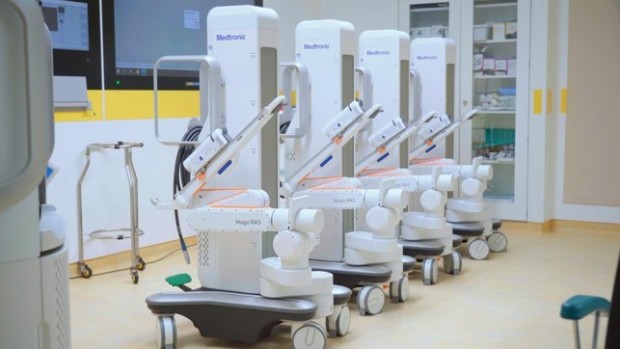
Five surgical operations using a robot have been successfully performed on patients with malignant tumours at the Bahrain Defence Force (BDF) Hospital.
This was the first time ever that the surgical robot Hugo was used in an operation in Bahrain, with the BDF Royal Medical Services (RMS) taking the lead.
RMS Brigadier General Dr Shaikh Fahad bin Khalifa Al Khalifa said that the acquisition of the Hugo RAS (Robotic-Assisted Surgery) System made the hospital the first one in the Middle East and North Africa to use such a technology.
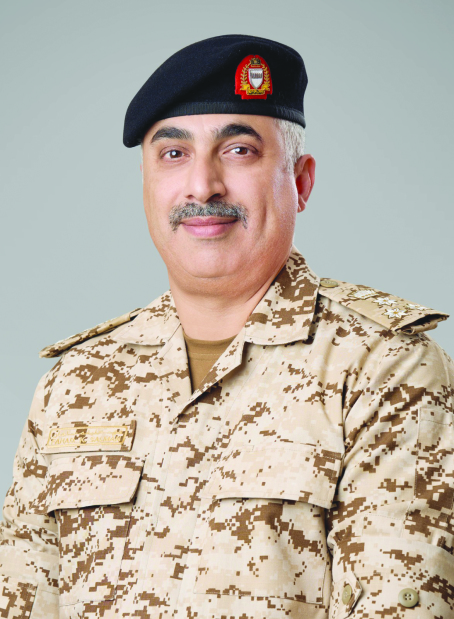
Brig Gen Dr Shaikh Fahad
The robot consists of a 3D camera and four robotic arms equipped with surgical instruments. The surgeons perform their tasks by controlling the arms by using a remote control panel.
It also has a screen that displays a high-quality image of the patient’s body, which reduces the chance of an infection breaking out, and in turn improves the results of the surgery.
View this post on Instagram
“We have endeavoured to develop our health services and provide them in a way that achieves sustainability and provides a healthy environment for all members of society,” said Brig Gen Dr Shaikh Fahad.
“The operations do not only meet the highest international standards, but they also ensure the flow of services in a way that enhances their quality and speed to give Bahraini citizens and residents a better experience.”
The robot was imported by the hospital in April this year, and comes as part of the directives of His Majesty King Hamad’s keenness to provide the best services to the citizens and residents in the kingdom.
BDF consultant urologist and chief physician Dr Ayman Raees praised the success of the surgical robot, stating that the hospital is always keen to employ the latest technologies.
“Hugo performed three operations to remove malignant tumours in the prostate of patients in their fifties and sixties without any complications,” said Dr Raees.
“The fourth operation was for a patient who had a tumour in the kidney, which was also removed successfully.
“The fifth and final operation centred on a patient in her 30s who underwent a procedure to remove a tumour in her adrenal gland.”
Dr Raees said that the robot has allowed surgeons to perform the operations with much higher accuracy, control and flexibility compared to traditional surgical methods.
“The extreme accuracy and control allowed us to be able to complete the surgeries without any significant complications or issues,” he said.
“Additionally, we have noticed that the patients spend less time in the hospital following the procedure as they tend to recover at a faster rate than normal.
“With our desire to keep pace with scientific and technological developments, and to provide the best medical and therapeutic services, the robot is expected to be used in the future in different types of operations, including general surgery, gynaecological surgery and obesity surgeries.
nader@gdnmedia.bh
&uuid=(email))