

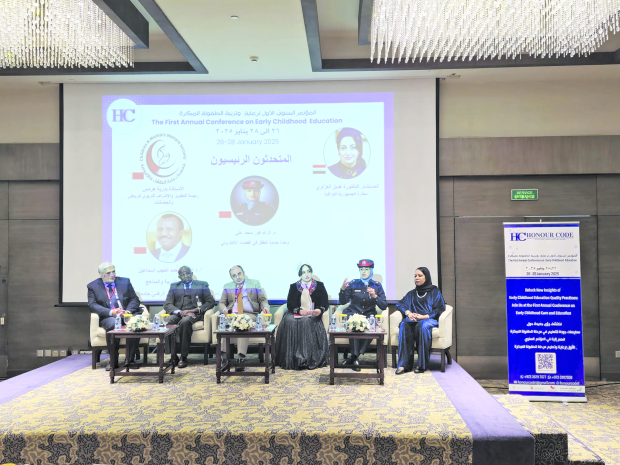
A leading medic has called for an emergency treatment unit to be set up in the kingdom to better serve children with special needs.
In the meantime, a database should be established so that doctors across Bahrain can gain access to medical notes to better manage health issues as and when they arise.
University Medical Centre at King Abdullah Medical City senior paediatric consultant Professor Mohammed Elbeltagi also highlighted the importance of government authorities and medical professionals working together to share and to help improve treatment options.
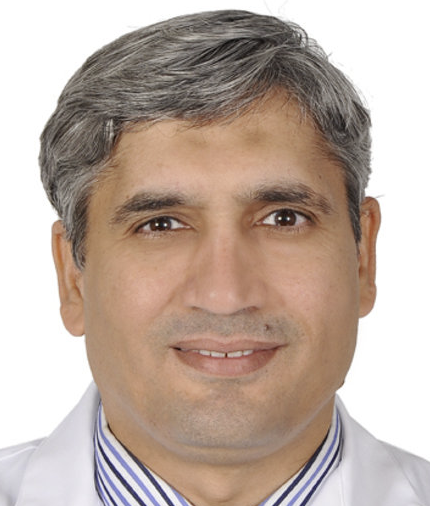
Dr Elbeltagi
He was speaking to the GDN on the sidelines of the first edition of the Early Childhood Education Conference at the Golden Tulip Bahrain, which concludes tomorrow. It is being organised by Honour Code for Pioneering Educational Training and Translation Service.
“Dealing with children with special needs is challenging and there should be a better process for how we manage the situation in Bahrain,” said Dr Elbeltagi. “During an emergency or treatment, the doctor, parent and child relationship is extremely important and they should all be considered because each is affected differently by this process. I would like to see a space in a new hospital for each of them.
“We should also remember that when a child is brought to the hospital during an emergency, they are already anxious. So, if they could seek medical and psychological care in one location, it would benefit everyone involved, including medical professionals and government authorities.
“We should refer to children with special needs as children with a condition, rather than a special needs child, because they should first and foremost be children,” he said.
“Having one space to contain all of the resources and medical assistance they need could provide higher quality of care, especially since some are more prone to accidents, trauma and infections.”
However, he acknowledged that many children with special needs and their parents unfortunately face stigma issues and having a specialised unit might add further to their distress.
According to published data, around 1,200 children in the kingdom have Autism Spectrum Disorder (ASD) although Dr Elbeltagi believes this figure may be higher.
“Many families will hide that their child has special needs, so the medical community expects this number to be higher,” he said, adding that an official database where people with special needs could be registered, might offer a solution.
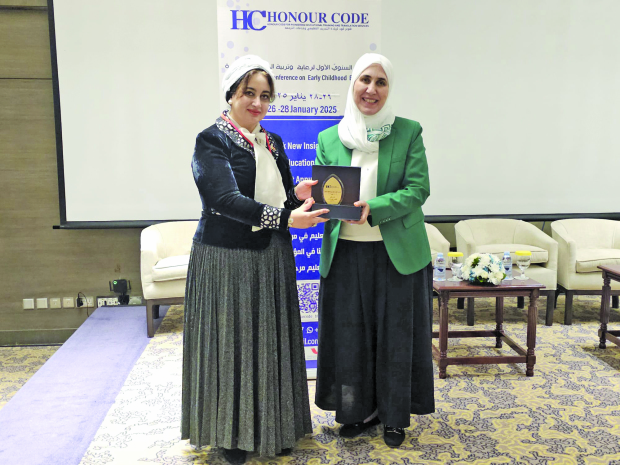
Honour Code for Pioneering Educational Training and Translation Services establishment managing director Dr Maha Alshorbaji honouring Dr Hadeel Alazawi, who presented a paper at the conference titled Education and Learning Policies: Creating Life Through Arts and Knowledge
“We are unable to provide a precise figure for the overall number of people with special needs due to a lack of information,” he added. “A register would assist doctors in understanding any other factors that could be contributing to these types of conditions.
“It could also help us identify areas in Bahrain with a high concentration of people with special needs. There are several factors, such as toxins and pollution, that may impact the number of children being born with these disorders; however, there is little evidence to investigate these possibilities without the statistics. Medical professionals can also be to blame for this as we should be keeping and sharing data.”
He added that a study is presently underway in Bahrain to determine whether vitamin B6 could be used to treat people with ASD. The study will look at low, moderate and high vitamin doses and their effectiveness.
Over the past 10 years or more, claims have been made that vitamin and mineral supplements may improve the symptoms of autism, in a natural way.
While not all researchers agree about whether these therapies are scientifically proven, many parents, and an increasing number of physicians, report improvement in those with autism when using individual or combined nutritional supplements.
“Overall, I believe there should be more collaboration with government authorities, medical professionals and teachers, and this conference is a great first step in getting these authorities to be in the same room to discuss how to improve care for children with special needs,” added Dr Elbeltagi.
Some of the sessions that will be featured today include ‘Justice and equity in early education – ensuring equal educational opportunities for all children in Bahrain’, ‘Support for SEN children and how to address the issues and challenges they may confront’, ‘Hyperactivity and attention deficit (ADHS) and the healthy heart’.
Workshops hosted by top regional experts will take place on the last day of the conference.
julia@gdnmedia.bh
Top stories for today:
80 falcons take part in races as part of Mawrooth challenges
Indians in Bahrain mark Republic Day
Emergency hospital urged for special needs children
&uuid=(email))