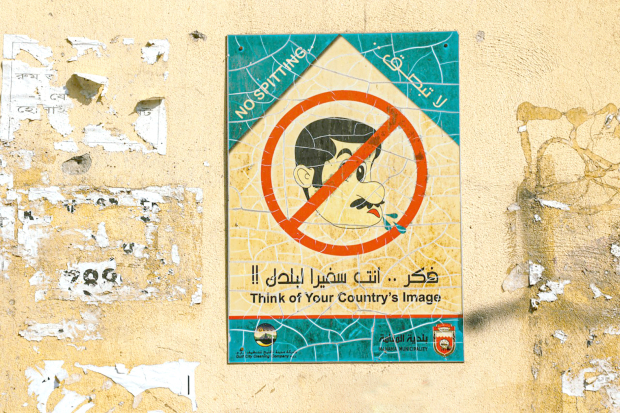
Police could soon be deployed to help enforce Bahrain’s public cleanliness laws as municipal leaders demand stronger action against offenders caught spitting or urinating in public.
Municipal leaders have warned that the current system, relying solely on municipal inspectors, is failing to deter unsocial behaviour due to limited working hours and alleged weak enforcement mechanisms.
Capital Trustees Board chairman Saleh Tarradah said the problem was not only widespread but also damaging to Bahrain’s image. “Most of the violators are expatriates who may not understand Arabic or English warning signs or appreciate the rules, but that is no excuse,” he said. “These acts are clearly wrong and the current punishment of a BD50 to BD300 fine, under the 2019 Public Cleanliness Law, is not even being enforced properly, in my opinion.”

Mr Tarradah
Mr Tarradah pointed out that municipal inspectors only work between 7am and 2.15pm on weekdays, and do not cover evenings or weekends.
“Once their shift ends, people can behave as they like without any fear of being penalised,” he stressed. “Police are not deputised to handle these cases, which creates a huge gap in the ability to offer enforcement.”
He argued that police officers were far better placed to handle the issues.
“Municipal inspectors do not have the power to arrest or confront violators effectively, but police officers do,” Mr Tarradah explained. “If we are serious about enforcing the law, authority must be transferred to the police, who are present 24/7 and can take immediate action.”

Mr Al Naar
Muharraq Municipal Council chairman Abdulaziz Al Naar agreed that the current monitoring system appeared outdated and inadequate.
“Spitting and urinating in public are health hazards and also create an image problem for our country,” he said. “If inspectors are only available for a few hours a day, then the law becomes meaningless.
“This is about public hygiene and respect for our society. If municipal inspectors are not enough, then we must either extend their hours, recruit more of them, or allow police to enforce the rules directly.”

Dr Abdulla, left, with Mr Al Dossary
Northern Municipal Council’s financial, administrative and legislative committee chairman Dr Mohsin Abdulla said stricter enforcement was essential.
“There appears to be a huge lapse in implementation and monitoring that is giving the wrong image about cleanliness in the country,” he warned.
“It’s not just about penalties – it’s about protecting the health and dignity of the country,” Dr Abdulla said.
Councillor Mohammed Al Dossary added that violations were especially common after inspectors’ shifts ended.
“After hours, people can blatantly violate the law because there is no one to stop them,” he said. “We either need inspectors working extended hours or alternative solutions like surveillance and police powers.”
Councillors are also calling for a comprehensive action plan to address the issue, including longer inspector shifts, greater use of technology, and empowering police to act.
The proposed move has been referred to Municipalities Affairs and Agriculture Minister Wael Al Mubarak for review.
mohammed@gdnmedia.bh