

Bahrain's strong inter-sectoral co-operation has been a key factor in safeguarding livestock from diseases and strengthening national food security, according to experts.
The kingdom’s proactive approach was underlined during a recent conference on multi-sectoral responses to zoonotic disease outbreaks.
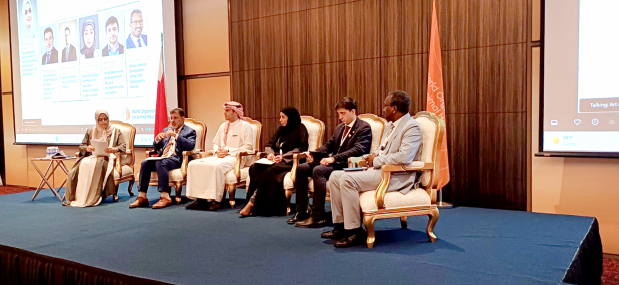
The session, titled ‘The Value of Inter-sectoral Co-ordination in One Health’, brought together Municipalities Affairs and Agriculture Ministry local animal production director Dr Abbas Al Hayki, Health Ministry public health director Dr Mohammed Al Wadi and Supreme Council for Environment (SCE) senior fish quality and protection specialist Layla Abdulla.
They were joined by World Organisation for Animal Health regional representative Dr Francesco Valentini and Food and Agricultural Organisation senior livestock development officer Dr Markos Tibbo.
Dr Al Wadi said that Bahrain’s livestock disease monitoring and prevention analysis begins before the illnesses even reach the country.
“We are always monitoring and looking out for diseases, both communicable and non-communicable, before they reach our borders,” he said.
“A dedicated group always looks out for alarm signals whenever we detect a disease, no matter what part of the world it comes from, and determine the risks of it spreading in our country.
“In our modern times, zoonotic diseases can end up in Bahrain in less than 24 hours, so it is crucial to ensure we are always co-operating with other agencies to come up with prevention measures.”
Internationally spread animal diseases include avian influenza, foot and mouth disease, African swine fever and rabies.
These are often zoonotic diseases that can jump from animals to other animals and even to humans.
Their spread is facilitated by factors like global trade, climate change and human expansion into wildlife habitats.
Bahrain has always taken an active step to limit such diseases.
In March 2017, MPs approved a ban on importing all poultry and live birds from countries where avian influenza had been detected.
Dr Al Wadi stated that the Health Ministry is always in contact with other government agencies in Bahrain, with inter-sectoral co-operation being at the heart of protecting animals and humans from such illnesses.
“If there is a potential for it to worsen, we create committees and even sub-committees to have in-depth discussions on how to deal with them,” he said.
“We analyse the diseases from multiple perspectives and discuss prevention methods in order to protect our livestock and the people of Bahrain.”
Meanwhile, Ms Abdulla said that the SCE monitors marine life in the kingdom’s waters and is constantly working with other agencies to mitigate the impact of anti-microbial resistance (AMR) in fishes.
She stated that while environmental factors directly impact fish life, it is more important to monitor AMR.
“The fisheries and agricultural sector are directly linked, making inter-sectoral co-operation absolutely crucial,” she said.
“Pollution and disease can affect fish stocks and transfer to humans directly if we are not careful.
“But one of the biggest things we need to monitor is the impact of AMR in marine life, and the SCE is always working with the Health Ministry and other agencies to mitigate its impact.”
AMR refers to the process in which bacteria, viruses, fungi or parasites evolve to resist the medications used to treat them. This is a major concern because it compromises food safety.
In farmed fish, it can transfer to humans through consumption, and infections in humans become more difficult to treat as resistant bacteria spread through the environment.
Finally, Dr Al Hayki discussed the constraints and challenges of inter-sectoral co-operation in Bahrain.
“Controlling zoonotic diseases is a long journey that starts from our borders,” he said.
“We have to effectively control the import of livestock, and inspect all animal products thoroughly, in cooperation with relevant ministries.
“However, a lack of data systems means it’s difficult to run effective communication.
“Additionally, there are budget constraints, and the fact that the nature of mandate and legislation differ between sectors.
“Despite that, the Municipalities Affairs and Agriculture Ministry is dedicated to ensuring food safety from the farm to the table.”
The conference was held at Art Hotel and Resort in Amwaj Islands.
nader@gdnmedia.bh
&uuid=(email))